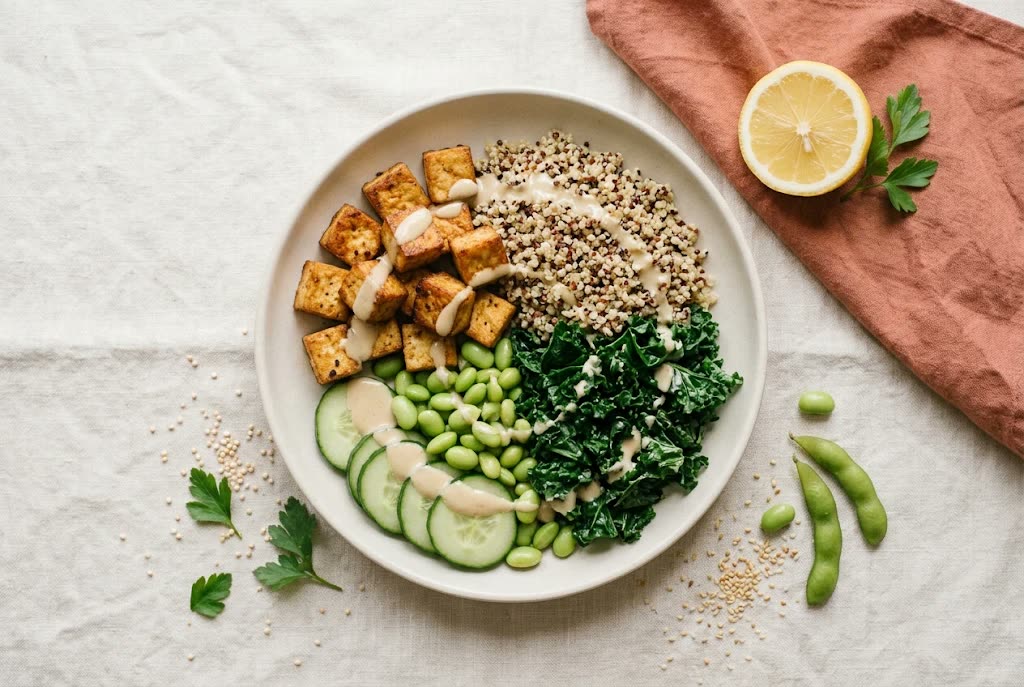
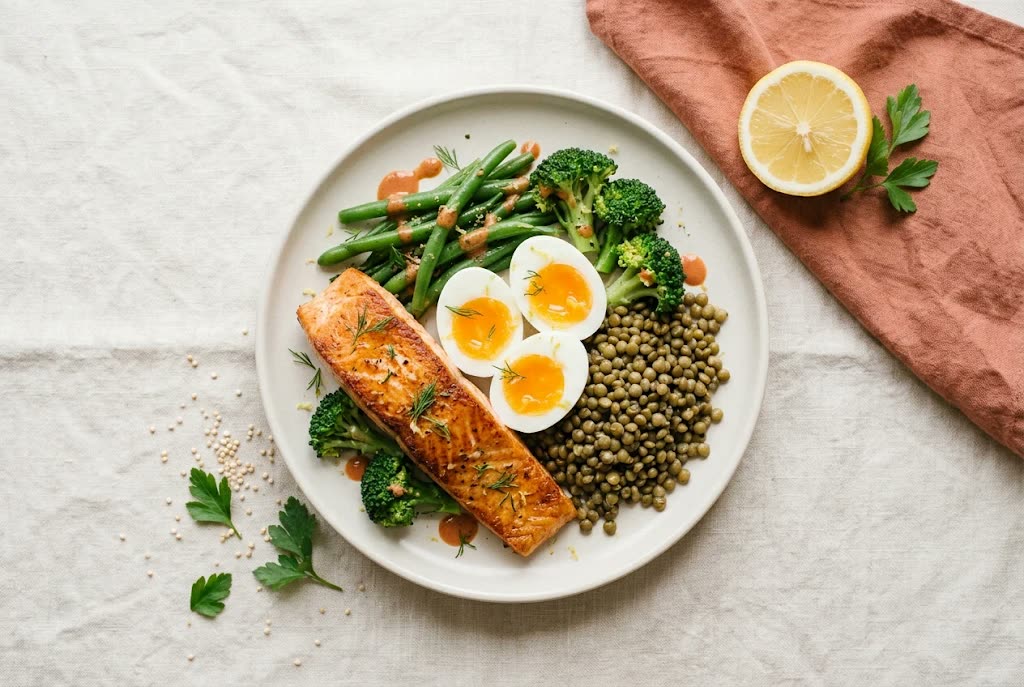
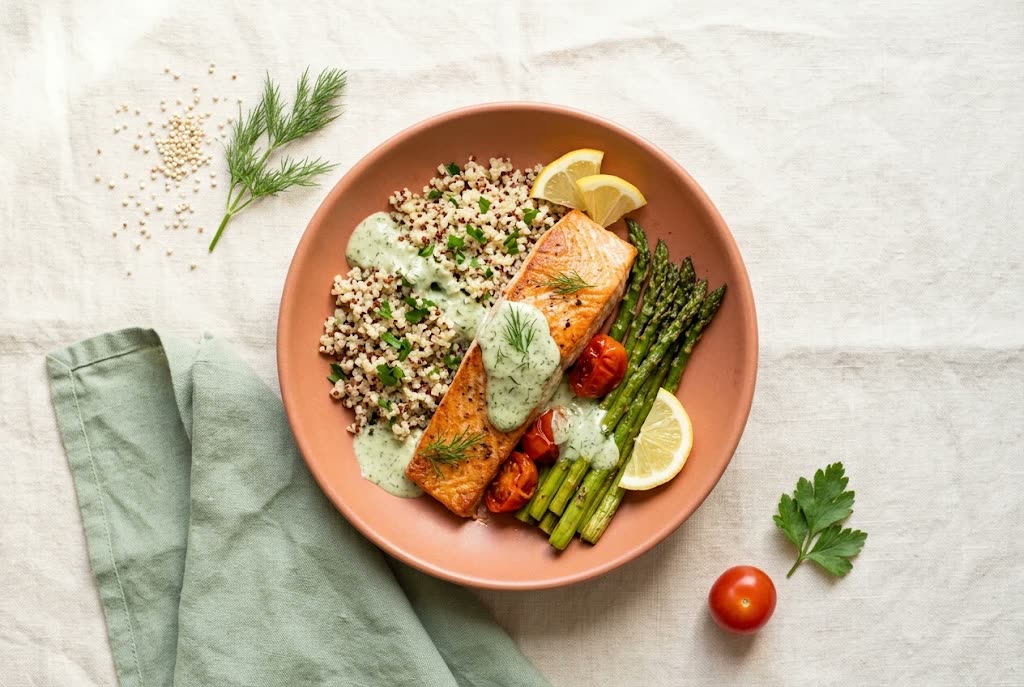
Anti-Inflammatory PCOS Meal Plan: A Free 7-Day Plan
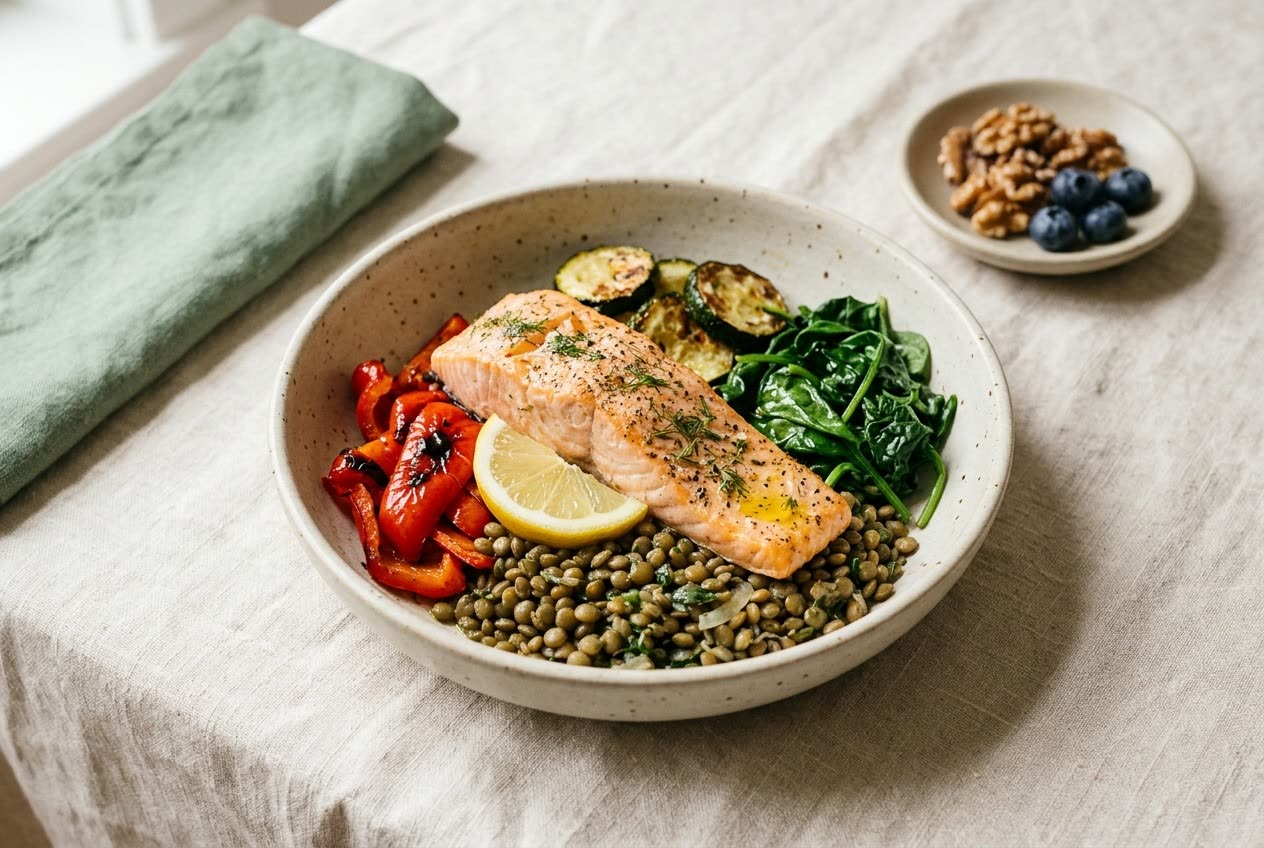
Many women with PCOS have mild, long-term inflammation, and it is linked to insulin resistance and higher androgens. You can't feel it, but the way you eat can push it in the right direction. Here is what the research shows, and a full week of meals to start with.
Key takeaways
- CRP, a marker of inflammation, is about twice as high on average in PCOS
- Eat oily fish, legumes, vegetables, berries, nuts and olive oil more often
- Keep protein at every meal: this plan gives 104 to 119 g a day
- The evidence is promising but early; no one diet is proven best for PCOS
Want an anti-inflammatory week set to your own calories and the foods you like? Get a personalised plan with recipes and a grocery list.
Contents
Is PCOS inflammatory?
Often, yes. A review of 31 studies found that C-reactive protein (CRP), a blood marker of inflammation, was on average 96% higher in women with PCOS than in women without it, and the difference held even when body weight was taken into account.1 This is mild, long-term ("low-grade") inflammation, not the kind you feel. It is linked with insulin resistance, and both can feed higher androgen levels.
Not every woman with PCOS has raised markers, and the same review found no clear difference in two other markers (IL-6 and TNF-α). But eating in a way that keeps inflammation down overlaps almost completely with eating well for PCOS anyway.
Does an anti-inflammatory diet help PCOS?
The evidence is promising but early, so here it is plainly:
- One 12-week study put 75 women with PCOS and overweight on an anti-inflammatory, lower-calorie diet with exercise. CRP fell, 63% regained regular cycles and 12% became pregnant.2 But there was no comparison group, and the women also lost about 7% of their weight, so we can't tell how much was the diet itself.
- A study of 112 women with PCOS found they ate less extra-virgin olive oil, legumes, fish and nuts than 112 women without PCOS. Women who followed a Mediterranean diet less closely had higher testosterone.3 This shows a link, not cause and effect.
- Omega-3 supplements, the fats found in oily fish, improved insulin resistance, cholesterol and triglycerides across 9 trials in women with PCOS.4 These were supplements, not food, but oily fish is the food source of the same fats.
The 2023 international PCOS guideline does not recommend one specific diet over another.5 What it supports is a healthy, sustainable way of eating you can keep up, and a Mediterranean-style, anti-inflammatory pattern fits that well.
The 7-day anti-inflammatory plan
Each day has protein at every meal, plenty of vegetables, a slow carb and healthy fats. Figures are estimates from typical USDA food values and will vary with brands and portions. Meat and fish weights are raw.
| Day | Breakfast | Lunch | Dinner | Snack | kcal | Protein |
|---|---|---|---|---|---|---|
| Monday | Tofu scramble with spinach and peppers, 1 slice whole grain toast | 120 g chicken, lentil, spinach and roasted vegetable salad, olive oil dressing | 130 g baked salmon, 150 g sweet potato, broccoli | Apple + 15 g almonds | 1,545 | 117 g |
| Tuesday | Overnight oats with fortified soy milk, chia, hemp seeds and blueberries | 90 g sardines, chickpea, tomato and cucumber salad with lemon | Chicken stir-fry with turmeric, ginger and vegetables, brown rice | 100 g edamame | 1,515 | 110 g |
| Wednesday | 2 eggs + egg whites scrambled with spinach, toast, a little avocado | Tempeh, quinoa and kale bowl with tahini | 200 g baked cod, roasted Mediterranean vegetables, chickpeas | Apple | 1,505 | 115 g |
| Thursday | Greek yogurt, blueberries, chia and walnuts (the week's one dairy meal) | Turkey, black bean and vegetable lettuce bowls with avocado | Prawn and vegetable curry with turmeric and ginger, brown rice | Hummus + carrots | 1,405 | 113 g |
| Friday | 2 eggs + egg whites with spinach, toast, a little avocado | 120 g chicken, white bean and leafy green salad | Crispy tofu and vegetable stir-fry with brown rice | Orange + 15 g almonds | 1,510 | 119 g |
| Saturday | Smoked salmon, 1 egg and avocado on whole grain toast | Salmon and quinoa salad with cucumber and greens | Chicken, sweet potato and pepper tray bake with olive oil | Hummus + carrots | 1,410 | 104 g |
| Sunday | Tofu scramble with spinach and peppers, 1 slice whole grain toast | Sardines on whole grain toast with a big side salad | Turkey and lentil ragù over zucchini noodles | Edamame + apple | 1,415 | 113 g |
Portions: 120 to 150 g chicken or turkey, 130 g salmon, 200 g cod, 180 g prawns, 90 g sardines, 150 to 200 g firm tofu, 120 g tempeh; 100 to 150 g cooked legumes; 100 to 120 g cooked grains or 150 g sweet potato; at least 200 g vegetables a meal; 1 to 2 teaspoons of extra-virgin olive oil per meal. Need fewer calories? Make the grain and oil portions smaller first; keep the protein and vegetables.
Foods to eat more of
- Oily fish (salmon, sardines, mackerel, trout): aim for two or more servings a week. They are the best food source of omega-3 fats.
- Beans, lentils and chickpeas: protein and fibre together, and slow to digest.
- Vegetables, especially leafy greens: half the plate at lunch and dinner.
- Berries: blueberries, raspberries and strawberries are lower in sugar than most fruit.
- Extra-virgin olive oil: your main cooking and dressing fat.
- Nuts and seeds: walnuts, almonds, chia, hemp and ground flax, a small handful at a time.
- Whole grains in small portions: oats, quinoa, brown rice and whole grain bread. See rice and PCOS and oatmeal and PCOS.
- Herbs and spices: turmeric, ginger, garlic and cinnamon make simple food taste good. There's no need for supplements.
Foods to eat less of
- Sugary drinks: soda, sweet coffees and juice. See what to drink instead of soda.
- Refined carbs: white bread, pastries, sweets and large portions of white pasta or rice.
- Processed meat: bacon, sausages, deli meats.
- Fried and ultra-processed foods: chips, fast food, packaged snacks.
- Alcohol: less is better. See PCOS and alcohol.
This plan keeps dairy to one meal a week for women who find it worsens their skin or bloating. Dairy isn't proven to cause inflammation, so add more if it suits you. Cut gluten only if you have coeliac disease or a diagnosed sensitivity.
What to buy for the week
- Protein: salmon fillets (about 250 g), 2 tins of sardines, smoked salmon (about 80 g, 1 small pack), cod (200 g), prawns (180 g), chicken breast (about 550 g), lean ground turkey (about 260 g), eggs (half a dozen), a carton of egg whites, firm tofu (2 blocks), tempeh (1 pack), a small tub of plain Greek yogurt.
- Legumes: lentils, chickpeas, black beans and white beans (tinned or dried), edamame (frozen).
- Grains: rolled oats, quinoa, brown rice, whole grain bread.
- Vegetables: spinach, kale, mixed leaves, broccoli, peppers, zucchini, cucumber, carrots, tomatoes, sweet potatoes, onions, garlic, ginger.
- Fruit: blueberries (fresh or frozen), apples, oranges, lemons, avocados.
- Pantry: extra-virgin olive oil, tahini, hummus, almonds, walnuts, chia, hemp seeds, unsweetened fortified soy milk, turmeric, cinnamon, light coconut milk, tinned tomatoes.
Want the whole list sorted by aisle with amounts for your own meals? HerMeal builds one with every plan.
Not medical advice. If you are pregnant or breastfeeding, take medication, or have a history of disordered eating, talk to your clinician before changing your diet.
Frequently asked questions
Is PCOS an inflammatory condition?▼
Does an anti-inflammatory diet help PCOS?▼
What foods are anti-inflammatory for PCOS?▼
Do I need to cut out dairy or gluten?▼
Should I take omega-3 supplements for PCOS?▼
References
- Escobar-Morreale HF et al. (2011). Circulating inflammatory markers in polycystic ovary syndrome: a systematic review and metaanalysis. Fertil Steril. PMID 21168133
- Salama AA et al. (2015). Anti-inflammatory dietary combo in overweight and obese women with polycystic ovary syndrome. N Am J Med Sci. PMID 26258078
- Barrea L et al. (2019). Adherence to the Mediterranean diet, dietary patterns and body composition in women with polycystic ovary syndrome (PCOS). Nutrients. PMID 31547562
- Yang K et al. (2018). Effectiveness of omega-3 fatty acid for polycystic ovary syndrome: a systematic review and meta-analysis. Reprod Biol Endocrinol. PMID 29580250
- Teede HJ et al. (2023). Recommendations from the 2023 international evidence-based guideline for the assessment and management of polycystic ovary syndrome. PMID 37580314
An anti-inflammatory week, built around you.
Pick the inflammation PCOS type in HerMeal and your meals lean on fish, legumes, vegetables and olive oil, set to your calories, protein and the foods you like. Free to try.
Build my free plan