Is Rice Good for PCOS? Yes — If You Pick, Portion and Pair It Right
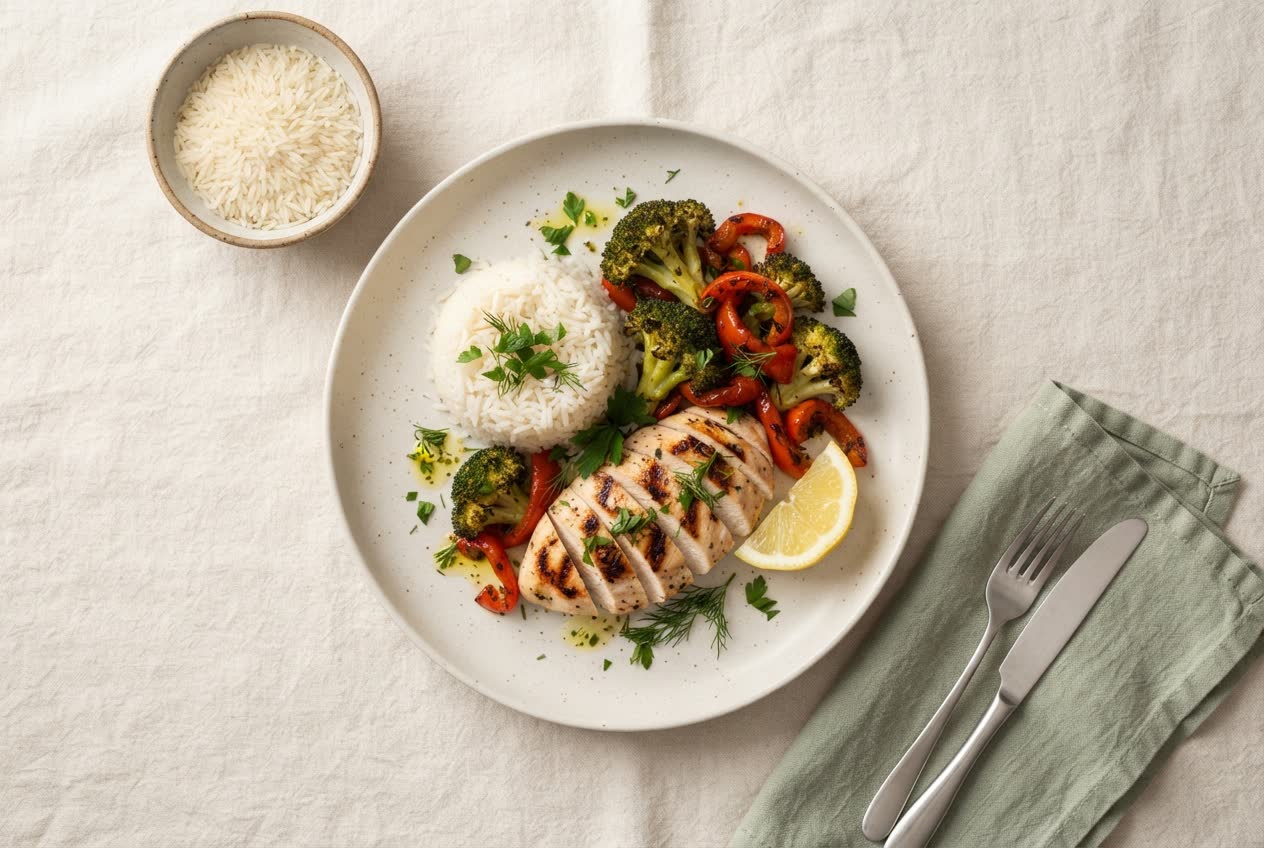
You don't have to give up rice to manage PCOS. Rice is mostly fast-digesting starch, so a big bowl on its own can spike blood sugar and insulin — the very thing PCOS makes harder to handle. But the type of rice, the size of the portion and what you eat with it change that a lot. Here's what the research says and how to keep rice on your plate.
Key takeaways
- Rice isn't off-limits with PCOS — portion, type and pairing matter more than the rice itself
- Basmati and parboiled rice raise blood sugar less than jasmine or sticky rice; brown rice adds a little fibre
- A PCOS-friendly portion is about ½ cup cooked (≈90 g, ≈110 kcal) — not a full plate
- Cooking rice, chilling it overnight and reheating it raised blood sugar less than freshly cooked rice in a small trial
- Eat your protein and vegetables first and the rice last — it softens the blood sugar rise
Contents
Why rice needs care with PCOS
Most women with PCOS have some insulin resistance. When you eat a lot of fast-digesting carbohydrate at once, blood sugar rises quickly and the body releases more insulin to bring it down — and in PCOS, high insulin pushes the ovaries to make more androgens. That's why PCOS eating focuses on steady blood sugar.
Cooked white rice is about 28 g of carbohydrate per 100 g with very little fibre, so it digests quickly. The research backs up some caution: a meta-analysis of 352,000 people found that each extra daily serving of white rice was linked to an 11% higher risk of type 2 diabetes — with the strongest link in Chinese and Japanese populations, who ate three to four servings a day.1 In Western populations, eating one or two servings a week, there was no clear link.
The lesson isn't "never eat rice". It's that large, frequent portions are the problem. In a 12-month trial of 96 women with PCOS, a low-glycaemic-index diet improved insulin sensitivity more than a conventional healthy diet, and more women on it got more regular cycles (95% vs 63% of those who finished).2 Choosing lower-GI rice in smaller portions fits that approach.
Which rice is best for PCOS?
Rice varies a lot: the international glycaemic index tables list rice in high-, medium- and low-GI versions, depending on the variety and how it's processed.4 As a general guide:
| Rice | Blood sugar effect | PCOS pick? |
|---|---|---|
| Basmati (white or brown) | Lower — long grains with more amylose, which digests more slowly | Best choice |
| Parboiled / converted rice | Lower — the parboiling process firms up the starch | Good choice |
| Brown rice | Medium — more fibre (≈1.8 g vs 0.4 g per 100 g cooked) and minerals | Good, keep portions small |
| Wild rice (technically a grass) | Medium — higher protein and fibre than white rice | Good |
| Jasmine, sticky / glutinous, arborio | Higher — soft, sticky starch digests fast | Occasional, small portions |
If you love jasmine or sushi rice, you don't have to cut it out — use the portion and pairing tricks below and keep it for some meals rather than every day.
How much rice with PCOS?
A practical PCOS portion is about ½ cup cooked rice (≈90 g) per meal — roughly 110 kcal and 25 g of carbohydrate. That's a quarter of the plate, not the base of it. Fill the rest with:
- A palm-to-hand-sized protein — chicken, fish, eggs, tofu or lentils (aim for about 25–30 g of protein per meal)
- Half a plate of non-starchy vegetables — broccoli, peppers, greens, zucchini, cauliflower
- A little healthy fat — olive oil, avocado or a few nuts
Three tricks that lower the blood sugar rise
1. Cook, chill, reheat
When cooked rice cools, some of its starch turns into resistant starch, which behaves more like fibre. In a small trial, white rice that was cooked, chilled for 24 hours at 4°C and then reheated had more resistant starch and raised blood sugar less than freshly cooked rice.5 Batch-cooking rice on a prep day and reheating it through the week does this for you. Cool cooked rice quickly and keep it in the fridge no more than 1–2 days.
2. Eat the rice last
Order matters. In a small study of people with type 2 diabetes, eating protein and vegetables before the carbohydrates led to lower blood sugar and insulin after the meal than eating the same food the other way round.6 Start with the vegetables and protein, finish with the rice.
3. Never eat it alone
Protein, fat and fibre all slow down how fast rice reaches your bloodstream. A rice bowl with salmon and edamame, or a curry with chicken and lentils over a small scoop of basmati, behaves very differently from plain rice with a sweet sauce.
Lower-carb swaps
On days you want more volume for fewer carbs, try:
- Half-and-half — mix ½ portion basmati with cauliflower rice
- Cauliflower rice — about 25 kcal and 3 g net carbs per 100 g
- Quinoa — similar carbs to rice but more protein and fibre
- Lentils or chickpeas — low GI, high fibre, and they add protein too
For more meal ideas built this way, see our PCOS dinner ideas and the low-GI PCOS meal plan.
Frequently asked questions
Is rice bad for PCOS?▼
Is brown rice or white rice better for PCOS?▼
How much rice can I eat with PCOS?▼
Is basmati rice good for PCOS?▼
Does cooling rice make it better for PCOS?▼
References
- Hu EA et al. (2012). White rice consumption and risk of type 2 diabetes: meta-analysis and systematic review. BMJ. PMID 22422870
- Marsh KA et al. (2010). Effect of a low glycemic index compared with a conventional healthy diet on polycystic ovary syndrome. Am J Clin Nutr. PMID 20484445
- Teede HJ et al. (2023). Recommendations from the 2023 International Evidence-based Guideline for the Assessment and Management of Polycystic Ovary Syndrome. J Clin Endocrinol Metab. PMID 37580314
- Atkinson FS et al. (2021). International tables of glycemic index and glycemic load values 2021: a systematic review. Am J Clin Nutr. PMID 34258626
- Sonia S et al. (2015). Effect of cooling of cooked white rice on resistant starch content and glycemic response. Asia Pac J Clin Nutr. PMID 26693746
- Shukla AP et al. (2015). Food order has a significant impact on postprandial glucose and insulin levels. Diabetes Care. PMID 26106234
Rice, portioned for you.
HerMeal builds a 5-day PCOS plan around your calorie and protein targets — grains like basmati sized as a side, paired with protein and vegetables. Free to try.
Build my free plan