What to Drink Instead of Soda with PCOS — Recipes, a Sugar Chart and a 2-Week Plan
The best everyday drinks with PCOS are water, plain or fruit-infused sparkling water, unsweetened tea and coffee. For the afternoon soda craving, an iced tea or a lime sparkler covers the fizz and the caffeine with no sugar. Below: what to drink at each point in the day, a sugar and caffeine chart, six two-minute recipes and a two-week plan to drop soda for good.
If you already know soda isn't doing your PCOS any favours (our sodas and PCOS guide explains why regular and diet soda both cause problems), the hard part is what to drink instead. This is the practical half: what to have from morning to evening, how much sugar and caffeine the common options really carry, drinks you can make in two minutes, and a two-week plan that works because something better is already in the fridge.
🔑 Key takeaways
- Water, sparkling water, unsweetened tea and coffee cover almost every drinking moment in the day, with no sugar
- A 355 ml can of cola has 39 g of sugar; a 250 ml glass of 100% orange juice about 21 g. Juice is not the healthy swap it looks like
- Coconut water is lighter than juice (about 6–10 g sugar per cup) but still not a daily drink; kombucha sugar varies by brand, so read the label
- Coming off a caffeinated soda? Keep the caffeine (tea or coffee) and drop the sugar, which avoids withdrawal headaches
- Most people find soda cravings fade within about two weeks when a drink they like is ready in the fridge
Your drinks are sorted. Now the meals.
HerMeal plans 5 days of high-protein, high-fibre PCOS meals sized to your calories, with one grocery list for the week.
Contents
What to Drink, Morning to Evening
Soda habits are usually tied to a time of day: the lunch can, the 3 pm pick-me-up, the drink with dinner. Give each of those moments its own replacement and there is nothing left for soda to fill.
| When | Drink | Why it works |
|---|---|---|
| Waking up | A glass of water, then coffee or tea | Black, or with plain milk. Skip sweetened creamers and syrups: they carry the sugar a soda would. |
| Mid-morning, at your desk | Sparkling water, plain or with citrus | Fizz and something to sip, with no sugar or sweetener. |
| The 3 pm slump | Iced black or green tea, or a lime sparkler | The classic soda hour. Tea brings a smaller caffeine lift; switch to decaf if caffeine late in the day keeps you up. |
| With meals | Water or sparkling water | Lets the food carry the flavour. A spritzer works when it's a special meal. |
| Evening | Herbal tea: spearmint, chamomile, ginger, rooibos | Caffeine-free, warm, a wind-down ritual. Spearmint has small-trial evidence in PCOS. |
| After a sweaty workout or a hot day | Water; coconut water now and then | Water is enough for most workouts. Coconut water adds potassium, with some natural sugar. |
Sugar and Caffeine, Side by Side
Approximate amounts per typical serving. Branded drinks use the maker's figures (Coca-Cola, Diet Coke, Gatorade, Red Bull); the rest are USDA averages. Brands vary, so the label on your bottle wins.
| Drink | Serving | Sugar | Caffeine |
|---|---|---|---|
| Regular cola | 355 ml can | 39 g | 34 mg |
| Diet cola | 355 ml can | 0 g | 46 mg |
| Sports drink | 591 ml bottle | 34 g | 0 |
| Energy drink | 250 ml can | 27 g | 80 mg |
| 100% orange juice | 250 ml | ~21 g | 0 |
| Coconut water | 250 ml | ~6–10 g | 0 |
| Kombucha | 1 bottle | Varies, check label | A little |
| Brewed coffee | 240 ml | 0 | ~80–100 mg |
| Black tea | 240 ml | 0 | ~47 mg |
| Green tea | 240 ml | 0 | ~30 mg |
| Herbal tea | 240 ml | 0 | 0 |
| Sparkling water (plain) | Any | 0 | 0 |
Two things stand out. Juice and sports drinks sit right next to soda: "100% juice" means no sugar was added, not that there's little sugar in it. And a diet cola has more caffeine than the regular one, which is why the afternoon diet-soda habit can be as much about caffeine as taste.
Six Drinks to Make in Two Minutes
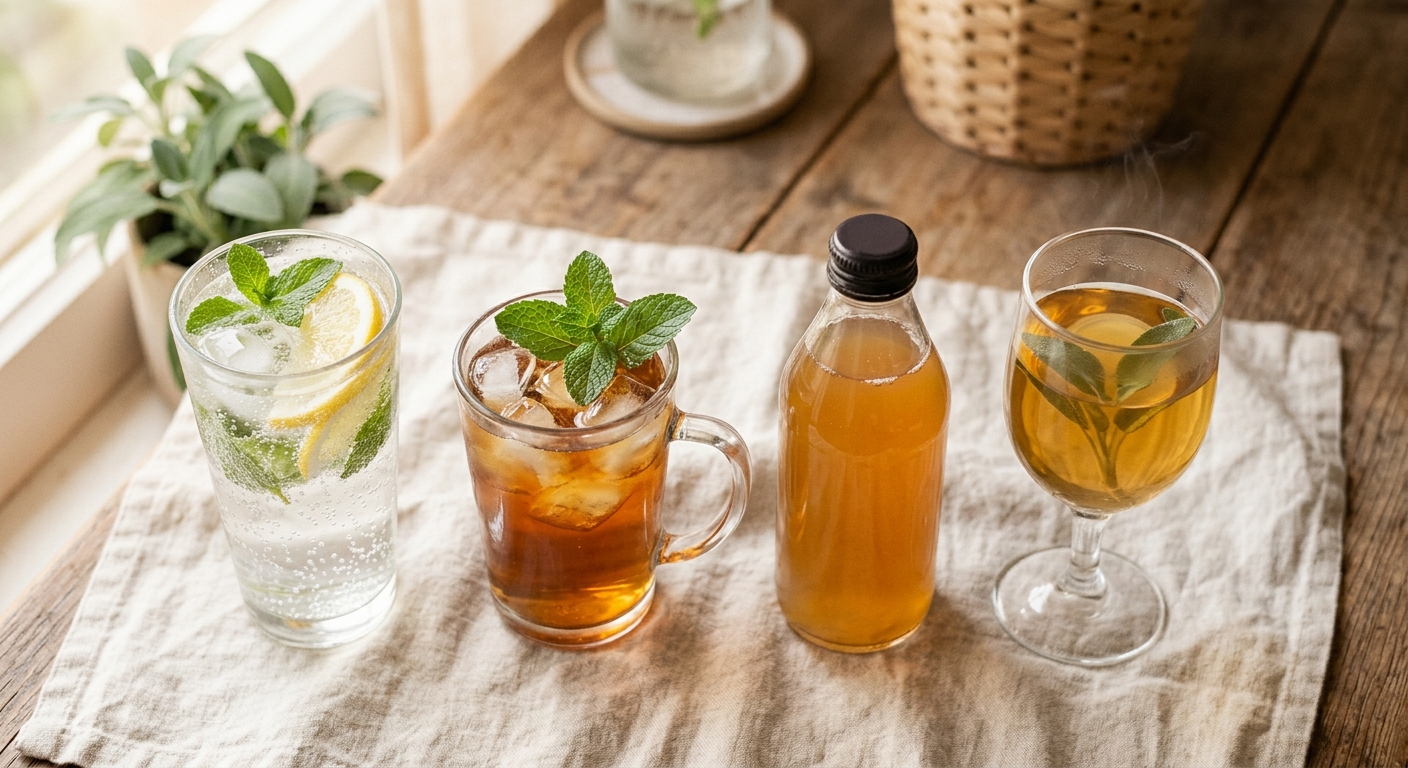
"Drink more water" rarely survives a craving. Having one of these ready in the fridge does. None has added sugar; the fruit adds a gram or two at most, except where noted.
1. Spearmint iced tea
2 spearmint tea bags (or 2 heaped tsp dried spearmint) · 500 ml just-boiled water · lemon slices · ice
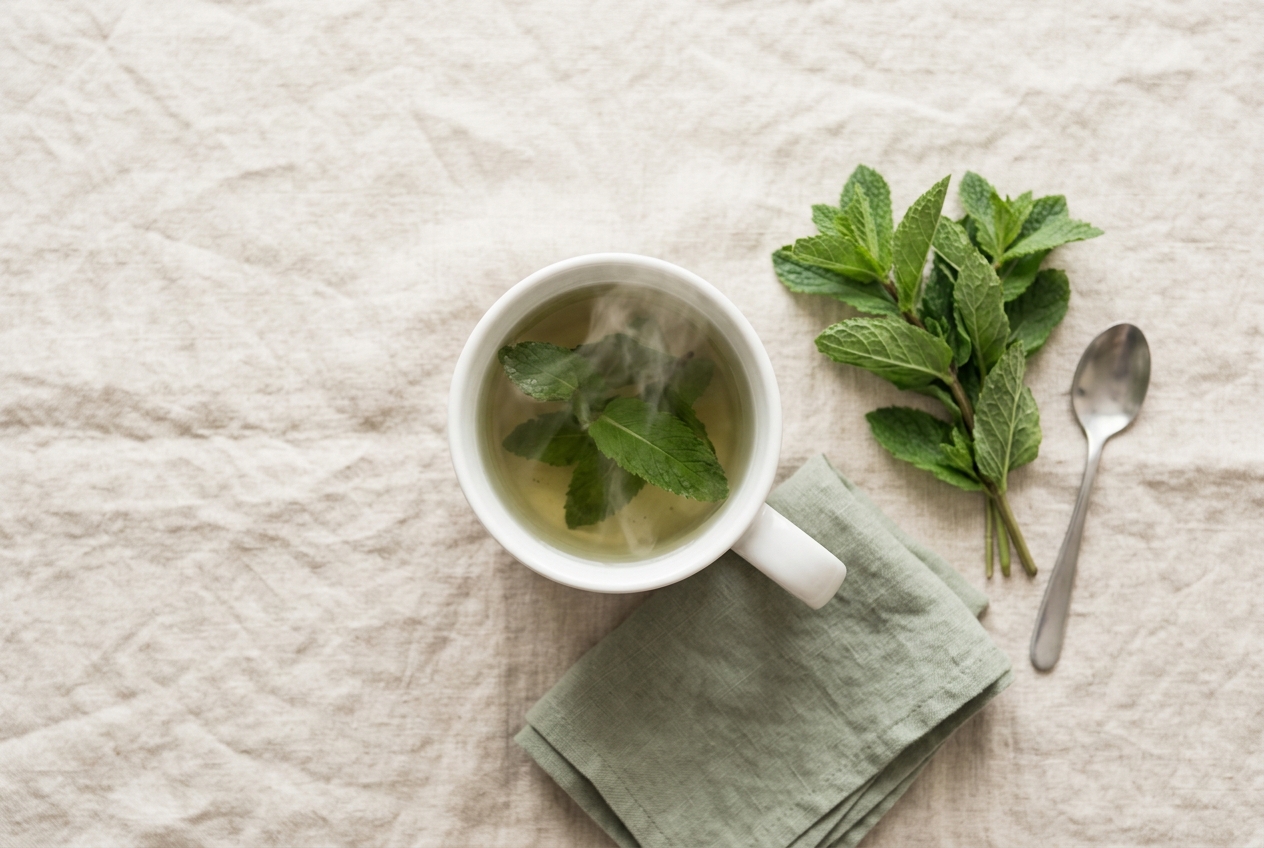
Steep 5–7 minutes, remove the bags, cool, then keep in the fridge for up to 3 days. Serve over ice with lemon. Two cups a day is the amount used in the small PCOS trials; see our spearmint tea guide, including the caution if you're pregnant or trying to conceive.
2. Cucumber-lime sparkler
4 thin cucumber slices · juice of ½ lime · 330 ml cold sparkling water · a few mint leaves · ice
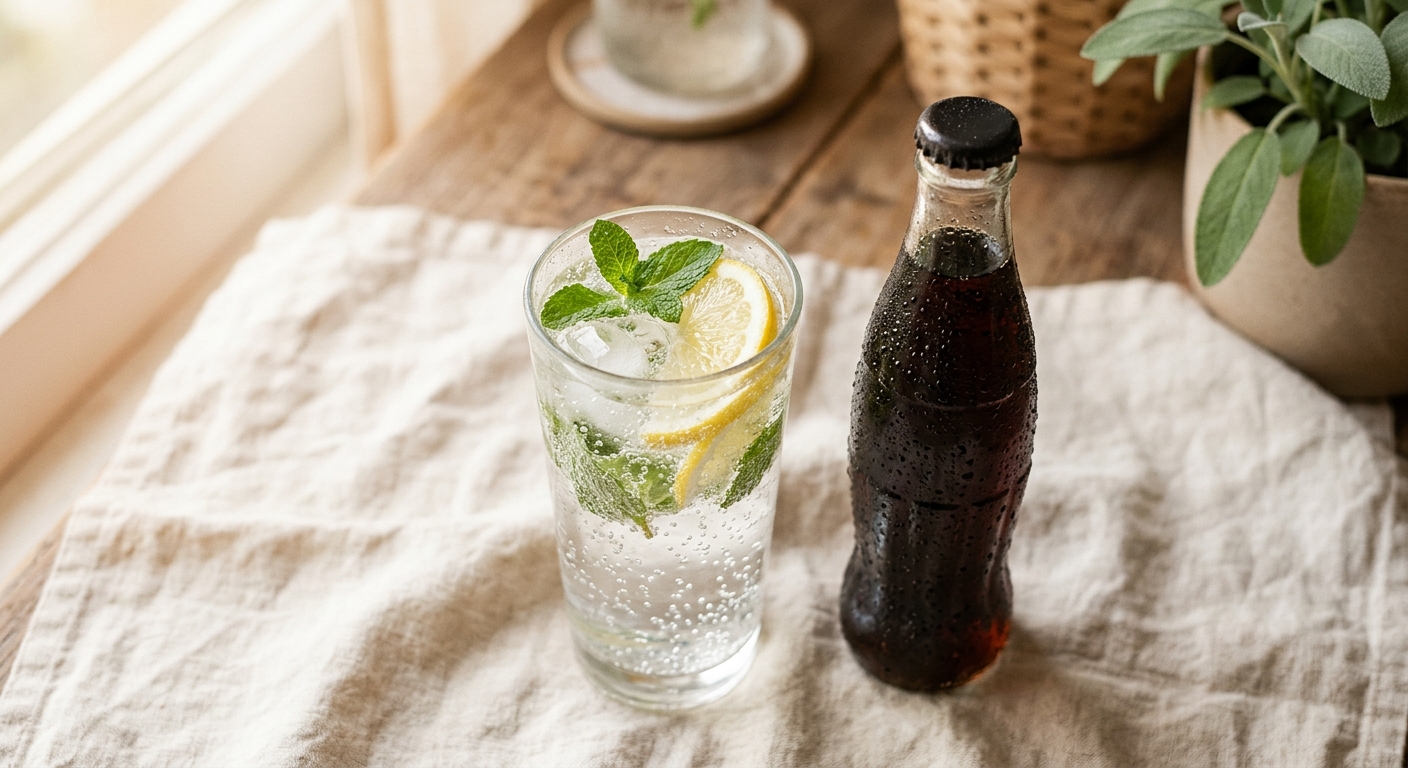
Lightly crush the mint and cucumber in the glass, add lime and ice, top up with sparkling water. The closest thing to a soda that isn't one.
3. Ginger-lemon fizz
4 thin slices fresh ginger · 100 ml hot water · juice of ½ lemon · 250 ml cold sparkling water
Steep the ginger in hot water for 10 minutes, let it cool (or make a jar of it ahead), then add lemon and top up with sparkling water. Spicy enough to replace a ginger ale.
4. Berry-mint ice cubes
A handful of blueberries or raspberries · mint leaves · water · an ice-cube tray
Drop 2–3 berries and a mint leaf in each cube, fill with water and freeze. Three or four cubes turn a plain glass of sparkling water pink and slightly fruity as they melt.
5. Cold-brew green tea
2 green tea bags · 500 ml cold water · lemon
Leave the bags in cold water in the fridge for 6–8 hours, then remove them. Cold brewing makes it smoother and less bitter than chilled hot tea. About 30 mg of caffeine a cup: a gentle 3 pm lift.
6. Citrus spritzer
2 tbsp (30 ml) fresh orange, blood orange or pomegranate juice · 300 ml cold sparkling water · ice
For when you want something that tastes like a treat. Two tablespoons of juice adds roughly 2–4 g of sugar, compared with 39 g in a can of cola. Keep it to the two tablespoons: a bigger pour is just juice.
A Two-Week Plan to Drop Soda
Preparation beats willpower. The aim is to make the alternative easier to reach than the soda.
Day 1: stock the fridge
Buy a case of sparkling water, lemons or limes, a box of tea (black or green, plus spearmint or another herbal), and make one recipe from above. Give these drinks their own shelf at eye level. Don't keep soda in the house for the two weeks.
Days 2–4: swap like for like
Match each soda moment with its replacement from the morning-to-evening table. If your soda had caffeine, keep the caffeine: an iced tea or coffee at the same time stops the headaches that come with quitting caffeine abruptly. When a craving hits, drink a sparkling water first, then decide.
Days 5–9: the hard stretch
Cravings are usually strongest in the first week. Expect them at your old soda times, and have the drink ready before that time comes. Taste starts to adjust: fruit and plain yogurt begin to taste sweeter.
Days 10–14: notice the change
Many people find the pull of soda drops sharply around now, and a sip of an old favourite tastes surprisingly sweet. Keep going until day 14.
After day 14: decide on purpose
If you still want soda sometimes, make it a choice rather than a default: a small glass with a meal, not a daily can. Most people who get through two weeks find they don't miss the habit.
Reading a Drink Label in 10 Seconds
- Check the serving size first. A bottle is often two servings, so double the sugar on the label.
- Look at sugars, then added sugars. US labels show "Includes Xg added sugars". Canadian labels list total sugars, so check the ingredients for sugar, syrups, honey or juice concentrate.
- "No added sugar" isn't "no sugar". Juice and coconut water carry their own natural sugar.
- "Zero sugar" means sweeteners. Sucralose, aspartame, acesulfame potassium, stevia, monk fruit, erythritol and allulose. Our sodas guide covers what they do.
- Kombucha: look for under about 5 g of sugar per serving.
Eating Out, Parties and the Bar
- Sparkling water with lemon or lime is available almost everywhere. Ask for it in a wine or highball glass and nobody asks questions.
- Unsweetened iced tea: ask for unsweetened specifically; many US restaurants default to sweet tea.
- Soda water with a splash of fresh juice: ask the bar for "a splash, not a pour".
- Espresso, Americano or hot herbal tea after a meal, instead of a dessert drink.
- Mocktails are often mostly syrup and juice. Ask what's in them, or ask for one made with soda water and fresh citrus.
Ordering a soda at a restaurant is usually habit more than preference. Choose a replacement once, and it becomes the new habit.
A PCOS meal plan built around your whole day
HerMeal builds personalised PCOS and PMOS meal plans around your calories, protein and the foods you like, with the grocery list done for you.
Get your free planFrequently asked questions
What is the best drink for PCOS? ▼
How much caffeine is OK with PCOS? ▼
Is coconut water good for PCOS? ▼
Is orange juice a good swap for soda? ▼
What can I drink at a restaurant instead of soda? ▼
How long does it take to stop craving soda? ▼