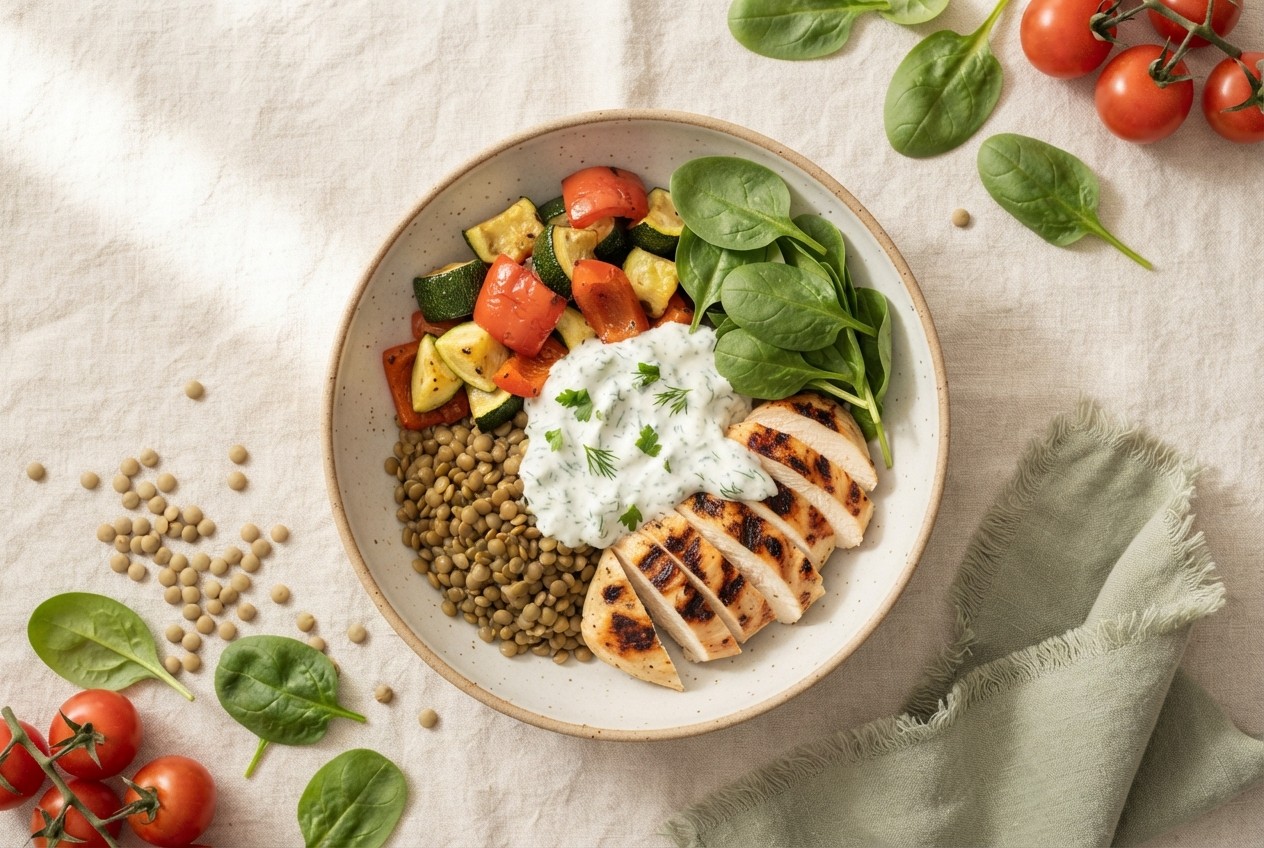
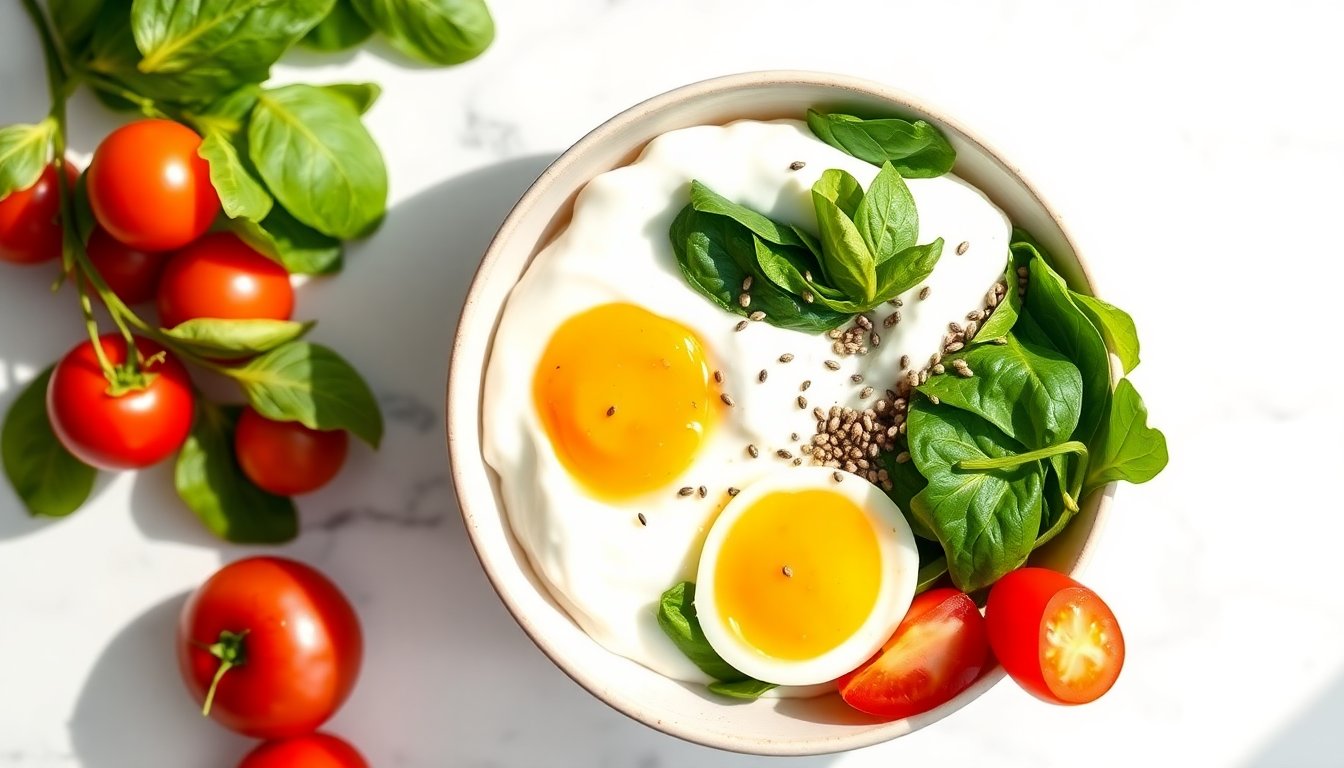
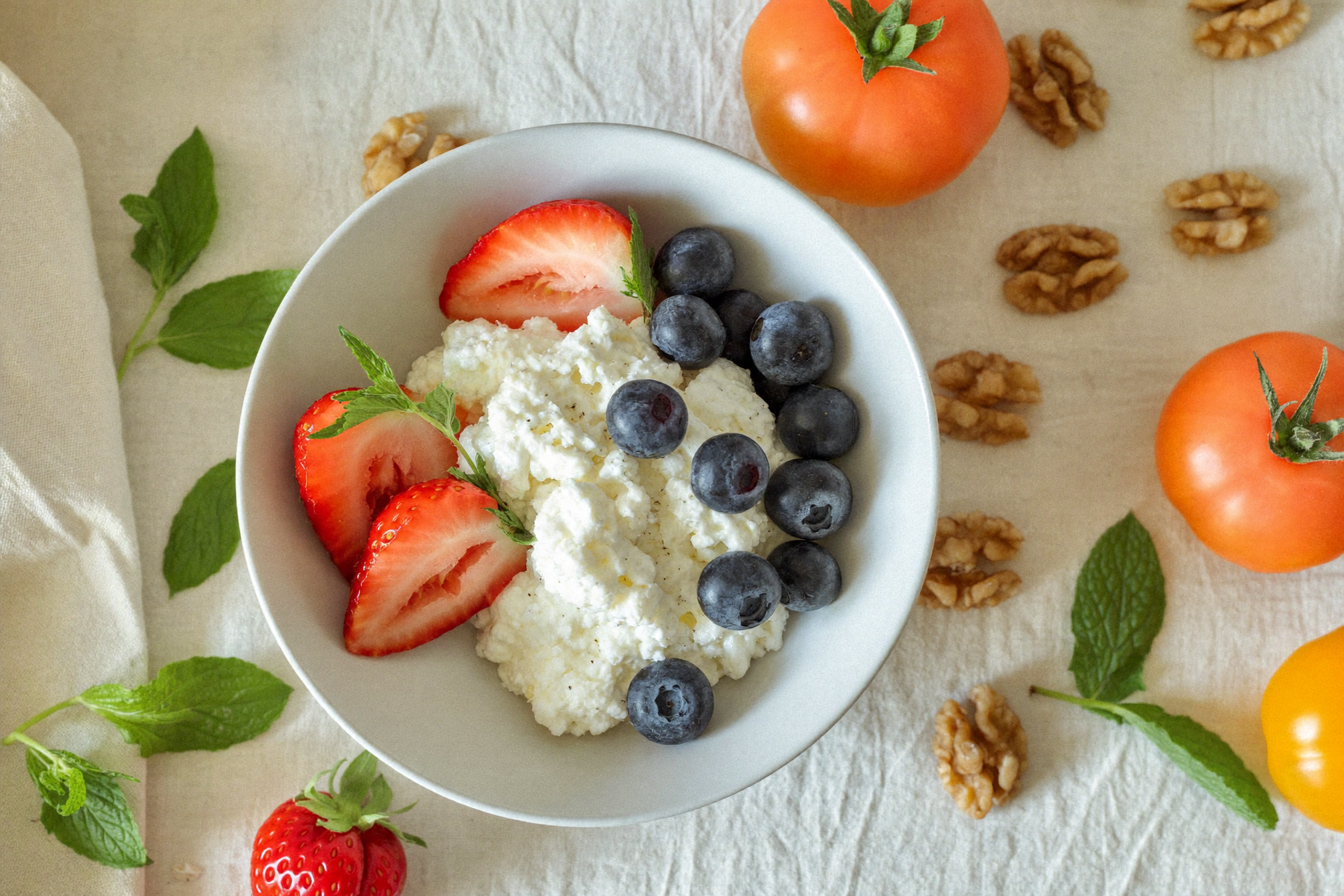
Are Eggs Good for PCOS? Yes — Here's How Many
Yes — eggs are one of the most useful foods for PCOS. They're cheap, quick, almost carb-free and full of protein, and the old worry about cholesterol hasn't held up in the large studies. There's no trial that tests eggs in PCOS specifically, so here's what the wider evidence actually says, how many to eat, and how to build an egg meal that keeps you full until lunch.
Key takeaways
- One large egg has about 72 kcal, 6 g protein, 5 g fat and almost no carbohydrate — it barely moves blood sugar
- Up to one egg a day was not linked to heart disease in three large Harvard cohorts and a meta-analysis of 1.7 million people
- In women with overweight, an egg breakfast kept them fuller and they ate less for the rest of the day than after a bagel breakfast of the same calories
- Two eggs alone give only ~13 g protein — pair them with egg whites, Greek yogurt, cottage cheese or lentils to reach 25–30 g a meal
- No study has tested eggs in PCOS directly — the PCOS guideline recommends no single diet, so eggs are a tool, not a treatment
Contents
Why eggs work for PCOS
Most women with PCOS have some degree of insulin resistance, which is why food advice for PCOS centres on keeping blood sugar steady and getting enough protein. Eggs do both. A large egg (about 50 g) gives you:
- ~72 kcal — low for what it delivers
- ~6 g protein — complete protein, with every essential amino acid
- ~5 g fat — which slows digestion and helps you feel full
- Under 1 g carbohydrate — so almost no direct effect on blood sugar
- Choline, vitamin D, B12 and selenium — mostly in the yolk, so don't throw it away
The fullness effect has been tested. In a randomised crossover study, 30 women with overweight or obesity ate either an egg breakfast or a bagel breakfast with the same calories and weight. After the eggs they felt fuller, ate significantly less at lunch, and their intake stayed lower for the rest of the day and the next 36 hours.1 It was a small, short study — but it fits the wider evidence that protein-rich meals improve appetite control.2
What about cholesterol?
A large egg has about 186 mg of cholesterol, all in the yolk, which is why eggs were rationed for decades. The large studies since then are reassuring. Harvard researchers followed over 215,000 women and men for up to 32 years: eating at least one egg a day was not linked to heart disease or stroke once other habits were accounted for. Their meta-analysis of 1.7 million people found the same — one egg a day made no difference to cardiovascular risk.4
Type 2 diabetes is the more relevant question for PCOS, and here the picture is mixed. The same team's meta-analysis of 16 cohorts found no overall link between moderate egg eating and diabetes. US studies did show a higher risk, while European and Asian studies did not — likely because, in the US, eggs often come with bacon, sausage and white toast.5 The practical lesson: what you eat with your eggs matters more than the eggs.
How many eggs a day with PCOS?
For most women with PCOS, 1–2 eggs a day, or around 7–12 a week, sits comfortably within the evidence. Some days you might have three in a frittata and none the next — the weekly average is what matters.
Variety matters too. Eggs every morning crowd out other protein sources — fish with omega-3s, legumes with fibre, Greek yogurt with probiotics. Rotating them across the week gives you a wider spread of nutrients and stops breakfast getting boring.
Getting enough protein from an egg meal
Here's the catch most egg recipes miss. Research suggests about 25–30 g of protein per meal for appetite and weight management.2 Two eggs give you about 13 g — half of that. Eating four or five whole eggs gets there but adds up to 350 kcal of mostly fat. A better way is two eggs plus a lean protein booster:
| Egg meal | Protein | Calories |
|---|---|---|
| 2 large eggs | 13 g | 144 kcal |
| 4 large eggs | 25 g | 288 kcal |
| 2 eggs + 3 egg whites (100 g) | 24 g | 196 kcal |
| 2 eggs + 150 g 0% Greek yogurt on the side | 28 g | 230 kcal |
| 2 eggs + 100 g cottage cheese, scrambled together | 24 g | 240 kcal |
| 2 eggs + 100 g cooked lentils | 22 g | 260 kcal |
Values are approximate. Add vegetables to any of them for fibre and volume — spinach, mushrooms, peppers and tomatoes all cook well with eggs.
PCOS egg meal ideas
- Veggie frittata — 2 eggs + 3 egg whites with spinach, mushrooms and a little feta. Make a tray on Sunday and slice it for three breakfasts
- Shakshuka — eggs poached in a spiced tomato and pepper sauce, with a spoon of Greek yogurt on top instead of bread
- Cottage cheese scramble — stir cottage cheese into eggs as they set for a creamier scramble and double the protein
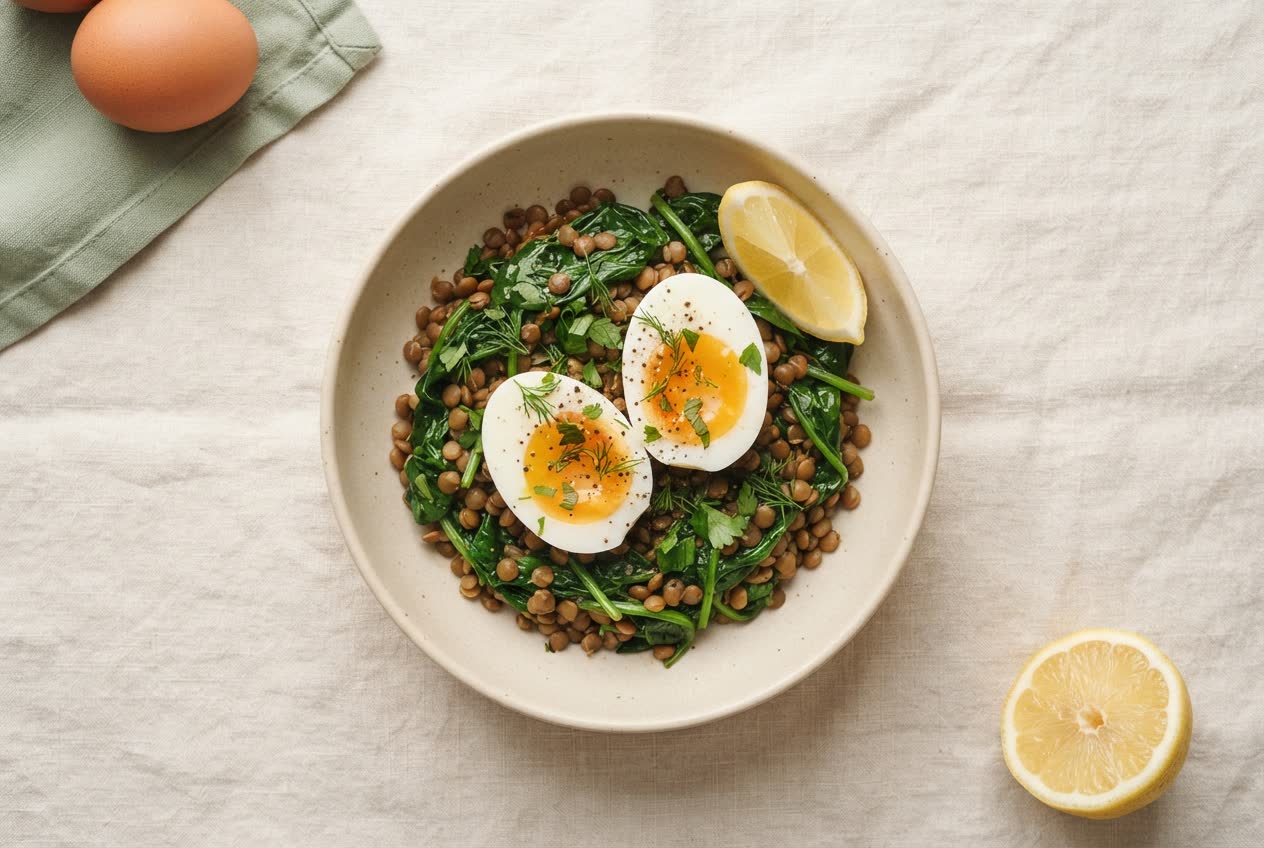
- Eggs over lentils and greens — two soft-boiled eggs on warm lentils with sautéed spinach and lemon
- Egg muffins — eggs, whites and chopped vegetables baked in a muffin tin; they keep 3 days in the fridge
- Boiled-egg salad — eggs, chickpeas, cucumber, tomato and herbs with an olive oil and lemon dressing for lunch
Skip the usual sides that undo the benefit: white toast, hash browns, sweetened ketchup, and processed meats like bacon and sausage. For more ideas, see our high-protein PCOS breakfasts.
Frequently asked questions
Are eggs good for PCOS?▼
How many eggs can I eat a day with PCOS?▼
Do eggs raise insulin?▼
Should I eat the yolk or just egg whites?▼
Are eggs enough protein for a PCOS breakfast?▼
References
- Vander Wal JS et al. (2005). Short-term effect of eggs on satiety in overweight and obese subjects. J Am Coll Nutr. PMID 16373948
- Leidy HJ et al. (2015). The role of protein in weight loss and maintenance. Am J Clin Nutr. PMID 25926512
- Teede HJ et al. (2023). Recommendations from the 2023 International Evidence-based Guideline for the Assessment and Management of Polycystic Ovary Syndrome. J Clin Endocrinol Metab. PMID 37580314
- Drouin-Chartier JP et al. (2020). Egg consumption and risk of cardiovascular disease: three large prospective US cohort studies, systematic review, and updated meta-analysis. BMJ. PMID 32132002
- Drouin-Chartier JP et al. (2020). Egg consumption and risk of type 2 diabetes. Am J Clin Nutr. PMID 32453379
Eggs, done differently every time.
HerMeal builds eggs into your week as frittatas, shakshuka, egg muffins and more — paired with the protein boosters that get each meal to your target. Personalised to your PCOS type. Free to try.
Build my free plan