PCOS in the UAE:
Eating for Insulin Resistance
With Gulf Foods
Most PCOS nutrition advice is written around Western supermarkets — chicken breast, quinoa, and Greek yogurt. If your kitchen runs on machboos, karak chai, and fresh khubz, that advice can feel completely disconnected from your actual life. This guide adapts the core PCOS nutritional framework — high protein, low GI, anti-inflammatory — to the foods and eating culture of the UAE and Gulf region.
Key takeaways
- PCOS prevalence in the Middle East is estimated at 18–20% — higher than the global average of 10%
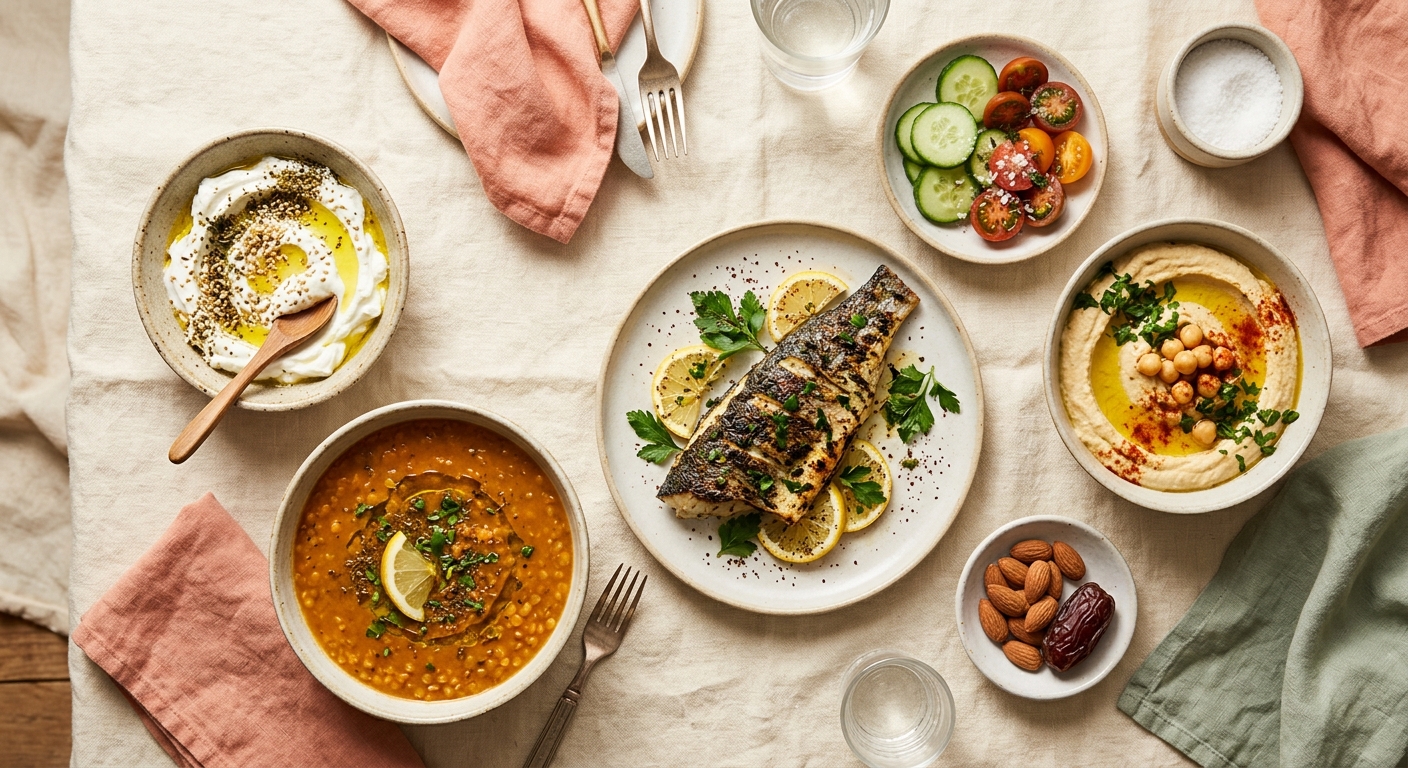
- Labneh, lentils, hummus, grilled fish, and freekeh are all genuinely excellent PCOS foods already in Gulf cuisine
- White rice, karak with sugar, and traditional sweets are the highest-insulin-spiking parts of the Gulf diet
- One to two dates per day alongside protein is manageable — five or six at once is not
- Ramadan fasting can benefit PCOS when iftar is structured correctly — protein first, then carbohydrates
- Everything you need for a PCOS-optimised diet is available at Carrefour, Lulu, and Spinneys
In this guide
PCOS in the UAE and Gulf region
PCOS affects an estimated 18–20% of women of reproductive age in the Middle East — nearly double the global average. Several factors specific to the region likely contribute: high rates of vitamin D deficiency (paradoxically common in sun-rich climates due to indoor lifestyles and covered dress), dietary patterns high in refined carbohydrates and sugar, and genetic predisposition in Arab and South Asian populations.
The condition is the same regardless of where you live. What differs is the food environment you're managing it in. The Gulf diet has real strengths for PCOS — labneh, legumes, olive oil, grilled fish, and spices like turmeric and cinnamon are genuinely useful foods. The challenge lies in the high-GI staples (white rice, white bread) and the sweetened drinks and desserts that accompany most meals.
The good news is that adapting the Gulf diet for PCOS does not require abandoning your food culture. It requires rebalancing the proportions — more protein and vegetables, smaller rice portions, swapping sweetened beverages — while keeping the fundamentals of Gulf cuisine intact.
Gulf foods that genuinely help PCOS
These are already common in UAE households and restaurants — they just need to be prioritised.
| Food | Why it helps PCOS | Status |
|---|---|---|
| Labneh | 8–10g protein per 100g, probiotic from fermentation, lower lactose than milk | Eat freely |
| Lentils (adas) | Low GI (~30), 9g protein and 8g fibre per 100g cooked, stabilises blood sugar | Eat freely |
| Hummus | Chickpeas + tahini + olive oil — protein, healthy fat, fibre in one dish | Eat freely |
| Grilled hammour / sea bass | 19–24g protein per 100g, omega-3 fatty acids reduce inflammation | Eat freely |
| Eggs | 6g protein per egg, no GI impact, rich in choline and fat-soluble vitamins | Eat freely |
| Freekeh | GI ~43 vs white rice GI ~72, higher protein and fibre than rice or couscous | Eat freely |
| Chickpeas / ful medames | Low GI, high fibre, plant protein — one of the best PCOS carbohydrate sources | Eat freely |
| Olive oil | Anti-inflammatory monounsaturated fats, supports insulin sensitivity | Eat freely |
| Grilled chicken (shish tawook) | 30g+ protein per serving, no GI impact when grilled without sugar-based marinades | Eat freely |
| Greek yogurt / laban | 17–20g protein per 200g, probiotic cultures, lower GI than sweetened dairy | Eat freely |
| Avocado | Healthy monounsaturated fat, fibre, potassium — widely available in UAE | Eat freely |
| Cinnamon / cardamom / turmeric | Cinnamon improves insulin sensitivity; turmeric reduces inflammation; cardamom in chai is beneficial | Eat freely |
| Halloumi | ~15g protein per 80g serving — high in salt, but a good protein source in moderation | Moderate |
| Dates (1–2/day) | High fibre buffers sugar absorption; 1–2 alongside protein is manageable | Moderate |
| Basmati rice (small portion) | Lower GI than white short-grain rice; manageable in 60–80g cooked portions | Moderate |
The protein-first rule applies everywhere. Whether you are eating at a Lebanese restaurant, a shawarma stall, or at home — always lead with protein. Eating grilled chicken or fish before the rice component of any meal dramatically reduces the insulin response to the carbohydrates that follow.
What to limit in the Gulf diet
The following are not forbidden — but they are the main drivers of insulin resistance in a typical Gulf diet and need to be consciously reduced.
| Food | The problem for PCOS | Status |
|---|---|---|
| Karak chai with sugar | 25–40g sugar per cup — equivalent to a soft drink, spikes insulin significantly | Limit |
| White rice (large portions) | GI ~72, a large serving (200g+) causes significant insulin spike | Reduce portion |
| Khubz / white flatbread | High GI, typically eaten in large quantities alongside already high-carb dishes | Reduce |
| Dates in large quantities (5–6+) | 18g sugar per Medjool date — eating several at once is a significant glucose spike | Max 1–2/day |
| Kunafa, luqaimat, baklava | High refined sugar and white flour — direct androgen and insulin drivers | Limit significantly |
| Jallab, vimto, sweetened laban | Pure liquid sugar — worst possible form for insulin resistance | Avoid |
| Deep-fried samboosa / spring rolls | Refined flour + high-temperature seed oils — inflammatory | Limit |
| Harees | Wheat and meat porridge with high GI from extended cooking that breaks down starch | Small portions only |
| Biryani (restaurant-sized portions) | Typically 200–300g white rice with high-fat cooking — calorie and GI problem | Halve the portion |
How to adapt popular Gulf dishes
Machboos / kabsa
The dish itself is built around spiced rice — which is the part to adjust. Keep the protein (chicken, fish, or lamb) and double the portion size. Reduce the rice serving to approximately 80g cooked (a small side scoop rather than a full base). Add a fresh salad or fattoush alongside to increase fibre and volume. The spices (saffron, turmeric, cardamom, black lime) are genuinely beneficial for PCOS and should be kept.
Shawarma
Order chicken or lamb shawarma without the bread — or in a half wrap if bread-free feels too extreme. Ask for extra salad, pickles, and turnip. The tahini sauce is fine. The garlic sauce (toum) is fine. The problem is the large white flatbread, not the filling. A plate of shawarma meat with hummus and salad is an excellent PCOS meal.
Fattoush
Remove or reduce the croutons (fried bread pieces) — they add GI with minimal nutritional value. The rest of fattoush — cucumber, tomato, radish, fresh herbs, sumac dressing — is genuinely good. Add a protein alongside (grilled halloumi, chicken, or a boiled egg) to make it a complete PCOS meal.
Lentil soup (shorbat adas)
No modification needed — this is already one of the best PCOS meals available. Red lentil soup with cumin and lemon provides protein, fibre, and iron in a form that has a low glycaemic response. Eat it without the bread, or with a very small piece. A bowl alongside a portion of labneh and vegetables is a complete and excellent PCOS meal.
Karak chai
Request it without sugar, or with a single half-teaspoon rather than the standard four to six. The spices themselves (cardamom, ginger, cinnamon) have mild insulin-sensitising properties — it is only the sugar that creates the problem. Karak made with unsweetened evaporated milk and no added sugar is a genuinely good PCOS-friendly drink.
5-day PCOS meal plan with Gulf foods
This plan targets 130g+ protein daily, under 50g net carbs, and 25g+ fibre — built entirely from foods available across UAE supermarkets and restaurants. Adjust portions to your body weight and calorie needs.
Get a plan personalised to you
This template is a starting point. HerMeal generates a complete 5-day PCOS meal plan built around your body weight, dietary restrictions, fasting window, and macro targets — free in minutes.
Build your free meal planEating for PCOS during Ramadan
Ramadan fasting can actually benefit PCOS. Intermittent fasting has research support for improving insulin sensitivity, reducing androgen levels, and supporting weight management — all directly relevant to PCOS. The 16–18 hour fasting window of Ramadan is equivalent to an aggressive intermittent fasting protocol.
The challenge is iftar. Breaking a long fast with dates, juice, harira or lentil soup, bread, followed by a full meal with rice, is a large glucose load delivered rapidly to a system that has been fasting all day. This is the situation that creates the biggest insulin spike of the day.
A PCOS-friendly iftar structure
- Break the fast: 1–2 dates and water. This is Sunnah — and also nutritionally correct. A small amount of natural sugar with fibre is much better than juice.
- First course: Protein-led — lentil soup, eggs, labneh, grilled chicken, or a small piece of fish. Eat this slowly before the main course.
- Main meal: Protein first, then vegetables, then a small portion of rice or bread. Not the reverse.
- Avoid: Jallab, vimto, sweetened laban, or any fruit juice at iftar. Water or unsweetened laban are the right drinks.
- Sweets: If eating kunafa or luqaimat, eat them after a full protein-led meal rather than as the first thing consumed. The protein buffer significantly reduces the insulin response to the subsequent sugar.
Suhoor for PCOS
Suhoor should be high in protein and fat to sustain blood sugar through the fasting hours and reduce hunger and cravings by mid-day. Ideal suhoor: eggs (3–4), labneh, avocado, a handful of nuts, and water. This combination provides sustained energy without a glucose spike that would leave you crashing by 10am.
What to avoid at suhoor: large amounts of rice, bread, dates, or sweet items. These cause a glucose spike followed by a crash, leaving you hungrier and more fatigued during the fasting hours.
Where to buy PCOS-friendly food in UAE
Supermarkets
- Carrefour / Lulu Hypermarket: Best for staples — Greek yogurt, eggs, lentils, chickpeas, chicken, frozen fish, labneh, avocado, nuts. Widest selection, lowest prices.
- Spinneys / Waitrose (Abu Dhabi): Better for specialty items — full-fat plain cottage cheese, freekeh, quinoa, imported nut butters, ground flaxseed.
- Organic Foods & Café / Ripe Market: For organic produce, pasture-raised eggs, and premium items.
Supplements
- iHerb (UAE delivery, 3–5 days): Best prices for inositol (Jarrow Formulas Myo-Inositol), magnesium glycinate (Doctor's Best, Pure Encapsulations), and vitamin D3+K2.
- Life Pharmacy / Boots UAE: In-store options — more limited but convenient for vitamin D, magnesium, and omega-3.
- Holland & Barrett: Locations in Dubai Mall, Mall of the Emirates, and major Abu Dhabi malls. Stocks most relevant PCOS supplements.
Frequently asked questions
Get your personalised PCOS meal plan
HerMeal generates a complete 5-day PCOS meal plan adapted to your dietary preferences, fasting window, protein target, and macro goals — free in minutes.
Start free