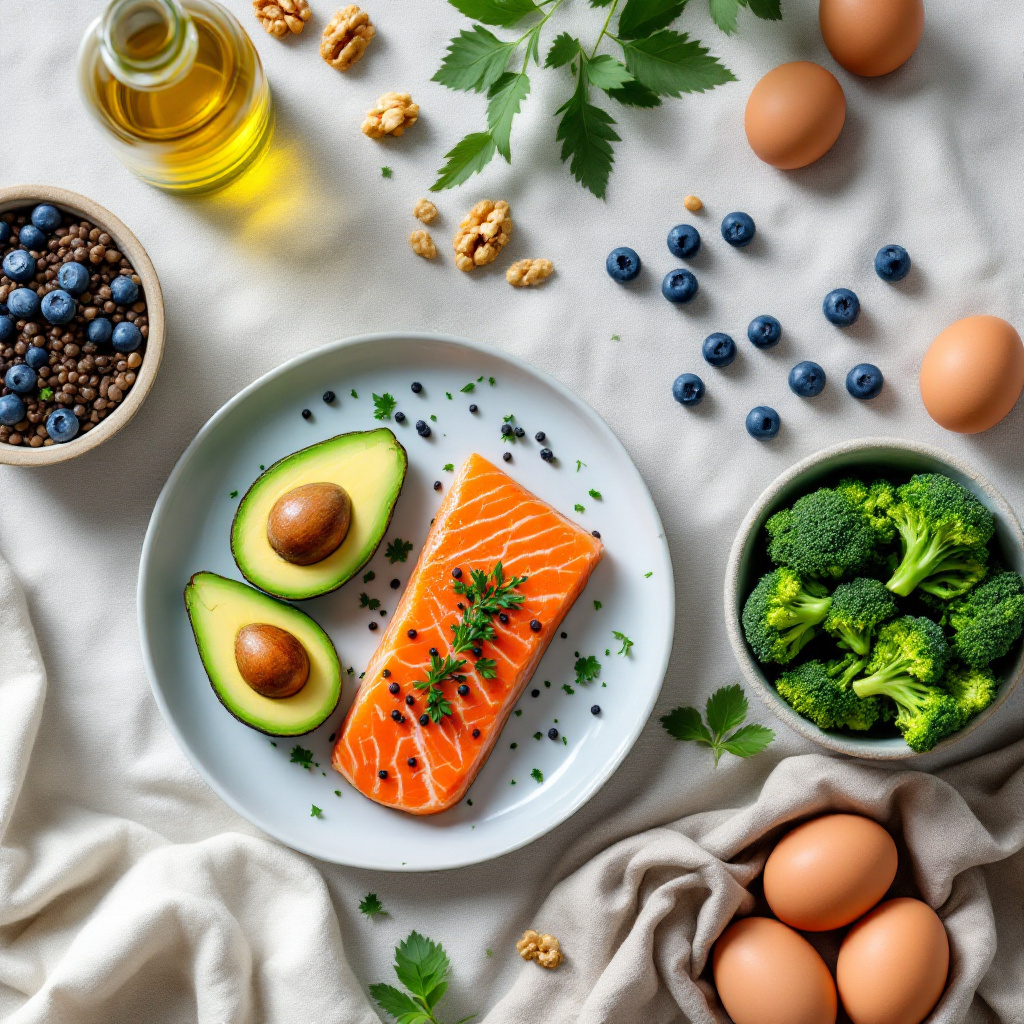
Key takeaways
- Dietary change is the first-line treatment for PCOS per the 2023 International Evidence-Based PCOS Guidelines — before any medication
- High protein (25–30% of calories) directly reduces insulin resistance and helps regulate androgens
- Low-GI carbohydrates — lentils, oats, sweet potato — blunt the insulin spike that drives most PCOS symptoms
- Omega-3 fatty acids from oily fish reduce the chronic inflammation that worsens hormonal imbalance in PCOS
Around 65.77 million women worldwide live with polycystic ovary syndrome (PCOS) — making it the most common metabolic disorder among women of reproductive age.[10] And yet most are handed a leaflet about "eating healthy" and sent on their way.
This guide exists to close that gap. What follows is the most complete, evidence-based breakdown of PCOS nutrition we've been able to write — pulling from randomised controlled trials, systematic reviews, and meta-analyses published in journals including The Journal of Clinical Endocrinology & Metabolism, The Lancet, Nature, and the British Journal of Nutrition. Not summaries of summaries. Actual science.
We'll cover the root mechanism, what to eat, what to avoid, which supplements have real evidence, and how to structure your meals around your lifestyle. Use the table of contents to jump to whatever matters most to you right now.
The 2023 International Evidence-Based PCOS Guidelines — the global clinical standard — list lifestyle intervention including dietary change as the first-line treatment for PCOS before any medication. Food isn't complementary. It's primary.
The Root Mechanism: The Insulin—Androgen Cycle
Before diving into what to eat, it helps to understand why food matters so much for PCOS. Almost everything traces back to one feedback loop.
In 70–80% of women with PCOS, cells become resistant to insulin — the hormone that moves glucose from your bloodstream into your cells. Your pancreas responds by producing more insulin to compensate. That excess insulin then signals your ovaries to produce more androgens (testosterone and DHEA-S). Those androgens disrupt the follicle-stimulating process that triggers ovulation, push LH levels out of ratio with FSH, and drive the symptoms most women recognise: irregular periods, excess hair growth, acne, and weight gain that resists conventional calorie restriction.
High-GI food blood sugar spike insulin surge ovarian androgen production disrupted ovulation symptoms worsen cravings increase more high-GI food. Every dietary change you make either interrupts this cycle or accelerates it.
This is why the standard low-fat, calorie-counting approach often fails women with PCOS. It ignores the hormonal machinery entirely. The nutrition framework below is built around breaking this cycle at every meal.
The PCOS Nutrition Framework: Protein — Fat — Fibre
Every meal, every snack — the structure is the same. Protein, fat, and fibre at every eating occasion. Not as a rule to memorise, but as a biological strategy.
When you eat protein, fat, and fibre together, you slow gastric emptying and blunt the blood sugar curve from any carbohydrates in the meal. That means lower insulin output, which means less androgen signalling from your ovaries. Do this consistently over weeks and months, and you start to see measurable changes in fasting insulin, testosterone, and menstrual regularity.
Protein: How Much You Actually Need
Protein is the non-negotiable foundation of PCOS nutrition. Here's why it matters more than you might think: protein has a negligible effect on blood sugar and a significant thermogenic effect — meaning your body burns more calories digesting it. It also triggers satiety hormones (GLP-1, PYY, CCK) that reduce appetite without willpower.
A 2024 systematic review and meta-analysis published in Nutrition & Diabetes (Nature) analysed eight trials involving 279 women with PCOS and found that higher protein intake significantly reduced fasting insulin and HOMA-IR (the clinical measure of insulin resistance) compared with balanced macronutrient diets.[4]
The clinical evidence supports 1.2–1.6 g of protein per kg of body weight per day for women with PCOS. For a 70 kg woman, that's 84–112 g/day — split across 2 or 3 meals.
Best protein sources for PCOS
- Chicken breast (27g per 100g cooked) — the most calorie-efficient lean protein available
- Salmon (~25g per 100g cooked) — also delivers omega-3 EPA+DHA; kills two birds with one fish
- Eggs (6g per egg) — contain choline and vitamin D alongside protein; eaten at breakfast, they reduce lunchtime calorie intake
- Greek yogurt (17g per 170g) — also provides gut-supporting probiotics and calcium
- Lentils (9g per 100g cooked) — plant protein combined with fibre; the PCOS double-hit
- Lean beef (~29g per 100g cooked) — rich in zinc, which supports SHBG production
- Cottage cheese (11g per 100g) — slow-digesting casein protein; ideal for meals that need to hold you for longer
Get Your Custom PCOS Meal Plan in 90 Seconds
Personalised protein targets, low-GI meal plans, auto-generated grocery lists, and AI meal swaps — built around your PCOS profile.
Start Your Free 7-Day TrialCarbohydrates: The Glycaemic Index Matters
Carbohydrates are not the enemy. High-glycaemic carbohydrates are. The distinction is important, because low-GI carbohydrates — lentils, chickpeas, sweet potato, quinoa, non-starchy vegetables — provide fibre, micronutrients, and fuel without the insulin spike that drives androgen production.
A 2022 systematic review and meta-analysis published in Advances in Nutrition — one of the most rigorous analyses to date — examined randomised controlled trials of low-GI dietary interventions in women with PCOS and found consistent improvements in fasting insulin, testosterone, and BMI compared with control diets.[3]
Separately, a study in The Journal of Clinical Endocrinology & Metabolism found that a low glycaemic load meal significantly improved ghrelin (the appetite-stimulating hormone) and glucagon responses compared with a high-glycaemic meal in women with PCOS, translating to reduced hunger and better satiety after eating.[2]
Low-GI carbs to build meals around
| Food | GI score | Why it works for PCOS |
|---|---|---|
| Lentils | ~32 | High fibre + plant protein; slows digestion significantly |
| Chickpeas | ~28 | Resistant starch feeds beneficial gut bacteria |
| Sweet potato | ~54 (boiled) | Rich in beta-carotene and fibre; far lower GI than white potato |
| Quinoa | ~53 | Complete protein + complex carb; no insulin rollercoaster |
| Black beans | ~30 | Fibre + magnesium + plant protein combination |
| Non-starchy veg | 15–35 | Broccoli, courgette, spinach, capsicum — virtually unlimited |
| Berries | 25–40 | High antioxidant load with low sugar per serving |
High-GI carbs to eliminate
- White rice, white bread, white pasta — refined grains with almost no fibre; cause rapid glucose spikes
- Sugary drinks and fruit juice — liquid glucose with zero fibre; the fastest route to an insulin surge
- Pastries, biscuits, breakfast cereals — ultra-processed, high-GI, high-inflammatory fat combinations
- Dried fruit and high-sugar fruit (mango, banana, pineapple) — concentrated fructose with no fibre buffer
The Mediterranean Diet: The Best-Evidenced Dietary Pattern for PCOS
If you were to design the ideal PCOS diet from scratch, you'd end up very close to the Mediterranean diet. It's naturally high in fibre (legumes, vegetables), rich in omega-3 (oily fish), uses anti-inflammatory olive oil as the primary fat, and keeps refined carbohydrates minimal.
A review published in the Proceedings of the Nutrition Society (Cambridge) found that the Mediterranean diet addresses multiple PCOS pathways simultaneously — improving insulin sensitivity, reducing chronic inflammation (via CRP and IL-6 reduction), lowering androgens, and supporting regular ovulation.[5]
A 12-week randomised controlled trial published in Frontiers in Nutrition assigned 100 overweight women with PCOS (72 completing the per-protocol analysis) to either a Mediterranean/low-carbohydrate dietary pattern or a conventional low-fat diet. The Mediterranean group showed significantly greater reductions in BMI, fasting insulin, testosterone, and LH levels, and more women in this group resumed regular menstrual cycles by week 12.[9]
Olive oil as the primary cooking fat — oily fish 2–3 times/week — legumes daily — a wide variety of vegetables at every meal — minimal red meat (2–3 times/week maximum) — no refined carbohydrates. Every HerMeal plan is built on this framework.
Healthy Fats: Omega-3 Is the Priority
PCOS is characterised by chronic low-grade inflammation — elevated CRP, IL-6, and TNF-a even in lean women with the condition. This inflammation both drives and sustains insulin resistance. Omega-3 polyunsaturated fatty acids (EPA + DHA) are the most evidence-backed dietary tool for reducing it.
A meta-analysis in the British Journal of Nutrition evaluated 16 randomised controlled trials (601 participants) of omega-3 supplementation in women with PCOS and found significant reductions in CRP, IL-6, TNF-a, total testosterone, and fasting insulin after 8–12 weeks of supplementation.[7]
How to get enough omega-3 from food
- Salmon (2.3g EPA+DHA per 100g) — 2–3 servings per week covers the clinical target of 2–4g/day
- Sardines and mackerel — among the highest EPA+DHA concentrations of any food, and low in mercury
- Ground flaxseed (1 tbsp = 1.6g ALA) — plant omega-3 that partially converts to EPA; sprinkle into yogurt or porridge
- Walnuts (2.5g ALA per 30g) — convenient snack with anti-inflammatory polyphenols
- Chia seeds (1.7g ALA per tbsp) — also provide soluble fibre that feeds gut bacteria
Dietary Fibre and the Gut Microbiome
Fibre's role in PCOS extends well beyond digestion. There is now strong evidence that PCOS is associated with altered gut microbiota composition — reduced microbial diversity, and specific overgrowths of genera linked to inflammation and androgen production.
A large individual-based analysis published in eClinicalMedicine (The Lancet) — the most authoritative systematic analysis of gut microbiota in PCOS to date — confirmed that gut microbiota composition is distinctly different in women with PCOS compared with healthy controls, with increases in Fusobacterium and Escherichia-Shigella.[6] Dietary fibre, particularly soluble fibre from legumes and vegetables, directly modulates this microbiome environment.
The clinical target is ≥25g fibre per day. Most women consume 12–15g. The gap matters.
Best fibre sources for PCOS
- Lentils (8g per 100g cooked) — soluble and insoluble fibre; also provide prebiotic fuel for beneficial bacteria
- Chickpeas (7g per 100g cooked) — resistant starch that escapes small intestine digestion and feeds the colon microbiome
- Broccoli (2.6g per 100g) — also contains sulforaphane, which has anti-androgen properties in emerging research
- Ground flaxseed (2.8g per tbsp) — lignans in flaxseed also have mild phytoestrogenic activity that may help modulate androgens
- Avocado (6.7g per half) — soluble fibre plus heart-healthy monounsaturated fat
Key Supplements: What Has Real Evidence
The supplement space around PCOS is noisy. A lot of products are marketed with minimal clinical backing. These four have the most rigorous evidence.
Myo-inositol
The most studied PCOS supplement by far. Myo-inositol acts as an insulin sensitiser at the cellular level — it's a second messenger in the insulin signalling pathway that is depleted in PCOS. A 2024 systematic review and meta-analysis in The Journal of Clinical Endocrinology & Metabolism, produced to support the evidence base for the 2023 International PCOS Guidelines process, analysed 30 trials with 2,230 participants and found inositol improved metabolic markers and showed potential benefits for ovulation, with fewer gastrointestinal side effects than metformin.[8]
The clinically studied formulation combines myo-inositol with D-chiro-inositol at a 40:1 ratio — for example, 3,600 mg myo-inositol + 90 mg D-chiro-inositol. This ratio reflects the physiological proportion found in healthy human plasma and serum, and is the formulation used in the majority of positive RCTs. Standard myo-inositol alone (4g/day) also shows benefit, but the 40:1 combination is the more precisely targeted approach.
Magnesium
Studies report magnesium deficiency in a significant proportion of women with PCOS, with some cohorts showing rates of 40–80% depending on the measurement method and population studied. Magnesium is a cofactor in more than 300 enzymatic reactions, including those involved in glucose metabolism and insulin signalling. Deficiency worsens insulin resistance and amplifies cortisol reactivity. Supplementing at 300–400 mg/day of magnesium glycinate or citrate has been shown to improve fasting glucose, insulin sensitivity, and sleep quality in PCOS patients.
Vitamin D
Vitamin D receptors are present on ovarian tissue, and deficiency is very common in PCOS — reported in 40–85% of women with the condition depending on geography, ethnicity, and the deficiency threshold used. Supplementation at 2,000–4,000 IU/day has been associated with improvements in AMH levels, menstrual regularity, and insulin sensitivity in several small RCTs.
Omega-3 supplementation
If oily fish isn't a regular part of your diet, a fish oil supplement providing 2–4g EPA+DHA per day fills the gap. As noted in the British Journal of Nutrition meta-analysis, 8–12 weeks of supplementation consistently reduces inflammatory markers and testosterone in women with PCOS.[7]
Supplements should complement — not replace — dietary and lifestyle changes. If you're taking medication for PCOS (metformin, the OCP, spironolactone), check for interactions with your prescribing doctor before starting any supplement, particularly berberine, which has significant drug interactions.
Meal Timing and Intermittent Fasting
When you eat matters as much as what you eat, particularly for insulin-driven conditions. Time-restricted eating — eating within a consistent 6–8 hour window — has shown genuine benefits for insulin sensitivity in women with PCOS, without the caloric restriction that triggers cortisol and hormonal disruption.
The mechanism: compressing your eating window lowers overnight insulin exposure, improves insulin sensitivity the following morning, and aligns food intake with circadian rhythms — when metabolic function is naturally most efficient.
Exercise and Nutrition: What Type Works
Nutrition and exercise are not alternatives — they're synergistic. Resistance training (weight lifting, bodyweight circuits) has the strongest evidence for PCOS because it builds glucose-hungry muscle tissue that absorbs blood sugar independent of insulin signalling. This directly reduces the insulin load required after meals.
Eating adequate protein (see above) is particularly important on training days, as muscle protein synthesis requires amino acid availability within 1–2 hours of resistance exercise.
Weight Loss with PCOS: Why Standard Advice Fails
Conventional calorie restriction often fails women with PCOS because it doesn't account for the hormonal environment. When insulin is chronically elevated, your body actively resists fat loss — even in a caloric deficit. The fix isn't eating less; it's restructuring what you eat to reduce the insulin signal first.
Even a modest weight loss of 5–10% of body weight has been shown to restore ovulation, improve androgen levels, and significantly improve quality of life in PCOS — but only when achieved through an insulin-aware dietary approach, not chronic restriction.
PCOS and Fertility: Eating to Restore Ovulation
PCOS is the most common cause of anovulatory infertility. But ovulation can often be restored through dietary change alone — by reducing the insulin signal that triggers androgen overproduction and disrupts the LH/FSH ratio required for follicular maturation.
A full fertility-focused diet includes all the principles above plus specific attention to antioxidants (CoQ10, vitamin C, vitamin E) that protect egg quality, and methylfolate (not folic acid) for women with MTHFR gene variants — which are more common in women with PCOS.
Snacking with PCOS
The wrong snack can spike insulin just as effectively as a full meal. The right snack — built on the same Protein + Fat + Fibre principle — can stabilise blood sugar between meals, reduce cortisol-driven afternoon cravings, and prevent the overeating that follows blood sugar crashes.
The best PCOS snacks share three characteristics: at least 10g protein, a fat source to slow digestion, and no added sugar. Think Greek yogurt with almonds, hard-boiled eggs with avocado, or apple slices with almond butter.
A Note on PMOS (The Updated Name for PCOS)
You may have seen the term PMOS — Polyendocrine Metabolic Ovarian Syndrome — appearing in recent medical literature. This is not a new condition; it's a proposed renaming of PCOS that better reflects what the condition actually is: a metabolic disorder with reproductive consequences, not a reproductive disorder with metabolic side effects. The distinction matters because it shifts the treatment focus toward metabolic intervention — exactly what this guide covers.
Sample PCOS Meal Structure: A Day in Practice
Knowing the principles is one thing. Seeing them applied is another. Here's what a well-structured PCOS day looks like across two and three meals.
| Meal | Example (2 meals) | Example (3 meals) | PFF check |
|---|---|---|---|
| Breakfast (8am) | — | 3-egg omelette with spinach + feta, 1 tbsp ground flaxseed | P ✓ F ✓ Fi ✓ |
| Lunch (12–1pm) | 220g salmon + roasted broccoli + — cup lentils + olive oil | Spiced chicken bowl with chickpeas, cucumber, tahini | P ✓ F ✓ Fi ✓ |
| Dinner (6–7pm) | Ground beef with courgette, black beans, cumin, avocado | Baked salmon with sweet potato + green salad + olive oil dressing | P ✓ F ✓ Fi ✓ |
| Snack (optional) | 30g almonds + 150g Greek yogurt | Celery + 2 tbsp almond butter | P ✓ F ✓ Fi ✓ |
Every HerMeal plan is built on this exact framework — structured around your calorie target, protein goal, fasting window, and food preferences. It generates 5 days of meals with recipes, macros, and a grocery list in under 2 minutes. Try it free
What to Expect: A Realistic Timeline
PCOS symptoms didn't develop overnight and they won't resolve overnight. Here's an honest timeline based on what the clinical evidence shows.
- Weeks 1–2: Energy stabilises, mid-afternoon crashes reduce, bloating improves as gut bacteria begin to shift
- Weeks 3–6: Measurable improvements in fasting glucose and insulin sensitivity in most women; some report reduced acne
- Weeks 6–12: Testosterone begins to decline measurably in clinical markers; hair and skin changes may be noticeable
- Months 3–6: Menstrual cycle regularisation becomes likely in women with insulin-dominant PCOS; ovulation may resume
- Months 6–12: Full hormonal recalibration for women who maintain consistent dietary adherence
Frequently Asked Questions
- Bozdag G, et al. Prevalence of polycystic ovary syndrome: a global and regional systematic review and meta-analysis. Human Reproduction Update. 2024;32(3):277–295. Oxford Academic
- Douglas CC, et al. Changes in Ghrelin and Glucagon following a Low Glycemic Load Diet in Women with PCOS. J Clin Endocrinol Metab. 2021;106(5):e2151—e2162. Oxford Academic
- Yang K, et al. Effects of Dietary Glycemic Index and Glycemic Load on Cardiometabolic and Reproductive Profiles in Women with PCOS: Systematic Review and Meta-analysis. Advances in Nutrition. 2022. Advances in Nutrition
- Liu Y, et al. Effects of high-protein diets on the cardiometabolic factors and reproductive hormones of women with PCOS: systematic review and meta-analysis. Nutrition & Diabetes. 2024;14:14. Nature
- Barrea L, et al. The potential role of the Mediterranean diet for the treatment and management of PCOS. Proceedings of the Nutrition Society. 2021;80(3):386–402. Cambridge Core
- Chen J, et al. Gut microbiota in women with polycystic ovary syndrome: an individual based analysis of publicly available data. eClinicalMedicine (The Lancet). 2024. The Lancet
- Yang Y, et al. Influence of n-3 fatty acid supplementation on inflammatory and oxidative stress markers in patients with PCOS: systematic review and meta-analysis. British Journal of Nutrition. 2022. Cambridge Core
- Pundir J, et al. Inositol for PCOS: A Systematic Review and Meta-analysis to Inform the 2023 Update of the International Evidence-based PCOS Guidelines. J Clin Endocrinol Metab. 2024;109(6):1630–1655. Oxford Academic
- Elnashar AM, et al. Mediterranean Diet Combined With a Low-Carbohydrate Dietary Pattern in the Treatment of Overweight PCOS Patients. Frontiers in Nutrition. 2022. PMC
- GBD 2021 PCOS Collaborators. Global burden of polycystic ovary syndrome in women of reproductive age, 1990–2021. International Journal of Women's Health. 2024. PMC
Get Your Custom PCOS Meal Plan in 90 Seconds
Personalised protein targets, low-GI meal plans, auto-generated grocery lists, and AI meal swaps — built around your PCOS profile.
Start Your Free 7-Day Trial- 5-Day PCOS Meal Plan
- What to Eat with PCOS
- High-Protein PCOS Breakfasts
- PCOS-Friendly Snacks
- PCOS Recipes
- Meal Prep Guide
- Low-GI Meal Plan for PCOS
- The PCOS Grocery List
- PCOS Meal Plan on a Budget