Myo-Inositol for PCOS: Dosage, Benefits & What the Research Actually Shows
The most studied supplement for PCOS — how it works, who it helps, and the exact dosage protocol backed by clinical trials.
Myo-inositol is not a trendy wellness supplement. It is a naturally occurring compound — technically a sugar alcohol in the vitamin B family — that plays a central role in how cells respond to insulin. In PCOS specifically, a well-documented deficiency in inositol signalling creates what researchers call "inositol resistance," a secondary layer of insulin dysfunction on top of the already-compromised insulin sensitivity most women with PCOS carry. The clinical evidence for myo-inositol in PCOS is unusually strong for a supplement: multiple randomised controlled trials show reductions in fasting insulin, LH:FSH ratio, free testosterone, and — crucially — improvements in ovulatory function and egg quality. This article covers everything you need to know to use it effectively.
Key Takeaways
- Myo-inositol is a secondary messenger in insulin signalling — PCOS depletes it, creating "inositol resistance"
- Clinical trials show it reduces fasting insulin, LH:FSH ratio, free testosterone, and improves ovulation rates
- The evidence-backed dose is 2g twice daily (4g/day total), taken with meals
- The 40:1 ratio of myo-inositol to D-chiro-inositol matches the physiological ratio and is better than D-chiro alone
- Most women notice hormonal changes within 8–12 weeks; full effect may take up to 6 months
In this article
What is myo-inositol?
Myo-inositol is a carbocyclic sugar — technically a polyol — that the body synthesises from glucose. It exists in nine isomeric forms, but myo-inositol is by far the dominant form in human tissue, accounting for approximately 95% of total tissue inositol. Despite sometimes being classified alongside the B-vitamin family, the body can make its own supply, though this endogenous production is clearly insufficient in certain metabolic contexts — PCOS being one of them.
Its most important biological role in the context of PCOS is as a secondary messenger in the insulin signalling cascade. When insulin binds to its receptor on a cell surface, it triggers a downstream chain of signals that ultimately tells the cell to take up glucose. Myo-inositol and its phosphorylated derivatives — collectively called inositol phosphoglycans (IPGs) — are critical relay signals in this chain. They act as the intracellular translators that convert insulin's arrival at the receptor into actual cellular responses: glucose transporter mobilisation, enzyme activation, and metabolic gene expression.
Beyond insulin signalling, myo-inositol is involved in a range of other cellular processes including phospholipid synthesis, cytoskeletal organisation, and the management of intracellular calcium. Its broad role in cell biology means that deficiencies don't produce a single, obvious symptom — they manifest as a generalised impairment of cellular responsiveness, which is precisely what makes inositol resistance so difficult to identify clinically without specific testing.
Food provides myo-inositol — legumes, citrus fruits, and bran are the richest sources — but the therapeutic doses used in PCOS research (typically 2–4g per day) are substantially above what a standard diet provides. A well-varied diet might deliver 1–2g of inositol daily, which is adequate for general health but insufficient to restore the signalling pathway in women with PCOS-associated inositol resistance.
Inositol resistance in PCOS
To understand why myo-inositol supplementation helps PCOS specifically, it helps to understand the concept of inositol resistance — a term that doesn't appear in most mainstream explanations of PCOS but that underpins much of the research behind the supplement.
In healthy cells, insulin binding triggers the release of myo-inositol-containing IPGs that activate downstream glucose transport. Think of it as a relay baton being passed: insulin hands the baton to the IPG system, which carries the message inside the cell. In PCOS, this handoff is impaired. Cells in muscle and ovarian tissue produce fewer IPGs in response to insulin stimulation, which means insulin has to work much harder to produce the same downstream effect. This is inositol resistance — a secondary signalling failure that occurs downstream of the insulin receptor itself, and is therefore distinct from (though compounding) the insulin receptor resistance that is also characteristic of PCOS.
This distinction matters clinically. A woman with PCOS can improve her insulin sensitivity through diet and exercise — reducing the burden on the receptor — and still have impaired IPG signalling that keeps her ovaries producing excess androgens. This is why some women with PCOS find that dietary changes help their metabolic markers but don't fully resolve their testosterone levels or cycle irregularity.
Inositol resistance in ovarian tissue has a specific consequence that makes it particularly relevant to androgen excess. In ovarian follicles, myo-inositol is converted to D-chiro-inositol by an enzyme called epimerase. D-chiro-inositol in turn acts as an IPG that signals the theca cells (the androgen-producing cells of the follicle) to reduce androgen synthesis. When inositol resistance impairs the production and function of these IPGs, and when the epimerase conversion is impaired, ovarian androgen production remains elevated regardless of how well a woman manages her blood glucose through diet. This is the mechanism through which supplementing myo-inositol can reduce androgen levels through a pathway that is separate from — and complementary to — dietary insulin management.
Research has also shown that women with PCOS excrete significantly more inositol in their urine than women without PCOS — a phenomenon called inositoluria. This suggests that the issue is not simply one of impaired synthesis, but also of abnormal renal handling that depletes the body's inositol pool faster than it can be replenished by either synthesis or diet.
What the research shows
The evidence base for myo-inositol in PCOS is, by supplement standards, exceptionally strong. Multiple independent randomised controlled trials have examined it, a systematic review has synthesised the findings, and an international clinical guideline has formally endorsed it. Here are the key studies you should know about.
Nestler et al. (1999) — The D-chiro-inositol NEJM trial
Published in the New England Journal of Medicine, this foundational trial enrolled insulin-resistant women with PCOS and compared D-chiro-inositol against placebo. The outcomes were striking: 62% of women in the treatment group ovulated during the trial period, compared to just 25% in the placebo group. Beyond ovulation, the treatment group showed significant reductions in fasting insulin, LH:FSH ratio, and free testosterone. Although this study used D-chiro-inositol rather than myo-inositol, it established the inositol pathway as a clinically meaningful target in PCOS and directly informed the subsequent myo-inositol research base.
Gerli et al. (2007) — Myo-inositol versus metformin
This trial directly compared myo-inositol (4g/day) with metformin — the standard pharmaceutical first-line for PCOS — in women with PCOS over 14 weeks. The findings showed comparable improvements in metabolic and hormonal parameters between the two groups, with both achieving similar reductions in fasting insulin, HOMA-IR, and testosterone. Critically, tolerability was significantly better with myo-inositol: metformin's well-known GI side effects (nausea, diarrhoea, abdominal discomfort) caused more discontinuation and distress than the supplement, which was well tolerated throughout the trial period.
Unfer et al. (2017) — Systematic review of myo-inositol RCTs
This systematic review synthesised findings from multiple randomised controlled trials, representing the most comprehensive analysis of myo-inositol evidence available at the time. Consistent across studies: reductions in HOMA-IR, total and free testosterone, and LH:FSH ratio. Improvements in menstrual regularity and ovulation rates were also reported across multiple trials. The review noted that the evidence was most consistent in insulin-resistant PCOS phenotypes, with more variable results in lean or normoinsulinaemic women with PCOS.
IVF outcome studies
For women pursuing IVF, the evidence is particularly compelling. Multiple studies have examined myo-inositol supplementation (typically 4g/day for 2–3 months before egg retrieval) and found improved oocyte quality, higher fertilisation rates, and better clinical pregnancy rates in PCOS women. Colazingari et al. (2013) showed that the combination of myo-inositol and D-chiro-inositol in the 40:1 ratio produced better IVF outcomes than D-chiro-inositol alone — a finding that directly shaped current recommendations around the combined formulation.
ISGE consensus statement
The International Society of Gynecological Endocrinology has formally recommended myo-inositol as a first-line supplement for women with PCOS — an endorsement that reflects the totality of evidence rather than any single trial. This places myo-inositol in a different category from the majority of "PCOS supplements" that circulate on social media without meaningful clinical trial support.
Myo-inositol vs D-chiro-inositol: the 40:1 ratio
If you have looked at inositol supplements, you have probably encountered the phrase "40:1 ratio" on labels. This is not marketing language — it has a specific biochemical rationale that matters for both safety and efficacy, particularly for women who are trying to conceive or undergoing IVF.
The human body maintains tissue-specific ratios of myo-inositol to D-chiro-inositol. These ratios reflect the different functions each form performs in different tissue environments. The most important ratios to understand are:
- Ovarian follicular fluid: from approximately 50:1 to 100:1 myo:D-chiro depending on the study population. The ovarian follicular environment is heavily weighted toward myo-inositol — it is the dominant form here by a large margin, and for good reason: myo-inositol promotes oocyte development and quality, while excessive D-chiro-inositol in follicular fluid is associated with impaired egg quality.
- Urinary excretion: approximately 40:1 myo:D-chiro. This is the ratio at which the body naturally excretes inositol, and it forms the basis for the "40:1" supplementation ratio.
- Blood plasma: approximately 40:1 myo:D-chiro, consistent with the urinary ratio.
The 40:1 supplementation ratio (for example, 2000mg myo-inositol combined with 50mg D-chiro-inositol per serving) is designed to mirror the physiological urinary excretion ratio. The logic is that supplementing in this ratio avoids over-supplying D-chiro-inositol relative to the body's natural handling capacity.
Why pure D-chiro-inositol is problematic
Early inositol research in PCOS focused heavily on D-chiro-inositol, because it is the form that directly signals theca cells to reduce androgen production. This led to a wave of D-chiro-inositol supplements. However, subsequent research — particularly the Colazingari 2013 IVF study — revealed a critical problem: when D-chiro-inositol is supplied in large doses without a corresponding increase in myo-inositol, it can accumulate in ovarian follicular fluid at concentrations that exceed the physiological 100:1 ratio. When the myo:D-chiro ratio in follicular fluid is disrupted toward more D-chiro-inositol, oocyte quality deteriorates.
This means that pure D-chiro-inositol supplements, while potentially helping androgen levels, may simultaneously impair egg quality — a particularly poor trade-off for any woman with PCOS who is trying to conceive. The current consensus, reflected in the ISGE guidelines, is that myo-inositol alone (4g/day) or in the 40:1 combination is preferred, and that pure D-chiro-inositol supplements should be avoided in the context of fertility.
Dosage and timing
The dose that appears across the clinical literature is consistent and clear. The vast majority of RCTs that demonstrated benefit used 4 grams of myo-inositol per day, divided into two doses of 2g each. This is the dose you should aim to match if you are supplementing for PCOS.
Timing
Take each 2g dose with a meal — breakfast and dinner are the most practical timings. Food slows the absorption of myo-inositol slightly, which reduces any GI sensitivity and helps maintain more stable inositol levels throughout the day. There is no meaningful evidence that the timing matters beyond this basic principle of splitting the dose and taking it with food.
40:1 combination products
If you choose a 40:1 ratio product, a standard serving provides 2000mg myo-inositol + 50mg D-chiro-inositol. Two servings per day gives you the 4g of myo-inositol that matches the research dose, plus 100mg of D-chiro-inositol — well within the safe range and consistent with the physiological ratio.
Combining with other supplements
Myo-inositol is compatible with most supplements commonly used in PCOS:
- Magnesium: complements inositol well; no interaction. Take at any time.
- Vitamin D: no interaction; continue at your usual dose.
- Omega-3 fatty acids: no interaction; both support insulin sensitivity through different mechanisms.
- Berberine: both improve insulin signalling, but through different pathways. Safe to combine — but some clinicians prefer not to take them simultaneously as they can be additive in glucose lowering. Space by 1–2 hours if combining.
How long to take it
The minimum period to assess whether myo-inositol is working for your PCOS is 12 weeks. Hormonal markers (testosterone, LH:FSH) typically show measurable change at this point in clinical trials. Ovulatory function may take up to 4–6 months to respond fully. Many women take myo-inositol as a long-term maintenance supplement, and there is no established downside to doing so — unlike some supplements, myo-inositol does not appear to down-regulate its own effect over time. Its mechanism is physiological rather than pharmacological, so the concept of "cycling" does not apply in the same way.
Research dose reference
| Study | Dose | Duration | Key outcome |
|---|---|---|---|
| Nestler et al. 1999 | 1,200 mg/day DCI | 12 weeks | +ovulation rate, −fasting insulin |
| Gerli et al. 2007 | 4g/day | 12 weeks | Comparable to metformin |
| Unfer et al. 2012 (IVF) | 4g/day | 3 months pre-IVF | Improved oocyte quality |
| Nordio & Proietti 2012 | 4g/day (40:1) | 6 months | −testosterone, −LH:FSH |
Food sources of inositol
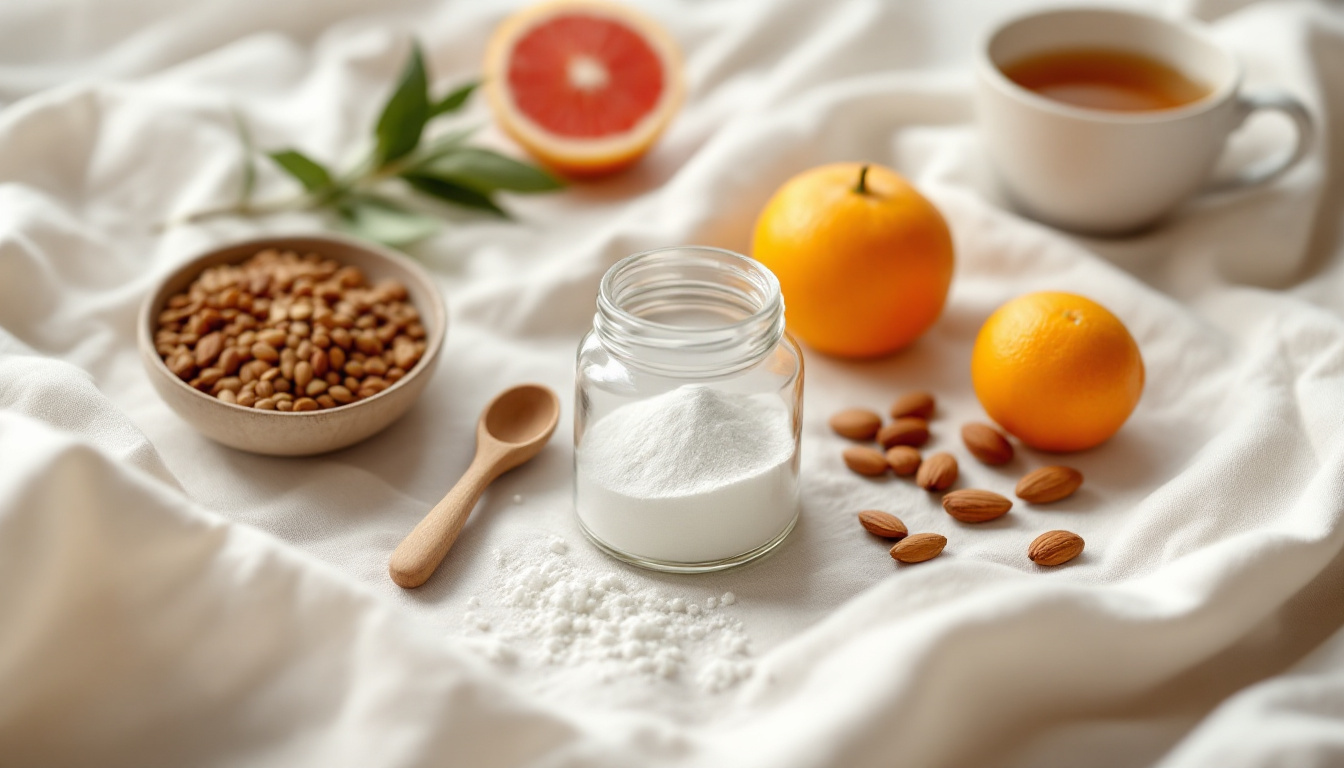
Myo-inositol is present in a wide range of foods — particularly legumes, citrus fruits, and whole grains. Understanding dietary sources is useful context, even if food alone cannot reach therapeutic doses for PCOS.
| Food | Serving | Inositol (approximate) |
|---|---|---|
| Grapefruit | 1 medium | 468 mg |
| Cantaloupe | 1 cup | 350 mg |
| Orange | 1 medium | 307 mg |
| Lentils (cooked) | ½ cup | 218 mg |
| Chickpeas (cooked) | ½ cup | 196 mg |
| Brown rice (cooked) | ½ cup | 150 mg |
| Chicken liver | 85g | 150 mg |
| Almonds | 30g | 97 mg |
A typical varied diet provides roughly 1–2g of inositol per day. This is sufficient for general cellular function in people without inositol resistance — but falls well short of the 4g per day that showed clinical benefit in PCOS trials. To put it plainly: even a diet rich in inositol food sources cannot bridge the gap to therapeutic effect. This is one of the clearer cases in nutritional science where supplementation is genuinely necessary rather than optional.
The practical takeaway from the food data is that emphasising inositol-rich foods (legumes, citrus, whole grains) is a useful background strategy — and these foods happen to overlap strongly with low-GI dietary principles that benefit PCOS through insulin mechanisms independently. But they should be viewed as a dietary foundation, not a replacement for supplementation.
Who benefits most — and who benefits less
Myo-inositol is not equally effective across all PCOS presentations. Understanding which phenotype is most likely to respond helps you set realistic expectations and make more informed decisions about supplementation.
Who benefits most
Classic insulin-resistant PCOS is the phenotype with the strongest, most consistent evidence for myo-inositol benefit. This presentation typically includes elevated fasting insulin, high HOMA-IR, often (but not always) higher BMI, glucose intolerance or prediabetes, acanthosis nigricans, and androgenic symptoms driven substantially by hyperinsulinaemia. If this is your phenotype, the mechanism of benefit is direct: you have the inositol resistance that supplementation is specifically designed to address, and the clinical trials that produced the most impressive results enrolled women with exactly this profile.
Women with PCOS trying to conceive represent one of the clearest applications of the evidence. Myo-inositol improves ovulation rates in anovulatory PCOS through a mechanism that operates in the follicle itself, and it does so without the risks associated with pharmaceutical ovulation induction. For women who are not yet at the stage of IVF, it is worth trying for at least 3 months before escalating to clomiphene or letrozole — discuss this with your reproductive endocrinologist or gynaecologist.
Women with PCOS undergoing IVF have particularly strong evidence supporting pre-treatment supplementation. The oocyte quality improvements in IVF studies are clinically meaningful — not marginal — and the 40:1 ratio is specifically better suited to the IVF context given the follicular fluid data discussed earlier. Starting 2–3 months before egg retrieval (or the start of your stimulation protocol) is the timing that aligns with the research.
Who benefits less
Lean or adrenal PCOS is the phenotype where myo-inositol evidence is thinnest. In lean PCOS (normal BMI, normal or low-normal fasting insulin, often younger women with PCOS diagnosed primarily on ultrasound and androgen markers rather than metabolic features), the primary driver of androgen excess may not be insulin signalling at all. HPA axis dysregulation — elevated cortisol, adrenal hyperresponsiveness to ACTH — can drive DHEAS and androstenedione elevation independently of insulin. In this context, addressing the underlying cortisol dysregulation through stress management, sleep, and adaptogenic strategies may be more impactful than inositol supplementation. Myo-inositol is unlikely to cause harm at 4g/day in lean PCOS, but you should have modest expectations.
Women on high-dose metformin should proceed with more care when considering adding myo-inositol. Both lower blood glucose and insulin levels, and while the mechanisms are complementary, the additive glucose-lowering effect warrants discussion with your GP before combining them at full doses — particularly if you are already experiencing near-normal fasting glucose on metformin.
Side effects and safety
Myo-inositol has one of the cleanest safety profiles of any supplement studied in PCOS research. Understanding what to expect — and what is not a concern — allows you to supplement with appropriate confidence.
At the standard 4g/day PCOS dose
Side effects at this dose are minimal. No serious adverse events have been reported in any clinical trial of myo-inositol at doses up to 4g per day. The most commonly reported minor effect is mild GI sensitivity — occasional nausea or loose stools — which is significantly reduced by taking doses with food rather than on an empty stomach. In the comparative trials against metformin, myo-inositol consistently showed superior tolerability.
At higher doses
GI effects (nausea, loose stools, bloating) become more common at doses above 12g per day. This dose range is studied in other contexts (such as certain psychiatric applications) but is not used in PCOS research, so there is no reason to exceed 4g per day for PCOS management.
Use in pregnancy
Emerging evidence suggests myo-inositol may be both safe and actively beneficial during pregnancy. Several RCTs have examined it as a preventive intervention for gestational diabetes in high-risk women, including those with PCOS, and have found meaningful reductions in gestational diabetes incidence at doses of 2–4g per day. The evidence is not yet sufficient to make a universal recommendation, but myo-inositol is not contraindicated in pregnancy and is increasingly viewed favourably in this context. If you become pregnant while taking it, discuss continuation with your OB-GYN or midwife — they may actively recommend continuing given the gestational diabetes risk associated with PCOS.
Interactions
No significant drug-supplement interactions have been identified for myo-inositol. The theoretical additive effect with metformin (both lower insulin and blood glucose through different pathways) is the main consideration — not a contraindication, but worth discussing with your GP if you are on metformin. No interactions have been identified with oral contraceptives, SSRIs, thyroid medications, or the other medications commonly used alongside PCOS management.
Myo-inositol vs berberine vs metformin
The three most commonly used insulin-sensitising interventions in PCOS are myo-inositol, berberine, and metformin. Understanding how they differ helps you have more informed conversations with your GP and make better decisions about your own management approach.
| Myo-inositol | Berberine | Metformin | |
|---|---|---|---|
| Mechanism | Secondary insulin signalling (IPG pathway) | AMPK activation, reduces hepatic glucose output | AMPK activation, reduces hepatic glucose output |
| Evidence in PCOS | Strong — multiple RCTs | Moderate — growing evidence | Strong — decades of data |
| Fertility/ovulation evidence | Strong — improves ovulation and egg quality | Limited | Moderate |
| Side effects | Minimal at 4g/day | GI effects common | GI effects common, B12 depletion |
| Requires prescription | No | No | Yes |
| Use in pregnancy | Likely safe / may be beneficial | Avoid (insufficient safety data) | Discuss with GP |
| Cost | Low–moderate | Low | Low (generic) |
Key distinctions
Myo-inositol and metformin work through genuinely different mechanisms — not just different pharmacological pathways to the same effect. Metformin primarily acts in the liver, reducing the amount of glucose the liver releases into the bloodstream and activating AMPK, which improves muscle glucose uptake. Myo-inositol works within individual cells to restore the IPG secondary messenger system — a mechanism that operates downstream of insulin receptor binding and that metformin does not directly address. This means that women who are already on metformin may still benefit from adding myo-inositol, particularly for ovulation and egg quality outcomes.
Berberine shares metformin's primary mechanism (AMPK activation and reduced hepatic glucose output), which is why many researchers describe it as having "metformin-like" effects. It has a growing evidence base in PCOS, but the fertility-specific data is much thinner than for myo-inositol, and its safety in pregnancy is not established — making it less suitable for women who are trying to conceive or who may become pregnant.
Get your personalised PCOS supplement + meal plan
HerMeal builds 5-day PCOS meal plans around the nutritional principles that complement myo-inositol — high protein, low-GI, anti-inflammatory. Ready in under 2 minutes.
Start freeFrequently Asked Questions
What does myo-inositol do for PCOS? ▼
Myo-inositol acts as a secondary messenger in the insulin signalling pathway, helping cells respond more effectively to insulin. In PCOS, a deficiency in this signalling — known as inositol resistance — means ovarian tissue continues to produce excess androgens even when blood glucose is managed through diet. Supplementing myo-inositol helps restore this signalling, reducing free testosterone, improving LH:FSH ratio, and restoring more regular ovulatory cycles. At 4g per day, clinical trials show meaningful reductions in fasting insulin, HOMA-IR, and free testosterone within 8–12 weeks.
How long does myo-inositol take to work for PCOS? ▼
Most clinical trials measure outcomes at 12–16 weeks, and this is a reasonable minimum timeframe to assess effect. Some women notice changes in energy, mood, and cycle regularity within 4–8 weeks, but hormonal markers — testosterone, LH:FSH — typically show measurable change after 3 months. Full effect on ovulatory function may take 4–6 months of consistent daily use. If you see no improvement after 6 months at the correct dose, insulin resistance may not be the primary driver of your PCOS phenotype and it may be worth investigating with your doctor.
What is the best dose of myo-inositol for PCOS? ▼
The dose used across the majority of PCOS clinical trials is 4g per day, taken as 2g twice daily with meals. This dose is consistent across Nestler et al. (1999), Gerli et al. (2007), and the IVF outcome studies. Some products combine this with 100mg D-chiro-inositol (the 40:1 ratio), which mirrors the physiological urinary excretion ratio. There is no established benefit to doses above 4g per day for PCOS, and higher doses increase the likelihood of GI side effects without improving outcomes.
Is D-chiro-inositol or myo-inositol better for PCOS? ▼
Myo-inositol is the better-supported option. While D-chiro-inositol plays a role in androgen suppression in ovarian tissue, high doses of D-chiro-inositol given alone have been shown to actually worsen oocyte quality. This is because ovarian follicular fluid maintains a very high myo:D-chiro ratio (approximately 100:1), and over-supplying D-chiro-inositol disrupts this environment and impairs follicle development. The evidence-backed approach is myo-inositol alone (4g/day) or a 40:1 combination of myo to D-chiro. Pure D-chiro-inositol supplements are not recommended for women trying to conceive.
Can I take myo-inositol with metformin? ▼
Yes, it is generally considered safe to take both, and some studies have examined the combination. They work through complementary but not identical pathways — metformin primarily reduces hepatic glucose output via AMPK activation, while myo-inositol restores intracellular insulin signalling through the IPG pathway. Because both lower blood glucose and insulin levels, the combination can be additive in its glucose-lowering effect. If you are on metformin, discuss adding myo-inositol with your GP before starting, particularly if you are monitoring blood glucose closely or managing doses for optimal effect.
Does myo-inositol help with PCOS weight loss? ▼
Myo-inositol is not a weight loss supplement — but it can support the conditions that make weight management easier with PCOS. By improving insulin sensitivity, it reduces fasting insulin levels, which in turn reduces the tendency toward fat storage — particularly around the abdomen — that chronically elevated insulin drives. Some trials have shown modest reductions in BMI and waist-to-hip ratio alongside the hormonal improvements. The effect is real but modest, and myo-inositol works best in combination with a low-GI, high-protein dietary approach rather than as a standalone intervention for weight loss.
Can myo-inositol help PCOS fertility? ▼
Yes — fertility support is probably the strongest specific application of the myo-inositol evidence. Clinical trials have shown it improves ovulation rates in anovulatory PCOS (25% of women ovulated on placebo vs 62% on myo-inositol in Nestler et al. 1999), improves oocyte quality in IVF cycles, and improves fertilisation and clinical pregnancy rates. The International Society of Gynecological Endocrinology formally recommends it as a first-line supplement for women with PCOS who are trying to conceive. If you are TTC with PCOS, myo-inositol is one of the most evidence-backed nutritional interventions available to you.
Is myo-inositol safe long-term? ▼
The safety profile of myo-inositol at 4g per day is very good. No serious adverse events have been reported across clinical trials. GI side effects are rare at the standard PCOS dose when taken with meals, and there is no known mechanism for tolerance development or down-regulation of effect — the supplement works physiologically and does not blunt its own action over time. Many women take it for years as a maintenance supplement. Emerging data also suggests safety and potential benefit during pregnancy for reducing gestational diabetes risk, though continuation in pregnancy should be discussed with your maternity care provider.
Can I take myo-inositol if I have lean PCOS? ▼
You can, but the evidence is less strong and expected benefit is more modest. Lean PCOS — characterised by normal BMI and often driven more by HPA axis dysregulation (stress-driven cortisol and adrenal androgen excess) than by classical insulin resistance — may not share the same degree of inositol resistance as the more common metabolic PCOS phenotype. If your fasting insulin and HOMA-IR are normal, the primary mechanism through which myo-inositol helps is less active. It is unlikely to cause harm at 4g per day, but lean PCOS often responds more to interventions targeting cortisol and adrenal function, sleep quality, and stress management alongside any inositol supplementation.
References
- Nestler JE, et al. (1999). Ovulatory and metabolic effects of D-chiro-inositol in the polycystic ovary syndrome. New England Journal of Medicine. pubmed.ncbi.nlm.nih.gov/10219066
- Unfer V, et al. (2017). Effects of myo-inositol in women with PCOS: a systematic review of randomized controlled trials. Gynecological Endocrinology. ncbi.nlm.nih.gov/pmc/articles/PMC5655679
- Genazzani AD, et al. (2008). Myo-inositol administration positively affects hyperinsulinemia and hormonal parameters in overweight patients with polycystic ovary syndrome. Gynecological Endocrinology. pubmed.ncbi.nlm.nih.gov/18335328
- Nordio M, Proietti E. (2012). The combined therapy with myo-inositol and D-chiro-inositol reduces the risk of metabolic disease in PCOS overweight patients compared to myo-inositol supplementation alone. European Review for Medical and Pharmacological Sciences. pubmed.ncbi.nlm.nih.gov/22774396
- Colazingari S, et al. (2013). The combined therapy myo-inositol plus D-chiro-inositol, rather than D-chiro-inositol, is able to improve IVF outcomes: results from a randomized controlled trial. Journal of Ovarian Research. pubmed.ncbi.nlm.nih.gov/23708322