Is Honey Good for PCOS? Yes — But Only 1–2 tsp/Day
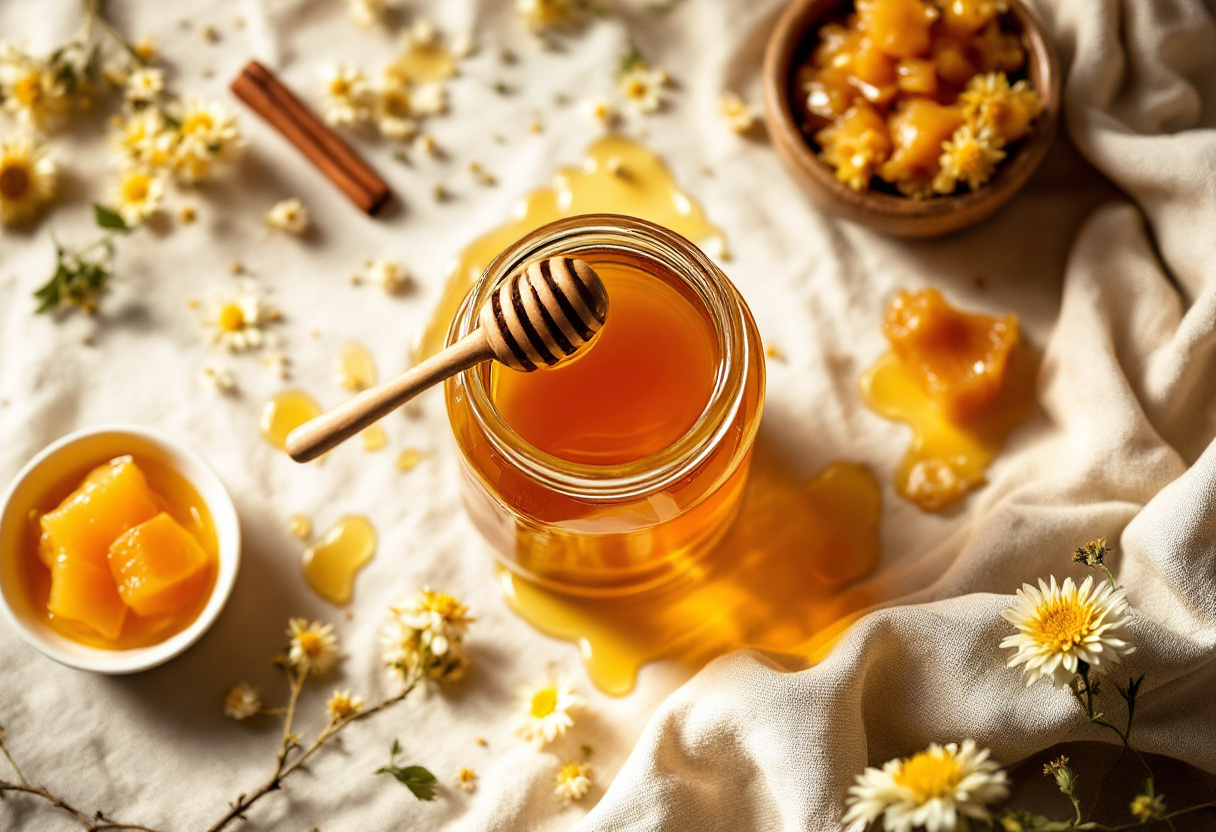
Wellness communities treat honey as the PCOS-safe sweetener. The truth is more specific — and more useful — than that.
Short answer: Yes, honey is OK for PCOS in small amounts — roughly 1–2 teaspoons per day of raw, unfiltered honey. It still raises insulin and contains fructose, but it also delivers antioxidants and antimicrobial compounds that table sugar completely lacks. The problem is not honey; it is how much and what kind. This article covers the exact daily limit, which types are worth the money, and where honey is genuinely better than other sweeteners for PCOS.
Scroll any PCOS community and you will find honey treated as a free pass: natural, ancient, full of enzymes, safe for insulin resistance. The reality is that honey is still sugar — it raises blood glucose and insulin — and in one key respect it is actually more problematic than table sugar. But it also has genuine properties table sugar completely lacks, and those matter for PCOS in ways worth understanding. This article gives you the full picture: what honey does metabolically, exactly how much is safe, and which sweeteners are genuinely better for PCOS.
Key takeaways
- Honey is still sugar — it raises blood glucose and insulin and is not a metabolically free sweetener for PCOS
- Honey is proportionally lower in fructose than table sugar (~38% vs ~50% split), though its higher fructose-to-glucose ratio within its own composition still matters for triglycerides and liver insulin resistance in large quantities
- Raw honey has real antioxidant polyphenols — a genuine advantage over refined sugar for PCOS-related chronic inflammation
- Safe amount: 1–2 teaspoons (7–14g) per day in tea or on yogurt — unlikely to be a meaningful problem
- For sweetness with no insulin effect, stevia and monk fruit are more neutral for PCOS than any sugar, including honey
Contents
- What honey actually is
- The fructose problem
- Glycaemic index and insulin response
- The genuine upside: antioxidants and inflammation
- Raw vs processed — why it matters
- Manuka honey and PCOS
- Sweetener comparison: honey vs sugar vs stevia
- The cinnamon and honey question
- How much is safe and what to use instead
- Frequently asked questions
What honey actually is
Honey is primarily a concentrated sugar solution — about 80% sugars by weight, with water making up most of the rest. The sugar composition is roughly 38% fructose, 31% glucose, plus smaller amounts of maltose, sucrose, and other oligosaccharides. The remaining fraction includes enzymes, organic acids, amino acids, vitamins, minerals, and — in raw honey — a meaningful quantity of antioxidant polyphenols.
That composition matters because it differs from table sugar in two important ways. First, table sugar (sucrose) splits cleanly into exactly 50% fructose and 50% glucose when digested — honey has a higher fructose-to-glucose ratio within its own composition (roughly 1.2:1 vs sucrose’s 1:1), though its total fructose content per gram (~38%) is lower than table sugar’s (~50%). Second, table sugar has essentially no bioactive compounds; raw honey does. Both of those facts shape how to think about honey for PCOS.
The fructose problem
Fructose is the sugar most PCOS resources overlook, yet it is one of the most metabolically relevant for insulin-resistant women. Unlike glucose, fructose is metabolised almost exclusively in the liver. In a liver already dealing with insulin resistance — common in PCOS — excess fructose has specific downstream effects:
- Triglyceride production — fructose is readily converted to fat in the liver, raising blood triglycerides. Elevated triglycerides are already more common in women with PCOS, and high triglycerides worsen insulin resistance further.
- Uric acid — fructose metabolism produces uric acid as a byproduct, which impairs nitric oxide signalling and has been independently associated with insulin resistance.
- Hepatic fat accumulation — consistent high fructose intake is one of the main dietary drivers of fatty liver, which amplifies whole-body insulin resistance.
None of this means a teaspoon of honey in morning tea is causing liver problems. It means that honey used liberally — two tablespoons in smoothies, in granola, in sauces and baking every day — can add a meaningful fructose load, and that load is not neutral for PCOS metabolism.
Glycaemic index and insulin response
The glycaemic index (GI) of honey typically falls between 55 and 65 depending on floral source and processing — somewhat lower than table sugar's 65–70.4 The lower GI exists partly because fructose has a very low GI (around 20), which pulls the average down. That does translate to a modestly blunted blood glucose spike compared with an equivalent amount of refined sugar.
A controlled study comparing honey with dextrose and sucrose in healthy, diabetic, and hyperlipidaemic participants found that honey produced lower blood glucose and better lipid profiles than the comparators, while also lowering C-reactive protein and homocysteine — markers directly relevant to PCOS inflammation.1 This doesn't make honey a health food, but it does meaningfully distinguish it from plain refined sugar.
The genuine upside: antioxidants and inflammation
PCOS is characterised by chronic low-grade inflammation — elevated CRP, IL-6, and TNF-alpha are consistently found in women with PCOS, and this inflammation worsens insulin resistance, androgen production, and ovarian dysfunction.2 This is where raw honey's antioxidant content becomes genuinely relevant.
Raw honey contains polyphenols — primarily flavonoids (quercetin, kaempferol, luteolin) and phenolic acids — whose concentration varies by floral source and processing. Darker honeys (buckwheat, Manuka, raw wildflower) tend to have higher polyphenol levels. These compounds neutralise reactive oxygen species, suppress inflammatory cytokine production, and may modestly improve endothelial function.3 Table sugar has none of these. In the specific context of PCOS — where chronic inflammation is a core driver — that distinction has practical relevance at realistic dose levels.
Raw vs processed — why it matters
Most supermarket honey has been heated and filtered to improve clarity and prevent crystallisation. That process significantly degrades the polyphenol content — some studies report losses of 30–50% or more. The clear honey in a plastic bear is essentially a fructose-glucose syrup with trace minerals and little remaining antioxidant activity.
Raw honey — unpasteurised, unfiltered, usually sold opaque or partially crystallised — retains the full polyphenol profile, natural enzymes, and bee pollen and propolis particles that contribute additional anti-inflammatory compounds. If honey is part of your PCOS eating pattern, raw is the only version worth using.
Manuka honey and PCOS
Manuka honey — from New Zealand and Australian Leptospermum tea tree — is distinguished by its high concentration of methylglyoxal (MGO), a compound with potent antimicrobial and anti-inflammatory properties not found in significant quantities in other honeys. A UMF (Unique Manuka Factor) or MGO rating indicates the potency of this compound.
For PCOS, Manuka's strongest case is in the inflammatory pathway — its anti-inflammatory effects are more potent than standard honey at equivalent doses. For women with PCOS who also have gut symptoms (dysbiosis, SIBO), Manuka's antimicrobial properties may add benefit given the emerging gut-ovary axis research. What Manuka does not do is change the insulin story — it still raises blood glucose and insulin at roughly the same rate as other honeys. If you use honey primarily for its anti-inflammatory properties and can afford the cost, Manuka (UMF 10+ or MGO 250+) in small amounts is the best version to choose.
Sweetener comparison: honey vs sugar vs stevia for PCOS
| Sweetener | GI | Fructose % | Antioxidants | PCOS verdict |
|---|---|---|---|---|
| Raw honey | 55–65 | ~38% | Yes (polyphenols) | OK in small amounts |
| Refined white sugar | 65–70 | 50% | None | Minimise |
| Agave syrup | 15–30 | 70–90% | Negligible | Avoid |
| Maple syrup (pure) | 54 | ~2% | Trace | OK in small amounts |
| Stevia (pure) | 0 | 0% | None | Best choice |
| Monk fruit extract | 0 | 0% | None | Best choice |
| Ceylon cinnamon | 0 | 0% | Yes (polyphenols) | Actively beneficial |
Note that agave's deceptively low GI is entirely due to its extreme fructose content — it causes a smaller blood glucose spike but a larger liver fructose load. It is consistently the worst sweetener choice for PCOS despite its "natural" positioning. Pure maple syrup has a very low fructose proportion and a similar GI to raw honey, making it a reasonable alternative to honey if you want variety.
The cinnamon and honey question
"Cinnamon and honey for PCOS" is one of the most-searched combinations. Here is the honest answer about each part:
Cinnamon has genuine modest evidence for PCOS benefit. Ceylon cinnamon slows gastric emptying, blunts the post-meal glucose spike, and appears to improve insulin signalling at a cellular level. A randomised controlled trial found that cinnamon supplementation significantly improved menstrual cyclicity in women with PCOS.5 It is worth including daily regardless of whether you use honey.
Honey adds sweetness and antioxidants, as covered above. Together in a hot drink, the combination is a pleasant, fine-in-small-amounts ritual. Adding cinnamon does not neutralise honey's effect on blood glucose — but it does add its own genuine benefit independently. If you enjoy the combination in a cup of tea, keep it. If you are consuming multiple tablespoons daily as a PCOS treatment, the expectations need recalibrating.
How much is safe and what to use instead
Safe daily amounts
- 1–2 teaspoons (7–14g) in a cup of tea or coffee
- A thin drizzle over plain full-fat Greek yogurt — adds roughly 5g sugar
- A teaspoon in a salad dressing shared across a full meal
Amounts that accumulate
- 2 tablespoons in a smoothie — 34g sugar, predominantly fructose and glucose
- Honey-sweetened granola eaten daily — most recipes use 3–4 tablespoons per batch
- Honey in oats, in sauces, and in tea on the same day — the cumulative load is what matters
Better alternatives for PCOS
- Stevia — zero GI, zero calories; some research suggesting mild insulin-sensitising effects of its own; best for hot drinks and baking
- Monk fruit extract — zero calories, zero GI, clean taste without the bitterness some people notice with stevia
- Ceylon cinnamon — not a sweetener, but adds warmth and sweetness perception with a net positive for insulin sensitivity; half a teaspoon daily is supported by evidence
- Pure maple syrup — lower fructose proportion than honey, similar GI; an acceptable occasional alternative
This article is for general educational purposes and does not constitute medical advice. If you have PCOS, speak with a registered dietitian before making significant dietary changes.
References
- Al-Waili NS. Natural honey lowers plasma glucose, C-reactive protein, homocysteine, and blood lipids in healthy, diabetic, and hyperlipidemic subjects: comparison with dextrose and sucrose. J Med Food. 2004;7(1):100–7. PubMed ↗
- González F et al. Inflammation in polycystic ovary syndrome: underpinning of insulin resistance and ovarian dysfunction. Steroids. 2012;77(4):300–5. PubMed ↗
- Erejuwa OO, Sulaiman SA, Wahab MS. Honey: a novel antioxidant. Molecules. 2012;17(4):4400–23. PubMed ↗
- Bogdanov S, Jurendic T, Sieber R, Gallmann P. Honey for nutrition and health: a review. J Am Coll Nutr. 2008;27(6):677–89. PubMed ↗
- Kort DH, Lobo RA. Preliminary evidence that cinnamon improves menstrual cyclicity in women with polycystic ovary syndrome: a randomized controlled trial. Am J Obstet Gynecol. 2014;211(5):487.e1–6. PubMed ↗
Frequently asked questions
A PCOS meal plan that gets sweeteners right
HerMeal generates personalised PCOS meal plans that balance blood sugar, hit protein targets, and work around your real food preferences — including how you like to sweeten things.
Get your free plan