What Is PMOS? The Updated Name for PCOS Explained
PMOS — Polyendocrine Metabolic Ovarian Syndrome — is the updated name for the condition most people still call PCOS. Here's what changed, why it matters, and what it means for how you eat and manage your symptoms.
PMOS (Polyendocrine Metabolic Ovarian Syndrome) is the updated medical name for the condition long known as PCOS (Polycystic Ovary Syndrome). The condition itself has not changed — the symptoms, the hormonal patterns, and the nutritional approach are identical. What changed is the name, and more importantly, the framing: PMOS is primarily a metabolic and endocrine disorder, not an ovarian one. That distinction changes how the condition is understood, communicated, and treated.
Key takeaways
- PMOS and PCOS are the same condition — only the name has changed
- The new name reflects that PMOS is primarily metabolic, driven by insulin resistance and androgen excess
- You do not need a new diagnosis — a PCOS diagnosis is a PMOS diagnosis
- The dietary approach for PMOS is the same: high protein, low-GI carbs, anti-inflammatory fats
- "PMOS" is still an emerging term — your doctor may still use PCOS, and both are correct
Contents
What does PMOS stand for?
PMOS stands for Polyendocrine Metabolic Ovarian Syndrome.
- Polyendocrine — the condition involves multiple endocrine (hormone-producing) systems: the pancreas produces excess insulin, the adrenal glands and ovaries produce excess androgens, and the hypothalamic-pituitary axis is disrupted. It is not a single-organ problem.
- Metabolic — insulin resistance is the central driver. PMOS is fundamentally a metabolic condition that manifests in hormonal symptoms, not a hormonal condition that happens to affect metabolism.
- Ovarian Syndrome — the ovaries are affected (irregular cycles, elevated androgens, sometimes polycystic appearance on ultrasound), but they are the downstream target of the metabolic dysfunction, not the origin of it.
The old name — Polycystic Ovary Syndrome — placed the ovaries at the centre of the condition. The new name places metabolic dysfunction at the centre, which is where the scientific evidence points.
Why was PCOS renamed to PMOS?
The name PCOS has been criticised for decades, and not without reason. Three specific problems drove the push to rename it:
1. Not everyone with the condition has cysts
A significant proportion of women diagnosed with PCOS have no polycystic ovaries on ultrasound — and yet they have the insulin resistance, the elevated androgens, and the metabolic symptoms. Naming the condition after a symptom that many sufferers don't even have created confusion for patients and clinicians alike.
2. The cysts are a symptom, not the cause
When polycystic ovaries do appear, they are a consequence of elevated LH and insulin signalling driving excessive follicle stimulation — not the root cause of the condition. Calling it "Polycystic Ovary Syndrome" implies the ovaries are broken when they are actually responding normally to an abnormal hormonal environment driven by insulin resistance.1
3. The name creates stigma and misunderstanding
Many women with PCOS/PMOS spend years being told their symptoms — fatigue, weight gain, acne, irregular periods — are a result of "ovarian problems." The metabolic framing is both more accurate and more empowering: it means the condition is substantially responsive to diet and lifestyle, because its root cause is metabolic.
PMOS vs PCOS: what's actually different?
In short: the condition is identical. The name is different. The framing is different. The treatment and nutritional approach are unchanged.
| Feature | PCOS (old name) | PMOS (updated name) |
|---|---|---|
| Full name | Polycystic Ovary Syndrome | Polyendocrine Metabolic Ovarian Syndrome |
| Underlying condition | Same | Same |
| Symptoms | Same | Same |
| Diagnosis criteria | Rotterdam criteria | Rotterdam criteria |
| Primary framing | Ovarian disorder | Metabolic & endocrine disorder |
| Treatment approach | Same | Same |
| Nutritional approach | Same | Same |
If you have a PCOS diagnosis, you have PMOS. You do not need to see a doctor to "switch" diagnoses — they are the same thing.
PMOS symptoms
Because PMOS and PCOS are the same condition, the symptoms are identical. PMOS is diagnosed on a spectrum — not every woman has every symptom, and severity varies widely.
- Irregular or absent periods — caused by anovulation (failure to ovulate regularly), driven by disrupted LH pulsatility and elevated androgens
- Elevated androgens — excess testosterone and DHEA cause acne (particularly jawline and chin), excess facial or body hair (hirsutism), and scalp hair thinning
- Insulin resistance — cells become less responsive to insulin, requiring more to be produced; leads to energy crashes, intense carbohydrate cravings, and difficulty losing weight despite calorie restriction
- Weight gain or difficulty losing weight — particularly around the abdomen, driven by elevated insulin promoting fat storage and suppressing fat mobilisation
- Chronic fatigue — reactive hypoglycaemia from insulin spikes causes energy crashes; poor sleep quality compounds this
- Polycystic ovaries on ultrasound — present in approximately 70% of women with PMOS, but not required for diagnosis
- Fertility challenges — irregular ovulation makes natural conception more difficult, though most women with PMOS can conceive with appropriate support
The root cause of PMOS
Understanding the root cause of PMOS changes how you approach managing it. The central driver is an interconnected cycle between insulin resistance and androgen excess:
- Insulin resistance develops — cells in muscle, liver, and fat tissue become less responsive to insulin. The pancreas compensates by producing more insulin (hyperinsulinaemia).
- Excess insulin stimulates the ovaries — elevated insulin directly signals the ovaries and adrenal glands to produce more androgens (testosterone, DHEA). Insulin also suppresses sex hormone-binding globulin (SHBG), meaning more of that testosterone is "free" and biologically active.
- Elevated androgens disrupt ovulation — excess androgens impair follicle development and LH pulsatility, preventing regular ovulation and driving the irregular cycles and polycystic appearance.
- The cycle reinforces itself — elevated androgens worsen insulin sensitivity, which raises insulin further, which raises androgens further. Without intervention, the cycle continues.
This cycle is the reason generic calorie-restricted diets consistently fail PMOS women. Reducing calories does not break the insulin-androgen cycle — targeting the right macronutrients does.
PMOS types and phenotypes
The Rotterdam criteria define four clinical phenotypes of PMOS based on which of the three diagnostic criteria are present. In practice, three distinct clinical presentations are most useful for understanding how to manage the condition:
Classic insulin-resistant PMOS
The most common presentation, accounting for roughly 70–80% of cases. Women in this group typically have elevated fasting insulin, higher BMI, visible central weight gain, strong carbohydrate cravings, and energy crashes after meals. Metabolic syndrome features — elevated triglycerides, low HDL, raised blood pressure — are common. This phenotype responds most dramatically to the high-protein, low-GI dietary approach because insulin resistance is the dominant driver.
Lean PMOS (adrenal phenotype)
Lean PMOS affects 10–20% of women with PMOS and is one of the most misunderstood presentations. Women in this group are at a healthy or low BMI, and their primary driver is adrenal androgen excess — elevated DHEA-S produced by the adrenal glands — rather than insulin resistance from excess body fat. The HPA (hypothalamic-pituitary-adrenal) axis is more reactive, meaning cortisol plays a much larger role in driving androgen production.
Lean PMOS symptoms are often identical to classic PMOS: irregular cycles, acne, fatigue, hair thinning. But the management differs in key ways:
- Cortisol management is a priority — chronic stress directly triggers adrenal androgen production
- Aggressive calorie restriction worsens lean PMOS by raising cortisol further
- Extended fasting protocols (16:8 or longer) can increase cortisol and should be approached cautiously — a 12–14 hour window is safer to start
- The dietary goal is still blood sugar stabilisation, but the mechanism matters: eating enough is as important as eating the right foods
Post-pill PMOS
Some women first notice PMOS symptoms — or notice them worsening — after stopping hormonal contraception. The combined oral contraceptive pill suppresses LH pulsatility and reduces androgen production during use; when stopped, there can be a rebound period where the underlying PMOS becomes apparent. This is not caused by the pill — the underlying susceptibility was present before — but the pill was masking symptoms.
Post-pill PMOS typically involves a 3–12 month recalibration period as the hypothalamic-pituitary-ovarian (HPO) axis re-establishes its natural rhythm. Diet and lifestyle support during this period significantly reduces the severity of the rebound and can accelerate the return of regular cycles.
What PMOS means for your diet
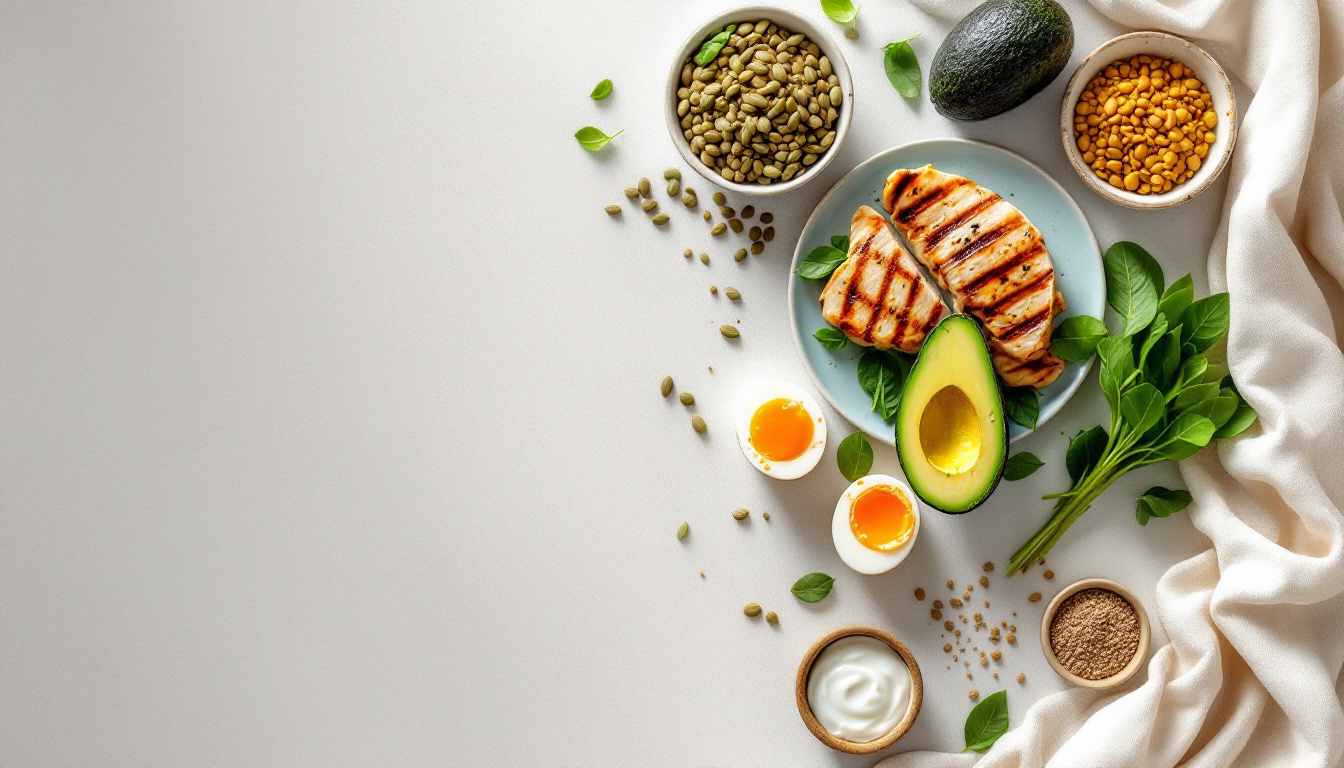
Because PMOS is a metabolic condition at its core, diet is one of the most powerful levers available. The nutritional approach that works for PMOS targets the insulin-androgen cycle directly:
High protein (130–140g per day)
Protein blunts post-meal glucose spikes by slowing gastric emptying, triggers satiety hormones (GLP-1, PYY) that reduce the relentless hunger PMOS drives, and supports muscle mass — your primary insulin-sensitive tissue. More muscle means better glucose disposal independent of insulin. Aim for 35–45g of protein per meal.3
Low-GI carbohydrates (under 50g net carbs per day)
High-GI foods cause rapid blood glucose spikes that trigger insulin surges, which directly drives androgen production. Low-GI sources — lentils, chickpeas, non-starchy vegetables, small amounts of sweet potato — provide energy without that spike. Most PMOS women notice significant reductions in cravings and energy crashes within two weeks of making this change.
Anti-inflammatory fats at every meal
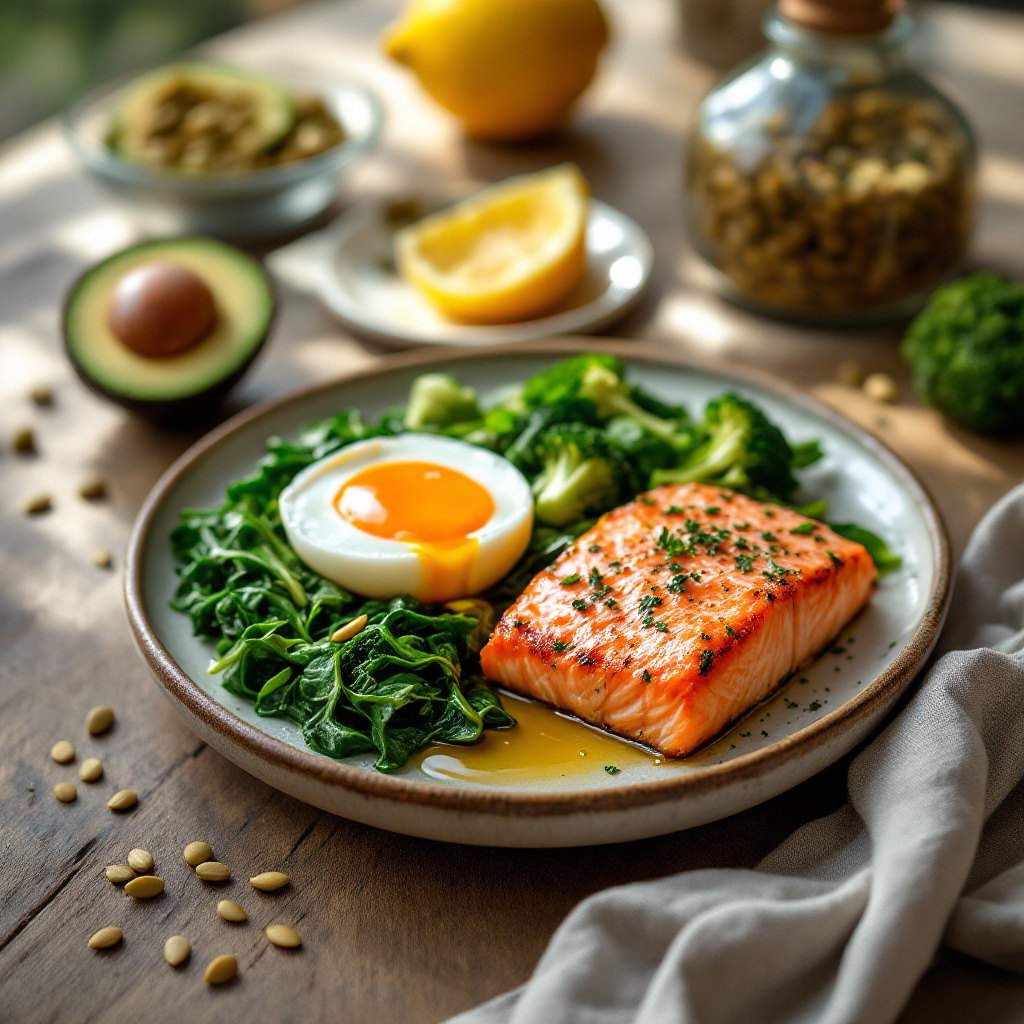
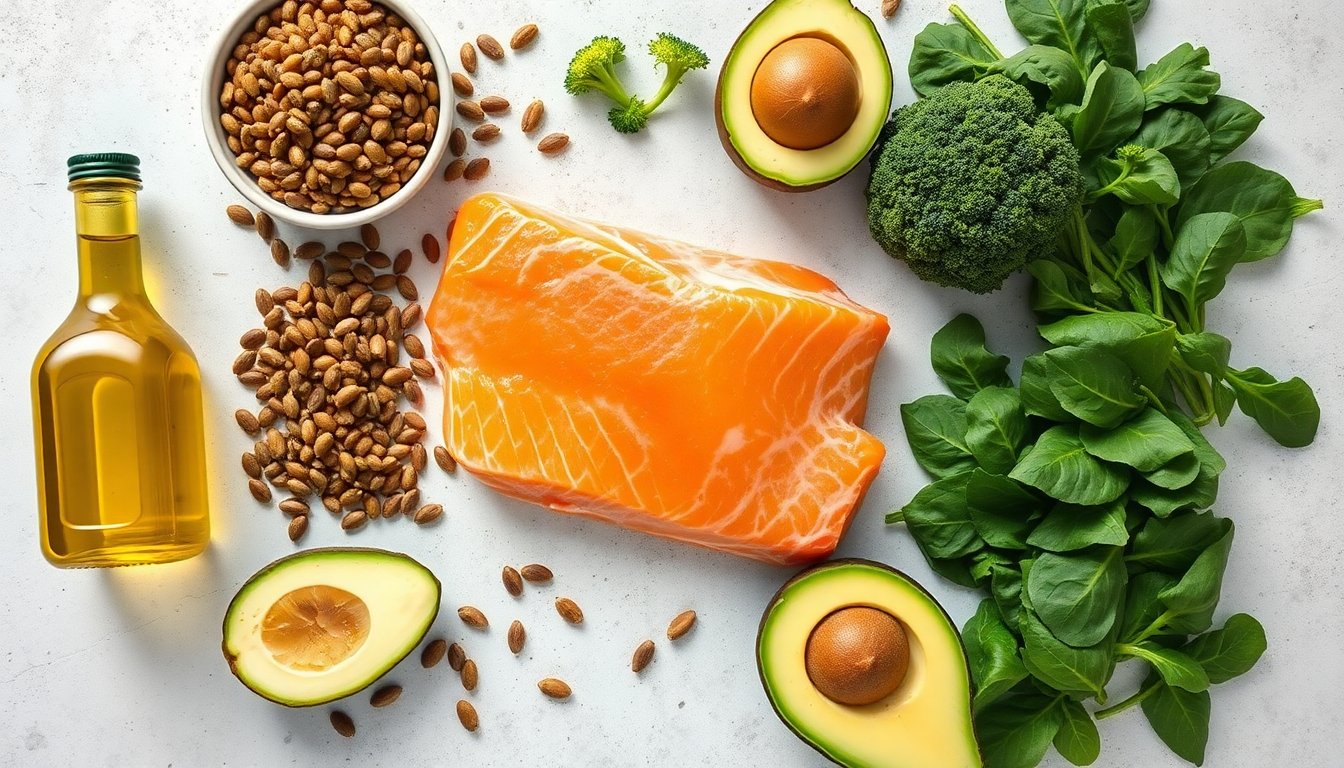
Omega-3 fatty acids (salmon, sardines, flaxseed, walnuts) directly reduce the chronic low-grade inflammation that characterises PMOS. Olive oil, avocado, eggs, and nuts support fat-soluble vitamin absorption and slow digestion to further blunt glucose absorption.
Foods with specific PMOS evidence
- Lentils and chickpeas — rich in myo-inositol, one of the most studied compounds for reducing insulin resistance and androgen levels in PMOS4
- Ground flaxseed (1 tbsp daily) — SDG lignans compete with androgens at receptor level, reducing the biological impact of excess testosterone
- Spearmint tea (2 cups daily) — shown in RCTs to significantly reduce free testosterone in PMOS women5
- Fatty fish (3–4 times per week) — omega-3s reduce inflammatory markers (CRP, IL-6) elevated in PMOS and improve adiponectin
- Pumpkin seeds — zinc-rich, and zinc is commonly depleted in PMOS; also shown to modulate 5-alpha reductase, the enzyme that converts testosterone to its more potent form
Supplements for PMOS
The following supplements have the strongest clinical evidence in PMOS and work by targeting the same insulin-androgen cycle that diet addresses. They supplement diet — not replace it — but for many women they noticeably accelerate progress when added to an already consistent nutritional foundation.
Myo-inositol (2–4g per day)
Myo-inositol is the most studied supplement in PMOS research. It is a secondary messenger in insulin signalling — meaning it helps insulin actually work at the cellular level even when cellular resistance is present. Multiple RCTs show it reduces fasting insulin, LH:FSH ratio, free testosterone, and AMH in women with PMOS, and improves ovulatory function.4 Take 2g with breakfast and 2g with dinner. The 40:1 ratio of myo-inositol to D-chiro-inositol mirrors physiological ratios.
Magnesium (300–400mg per day)
Magnesium deficiency affects the majority of women with PMOS and is rarely tested. Magnesium is a cofactor in over 300 enzymatic reactions including glucose metabolism and insulin receptor function. Supplementation improves insulin sensitivity, reduces fasting glucose, and lowers cortisol — particularly relevant for lean/adrenal PMOS. Magnesium glycinate or bisglycinate is better tolerated than magnesium oxide. Take at night as it also supports sleep quality.6
Vitamin D (2,000–4,000 IU per day)
Vitamin D deficiency is nearly universal in PMOS — studies consistently find that over 80% of women with PMOS are deficient or insufficient. Vitamin D receptors are present in ovarian tissue, the pancreas, and adrenal glands, and supplementation improves insulin sensitivity, ovulatory function, and androgen profiles.7 Get your 25-OH vitamin D tested — if below 50 nmol/L, consider 4,000 IU daily with K2 (100mcg) to support calcium metabolism.
Omega-3 fatty acids (2–4g EPA+DHA per day)
Omega-3s reduce the chronic low-grade inflammation (elevated CRP, IL-6) that characterises PMOS and worsens insulin resistance. They also improve adiponectin — a hormone that enhances insulin sensitivity and is typically suppressed in PMOS. Three to four servings of fatty fish per week provides meaningful omega-3 intake, but most women need supplementation to reach clinical levels. Look for a product with at least 500mg EPA + 300mg DHA per capsule.
Berberine (500mg, 2–3 times per day with meals)
Berberine is a plant-derived compound with clinical effects comparable to metformin in multiple head-to-head RCTs. It activates AMPK — the same pathway metformin targets — to reduce hepatic glucose output and improve peripheral insulin sensitivity. Berberine also reduces total testosterone and LH:FSH ratio in PMOS. Take with food as it can cause GI discomfort on an empty stomach. It should not be combined with metformin without GP guidance, and is not recommended during pregnancy or while trying to conceive.
Treatment and management
PMOS is a chronic condition, but it is highly responsive to treatment — particularly lifestyle-based intervention. The most effective approach addresses the root cause (insulin resistance and androgen excess) rather than managing individual symptoms in isolation.
First-line: diet and exercise
International clinical guidelines consistently recommend lifestyle modification as the first-line treatment for PMOS. A 5–10% reduction in body weight in women with insulin-resistant PMOS significantly improves hormonal markers, cycle regularity, and fertility outcomes — and diet is the primary driver of this change, not exercise alone.
- Diet: high protein (130–140g/day), low-GI carbohydrates, anti-inflammatory fats — as described in the section above
- Resistance training: 2–3 sessions per week; skeletal muscle is the primary tissue for glucose disposal, so building muscle directly improves insulin sensitivity independent of weight loss
- Post-meal walking: 10–20 minutes after meals reduces post-meal glucose spikes by activating GLUT4 transporters without requiring insulin, reducing the insulin burden after each meal
- Sleep: 7–9 hours per night; even one night of sleep restriction measurably reduces insulin sensitivity and raises cortisol the following day
- Stress management: particularly critical for adrenal/lean PMOS; practices that reduce HPA axis reactivity (restorative yoga, breathwork, consistent sleep/wake timing) directly reduce DHEA-S and cortisol
Medical options
Medical treatment for PMOS is symptom-directed and prescribed by a GP or specialist. Common options include:
- Metformin — an insulin sensitiser that reduces hepatic glucose production and improves cellular insulin response. Often prescribed alongside lifestyle intervention for insulin-resistant PMOS. Dose typically starts at 500mg and increases to 1,000–2,000mg/day as tolerated. GI side effects (nausea, loose stools) are common initially and usually resolve within 4–6 weeks.
- Combined oral contraceptive pill (OCP) — regulates cycles and reduces androgen symptoms by suppressing LH and raising SHBG. Does not address the underlying metabolic dysfunction. Often used short-term while lifestyle changes take effect, or for women not actively trying to conceive.
- Spironolactone — an anti-androgen that blocks androgen receptors, reducing acne and hirsutism. Used when androgen-driven symptoms are the primary concern. Not suitable for women who are pregnant or planning pregnancy.
- Clomiphene or Letrozole — ovulation-induction agents prescribed for PMOS women trying to conceive. Letrozole is now preferred over clomiphene in most guidelines due to higher live birth rates in PMOS.
PMOS diagnosis
PMOS is diagnosed using the same Rotterdam criteria used for PCOS. A diagnosis requires at least two of the following three features:
- Irregular or absent ovulation — typically presenting as irregular or absent periods (cycles shorter than 21 days or longer than 35 days, or fewer than 8 periods per year)
- Clinical or biochemical signs of hyperandrogenism — acne, hirsutism, or scalp hair loss clinically; or elevated total testosterone, free testosterone, or DHEA-S on blood test
- Polycystic ovaries on ultrasound — 20 or more follicles in at least one ovary, or ovarian volume greater than 10mL
Only two of the three are required. You can have PMOS without polycystic ovaries on ultrasound. You can have PMOS without obvious androgen symptoms. The condition presents differently in different women.
If you suspect PMOS, speak to your GP or a gynaecologist. Blood tests to ask for: total testosterone, free testosterone, DHEA-S, LH, FSH, fasting insulin, fasting glucose, HbA1c, and SHBG. A transvaginal or transabdominal ultrasound of the ovaries is also typically part of the diagnostic workup.
This article is for general educational purposes and does not constitute medical advice. If you suspect you have PMOS or PCOS, consult your GP or a registered specialist for a diagnosis and personalised treatment plan.
References
- Dumesic DA, et al. (2015). Scientific Statement on the Diagnostic Criteria, Epidemiology, Pathophysiology, and Molecular Genetics of Polycystic Ovary Syndrome. Endocrine Reviews. PubMed ↗
- World Health Organization. (2023). Polycystic ovary syndrome fact sheet. WHO ↗
- Paddon-Jones D, et al. (2008). Protein, weight management, and satiety. American Journal of Clinical Nutrition. PubMed ↗
- Unfer V, et al. (2017). Effects of myo-inositol in women with PCOS: a systematic review. Gynecological Endocrinology. PMC ↗
- Grant P. (2010). Spearmint herbal tea has significant anti-androgen effects in polycystic ovarian syndrome. Phytotherapy Research. PubMed ↗
- Barbagallo M, et al. (2018). Magnesium in Type 2 Diabetes, Insulin Resistance and Metabolic Syndrome. Open Access Macedonian Journal of Medical Sciences. PubMed ↗
- Irani M, et al. (2014). Vitamin D supplementation decreases TGF-β1 bioavailability in PCOS: a randomized placebo-controlled trial. Journal of Clinical Endocrinology & Metabolism. PubMed ↗
Frequently asked questions
Get your personalised PMOS meal plan
HerMeal generates a complete 5-day PMOS meal plan built around your fasting window, calorie target, dietary restrictions, and PMOS profile — ready in under 2 minutes.
Start free