Low GI Meal Plan for PCOS Foods, Science and a 5-Day Plan
Of every dietary approach studied for PCOS, low glycemic index eating has some of the most direct trial evidence — including improved cycle regularity.
Most PCOS nutrition advice eventually lands on the same phrase: "eat low GI." But what does that actually mean at breakfast on a Tuesday? The glycemic index (GI) ranks carbohydrates by how quickly they raise blood glucose — and because PCOS is driven substantially by insulin resistance, slowing that glucose rise matters more for you than for almost anyone else. In a randomised trial, women with PCOS following a low-GI diet showed significantly better insulin sensitivity and menstrual regularity than those on a conventional healthy diet 1. This guide turns that evidence into food: what to choose, what to swap, and a full 5-day low-GI meal plan.
🔑 Key takeaways
- Low GI means slower-digesting carbohydrates (GI ≤ 55) — it is not a low-carb diet
- In a randomised PCOS trial, low-GI eating improved insulin sensitivity and menstrual regularity more than a conventional healthy diet
- Legumes, intact whole grains, non-starchy vegetables, berries and dairy form the low-GI core
- Pairing carbs with protein and fat — and eating them last in the meal — lowers the glycemic impact of the whole plate
- A few simple swaps (steel-cut oats for cereal, barley for white rice, sourdough for white bread) do most of the work
Contents
Why the Glycemic Index Matters More with PCOS
When you eat a high-GI food — white bread, most breakfast cereals, sugary drinks — glucose floods the bloodstream quickly, and the pancreas responds with a surge of insulin. In PCOS, where the body is already insulin resistant, that surge is larger and lasts longer. Chronically elevated insulin then stimulates the ovaries to produce more androgens, which drives many of the symptoms you actually feel: irregular cycles, acne, hair changes.
Low-GI carbohydrates flatten this whole cascade at the first step. The physiological mechanisms are well established: slower glucose absorption means a smaller insulin response, better satiety, and improved metabolic markers over time 2. For a woman with PCOS, choosing lentils over white rice is not a minor tweak — it is directly targeting the hormone pathway at the centre of the condition.
What the Evidence Shows
Low-GI eating is one of the few dietary patterns tested directly in women with PCOS. In a 12-month randomised trial, Marsh and colleagues compared an ad libitum low-GI diet against a macronutrient-matched conventional healthy diet. The low-GI group showed significantly greater improvement in insulin sensitivity — and strikingly, 96% of women on the low-GI diet had improved menstrual regularity, compared with 63% on the conventional diet 1.
A subsequent systematic review of dietary composition in PCOS treatment reached a similar conclusion: while weight loss helps across the board, carbohydrate quality — particularly lower-GI patterns — produced measurable benefits for menstrual regularity and insulin-related outcomes 3. Broader PCOS nutrition reviews consistently include low-GI eating among the best-supported strategies 4.
Low-GI Swaps That Do the Heavy Lifting
You do not need a GI table taped to your fridge. Most of a low-GI diet is accomplished by a dozen one-for-one swaps:
- Breakfast cereal steel-cut or rolled oats (the less processed the oat, the lower the GI)
- White bread dense wholegrain or sourdough (sourdough's fermentation lowers its glycemic response)
- White rice barley, quinoa or basmati (barley is one of the lowest-GI grains available)
- Mashed potato roasted sweet potato or lentils
- Crackers and rice cakes nuts, seeds or vegetable sticks with hummus
- Fruit juice whole fruit (juicing removes the fibre and doubles the speed of the sugar)
- Regular pasta pulse-based pasta, or cook regular pasta al dente (overcooking raises GI)
- Instant oats and flavoured sachets plain traditional oats
- White flour baking add ground flax, oats or almond flour
Building a Low-GI PCOS Plate
GI is a property of foods, but your blood sugar responds to meals. Three plate-level habits lower the glycemic impact of everything you eat:
1. Never eat carbohydrates alone. Protein and fat slow gastric emptying, so oats with Greek yoghurt and nuts produce a much flatter glucose curve than oats alone. Every meal and snack should pair its carb with a protein.
2. Eat carbs last. Eating protein and vegetables first and saving the carbohydrate for the end of the meal measurably reduces the post-meal glucose and insulin spike 5. It costs nothing and requires no food changes at all.
3. Prioritise fibre at every meal. Soluble fibre — oats, legumes, chia, flax — forms a gel that slows glucose absorption. It is the mechanism behind much of the low-GI benefit, and it is why legumes are the single best carbohydrate family for PCOS.
A Sample 5-Day Low-GI PCOS Meal Plan
Monday
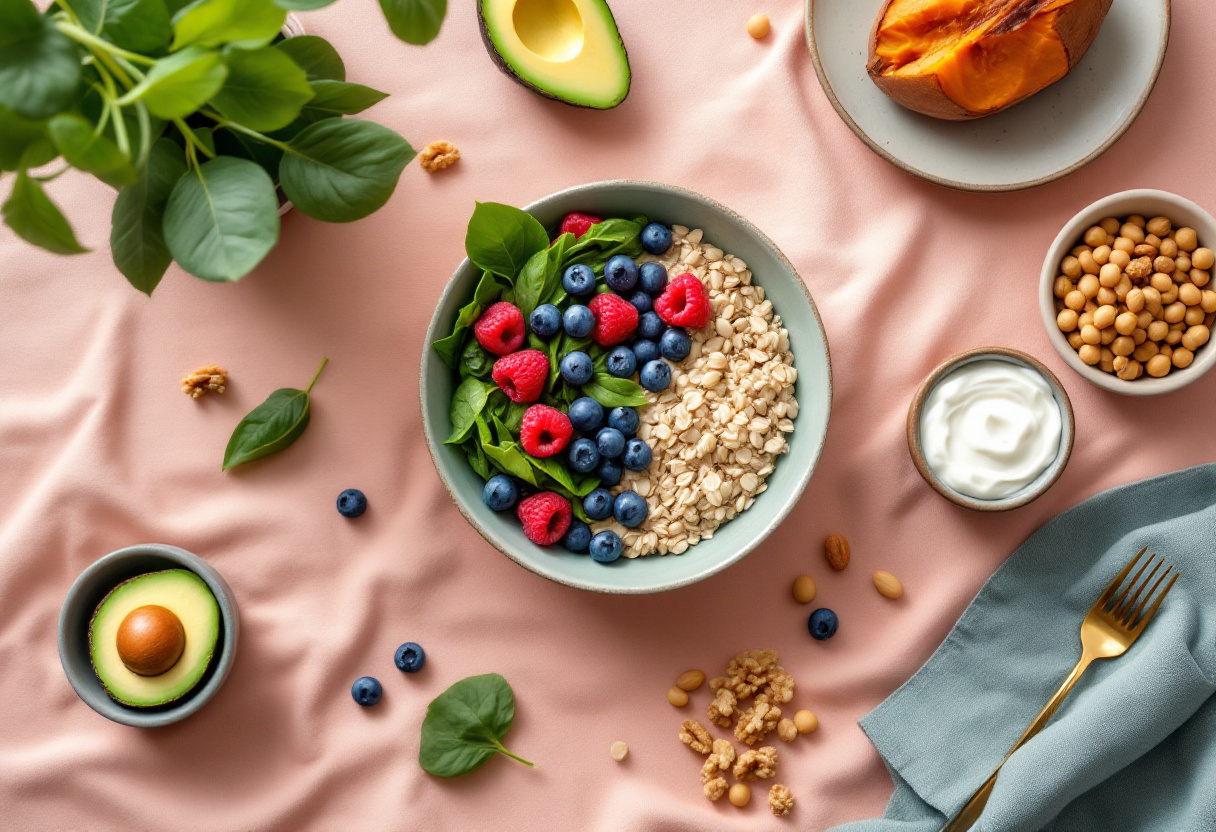
- Breakfast: Steel-cut oats with Greek yoghurt, blueberries and chia
- Lunch: Lentil and vegetable soup with a slice of dense wholegrain bread
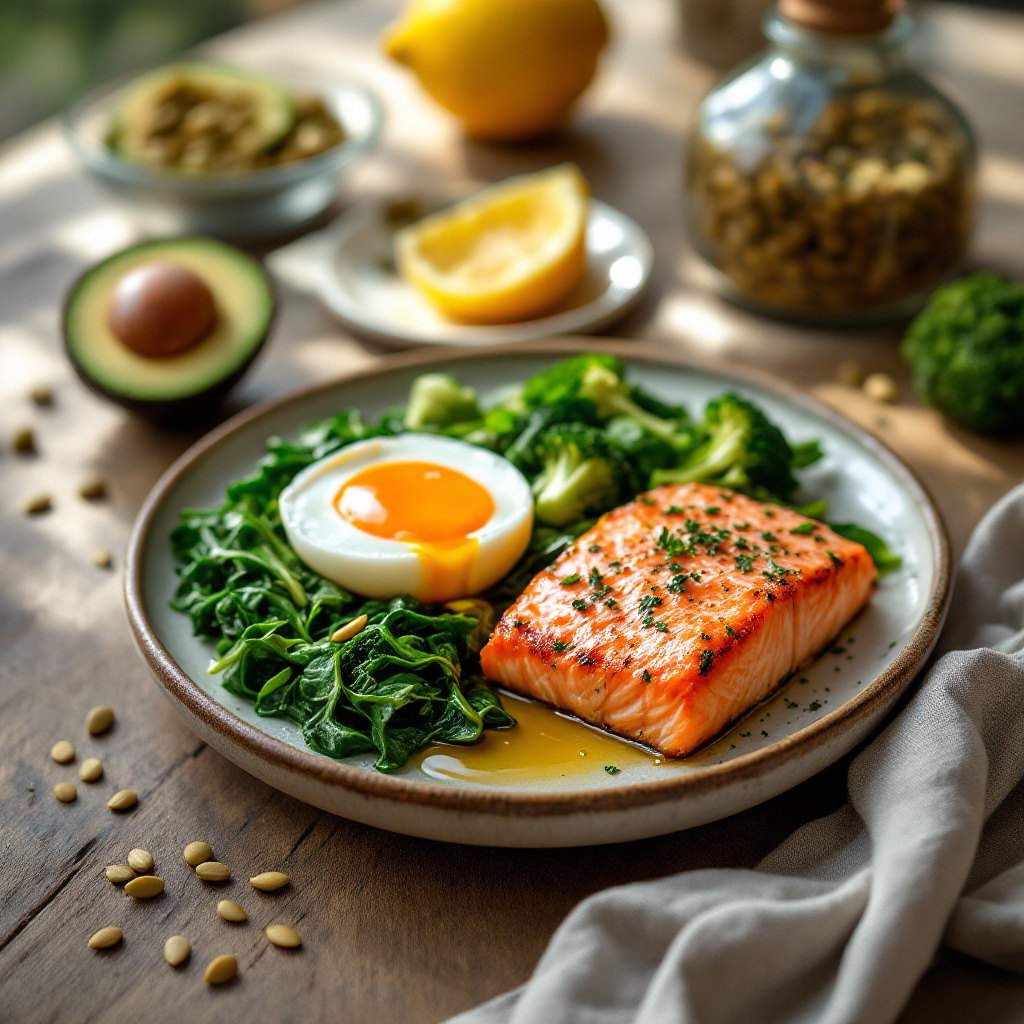
- Dinner: Baked salmon or chicken thighs, roasted broccoli, pearl barley
Tuesday
- Breakfast: Three-egg omelette with spinach and feta, half an avocado
- Lunch: Chickpea salad with cucumber, tomato, olive oil and lemon
- Dinner: Beef or tofu stir-fry with mixed vegetables over basmati rice (small portion, eaten last)
Wednesday
- Breakfast: Greek yoghurt bowl with raspberries, walnuts and ground flax
- Lunch: Leftover stir-fry, or sardines on sourdough with rocket
- Dinner: Red lentil dahl with spinach, served with quinoa
Thursday
- Breakfast: Overnight oats with grated apple, cinnamon and peanut butter
- Lunch: Leftover dahl with a boiled egg
- Dinner: Roast chicken, sweet potato wedges, big green salad with vinaigrette
Friday
- Breakfast: Cottage cheese with sliced pear and toasted almonds
- Lunch: Tuna, white bean and red onion salad with olive oil
- Dinner: Pulse-pasta bolognese (lentil or chickpea pasta) with a side of greens
Every day follows the same quiet rules: protein at every meal, legumes at least once, carbohydrates intact rather than processed, and vegetables or salad taking up half the dinner plate.
Common Low-GI Mistakes
Confusing low GI with low carb. The trial evidence for PCOS comes from diets that kept carbohydrates and simply slowed them down 1. Cutting carbs to nothing usually cuts fibre too — and makes the diet much harder to sustain.
Ignoring portion size because a food is "low GI". GI measures quality, not quantity. A very large serving of a low-GI food still delivers a large glucose load. Reasonable portions of low-GI carbs — roughly a quarter of the plate — is the pattern the evidence supports.
Trusting labels over structure. "Wholegrain" on a package tells you about ingredients, not digestion speed. Finely milled wholegrain flour behaves almost like white flour. Look for intactness — visible grains, dense texture, seeds — rather than marketing words.
Drinking your sugar. Juice, smoothies with fruit only, and sweetened coffees are the fastest glucose in the modern diet. If it is liquid and sweet, it is high GI regardless of how healthy the label looks.
References
- Marsh KA, Steinbeck KS, Atkinson FS, Petocz P, Brand-Miller JC. (2010). Effect of a low glycemic index compared with a conventional healthy diet on polycystic ovary syndrome. The American Journal of Clinical Nutrition, 92(1):83–92. PubMed ↗
- Ludwig DS. (2002). The glycemic index: physiological mechanisms relating to obesity, diabetes, and cardiovascular disease. JAMA, 287(18):2414–2423. PubMed ↗
- Moran LJ, Ko H, Misso M, et al. (2013). Dietary composition in the treatment of polycystic ovary syndrome: a systematic review to inform evidence-based guidelines. Journal of the Academy of Nutrition and Dietetics, 113(4):520–545. PubMed ↗
- Szczuko M, Kikut J, Szczuko U, et al. (2021). Nutrition Strategy and Life Style in Polycystic Ovary Syndrome-Narrative Review. Nutrients, 13. PubMed ↗
- Shukla AP, Iliescu RG, Thomas CE, Aronne LJ. (2017). Carbohydrate-last meal pattern lowers postprandial glucose and insulin excursions in type 2 diabetes. BMJ Open Diabetes Research & Care, 5(1):e000440. PubMed ↗
Frequently asked questions
Get a meal plan built around this
Generate your personalised 5-day PCOS & PMOS meal plan free — high protein, hormone-balancing, built around your fasting window and profile.
Start free trial