PCOS and Sleep: Why You Sleep Badly — and How to Actually Fix It

Why PCOS disrupts sleep at a hormonal level, and what diet and lifestyle changes actually move the needle.
Telling a woman with PCOS to "just get better sleep" is like telling someone with a broken leg to walk it off. Poor sleep in PCOS isn't a habit problem — it has a direct hormonal basis. Women with PCOS are two to three times more likely to experience sleep disorders than women without the condition, and the relationship runs in both directions: PCOS disrupts sleep, and disrupted sleep makes PCOS worse. Understanding the mechanism is the only way to address it effectively — because the standard sleep hygiene advice was written for people whose cortisol, insulin, and androgen levels are working normally. Yours aren't.
🔑 Key takeaways
- Women with PCOS are 2–3x more likely to have sleep disorders, including obstructive sleep apnoea and insomnia
- Elevated androgens, insulin resistance, and low progesterone each independently disrupt sleep architecture
- Even one night of poor sleep measurably reduces insulin sensitivity — creating a direct feedback loop that worsens PCOS
- Low melatonin production is documented in women with PCOS and contributes to difficulty initiating sleep
- Diet is the most underused lever: stable blood sugar at night removes a major driver of overnight cortisol spikes and early waking
- Magnesium glycinate, consistent sleep timing, and evening protein all have specific evidence in the PCOS context
Contents
Why PCOS disrupts sleep — the hormonal picture
Sleep problems in PCOS aren't one thing. They arise from at least four overlapping hormonal disruptions, each of which would independently impair sleep — and in PCOS, they tend to occur simultaneously.
Insulin resistance and cortisol dysregulation are the most fundamental. Chronic hyperinsulinaemia (persistently elevated insulin) keeps the hypothalamic-pituitary-adrenal axis in a state of low-grade activation, meaning cortisol doesn't follow its normal diurnal curve — high in the morning, falling steadily through the day, low by 9–10pm. Instead, it stays elevated into the evening or spikes during the night. Cortisol is not compatible with sleep: it's an alertness hormone, and its presence in the evening disrupts the transition into slow-wave sleep. Women with PCOS and insulin resistance frequently report lying awake with a racing mind or waking between 2am and 4am — both classic signs of a cortisol spike rather than primary insomnia.
Low progesterone compounds the problem. Normal ovulation produces a significant rise in progesterone in the luteal phase, and progesterone metabolises into allopregnanolone — a potent positive modulator of GABA-A receptors, the brain's primary calming system. Women who ovulate regularly experience a measurable sedative effect in the second half of their cycle. Women with PCOS who ovulate infrequently or not at all are essentially missing this neurological signal entirely, leaving them without a reliable monthly window of deeper, easier sleep.
Elevated androgens disrupt sleep architecture through both central and peripheral mechanisms — more on that in the section below on sleep apnoea. And chronic low-grade inflammation, which is also elevated in PCOS, independently reduces slow-wave sleep by raising pro-inflammatory cytokines (particularly IL-6 and TNF-alpha) that interfere with the brain's sleep-regulating systems.
Androgens, sleep apnoea, and the breathing problem
Obstructive sleep apnoea (OSA) is dramatically more common in PCOS than in the general female population — studies find prevalence rates approximately 30 times higher, even after controlling for BMI. This isn't explained by weight alone. Even lean women with PCOS have elevated OSA rates, pointing to androgens as an independent risk factor.
The mechanism is direct: androgens — specifically testosterone and its downstream metabolites — increase upper airway collapsibility by affecting the muscle tone of the pharyngeal muscles. They also alter the central respiratory drive in ways that increase apnoeic events during sleep. The result is fragmented sleep architecture, frequent micro-awakenings (which the sleeper often doesn't consciously register), and a failure to reach or sustain the deep slow-wave sleep where most physical restoration occurs.
OSA in PCOS then closes the loop in the worst possible way: apnoeic events during sleep trigger cortisol and adrenaline spikes with each awakening — which worsen insulin resistance the following day. This is why sleep apnoea in PCOS is not just a sleep problem; it's a metabolic amplifier.
The sleep-insulin feedback loop
This is the most important cycle to understand — because it means that poor sleep isn't just a symptom of PCOS, it's an active driver of it.
A single night of sleep restriction (5–6 hours versus 8) can reduce whole-body insulin sensitivity by 20–25% in healthy adults, depending on the degree of restriction. In women who already have insulin resistance as part of their PCOS, the same night of poor sleep produces a more severe response. Fasting glucose rises, post-meal glucose spikes are higher and longer, and the resulting hyperinsulinaemia drives more androgen production from the ovaries the following day.
Sleep deprivation also disrupts the hunger hormone balance in a specific way that works against PCOS management. Ghrelin (the appetite-stimulating hormone) rises significantly after poor sleep. Leptin (the satiety hormone) falls. The practical result: the day after a bad night, you're hungrier, your cravings are skewed toward high-glycaemic carbohydrates, and your willpower to resist them is genuinely physiologically impaired — not a character flaw, a measurable neurological effect. Eating those carbohydrates spikes insulin, which worsens the next night's cortisol pattern, which disrupts the following night's sleep. The cycle reinforces itself.
Melatonin deficiency in PCOS
Emerging research has identified lower nocturnal melatonin levels in women with PCOS compared to age-matched controls. Melatonin is produced by the pineal gland in response to darkness and is the primary signal that tells the body it's night — initiating the physiological cascade of falling body temperature, lowered heart rate, and drowsiness that precedes sleep onset. In women with PCOS, this signal appears to be blunted.
The relationship goes both ways. Melatonin receptors are present on granulosa cells in the ovaries, and melatonin plays a role in follicular development and ovulation. Low melatonin worsens ovarian dysfunction — and the ovarian dysfunction of PCOS may, in turn, disrupt melatonin synthesis. What's particularly interesting is that melatonin has demonstrated insulin-sensitising properties in PCOS-specific research: a small RCT published around 2019–2020 in the Journal of Pineal Research found improvements in fasting insulin and HOMA-IR in women with PCOS, with some signal toward reduced testosterone compared to placebo — though the trial was small and results need replication.
This doesn't mean melatonin supplements are a solution in isolation — but it does mean that protecting the conditions for natural melatonin production (darkness in the evening, blue light avoidance, consistent sleep timing) has hormonal benefits well beyond sleep itself in the PCOS context.
What to eat (and avoid) for better PCOS sleep
Diet is the most underused lever for PCOS sleep — and it works through mechanisms that generic sleep hygiene guides don't address.
The evening blood sugar problem
High-GI foods eaten in the evening — refined carbohydrates, fruit juice, white rice, dessert — cause a blood glucose spike followed by a reactive drop several hours later. That drop in blood sugar is perceived by the body as a low-grade emergency, and cortisol is released to raise it. If this happens at 2am or 3am, you wake up with a racing heart and an inability to get back to sleep. This is not insomnia in the classical sense — it's reactive hypoglycaemia disrupting sleep, and it resolves when you stabilise blood sugar in the evening.
What to eat before bed
A small pre-sleep snack of protein and fat — not carbohydrates alone — slows gastric emptying and keeps blood glucose stable through the night. Options that work well:
- Greek yogurt (200g) — 20g protein, calcium supports sleep, tryptophan precursor to serotonin
- 2 boiled eggs — leucine-rich protein, minimal carbohydrate
- Cottage cheese with a few walnuts — casein protein (slow-digesting) plus omega-3
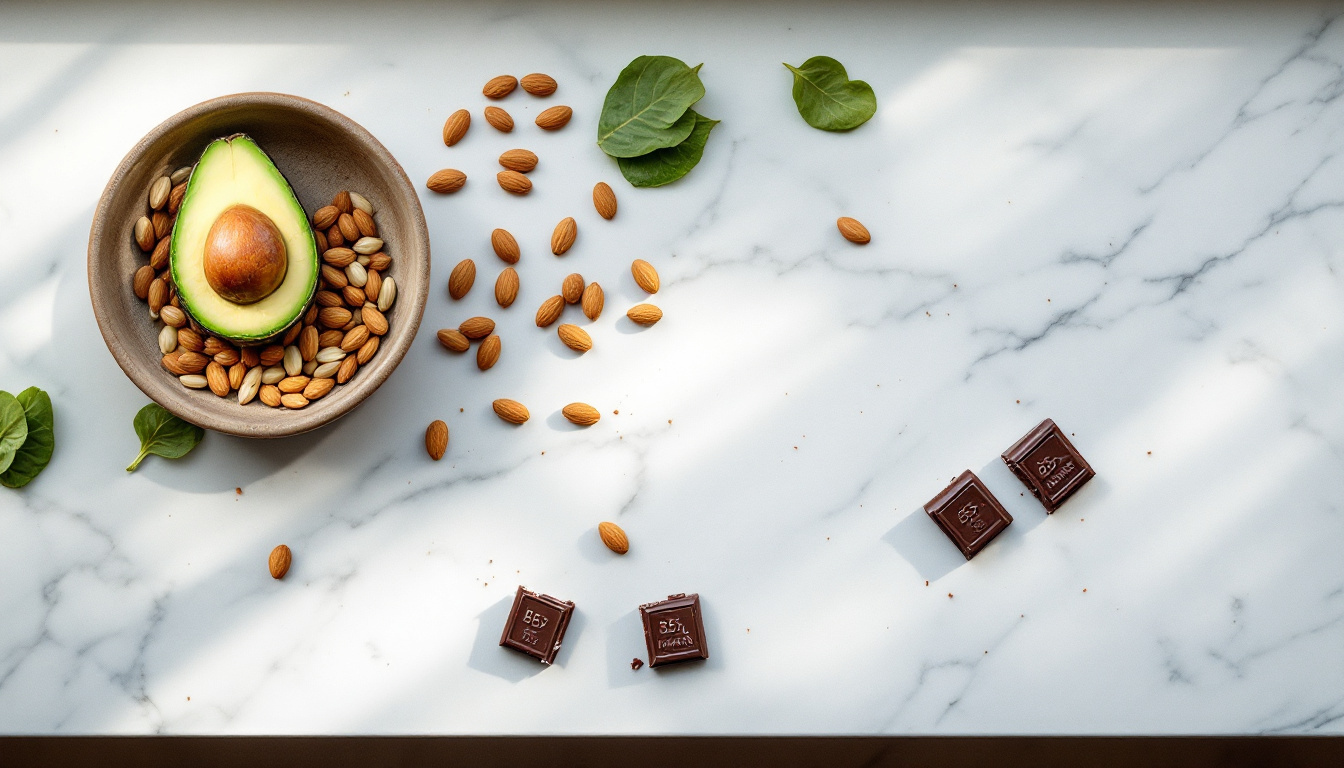
- 30g almonds — magnesium, protein, healthy fat
- A small piece of salmon — omega-3 and vitamin D, both associated with better sleep quality
Avoid high-GI carbohydrates in the 2 hours before bed. This includes fruit juice, sweetened drinks, most cereals, white bread, and — practically speaking — large portions of any carbohydrate without protein and fat to buffer them.
Magnesium for sleep — the PCOS case
As covered in our magnesium and PCOS guide, most women with PCOS are magnesium-deficient — and magnesium is directly involved in GABA receptor function, the neurological pathway that enables sleep onset. Magnesium glycinate taken 30–60 minutes before bed consistently improves sleep onset and quality in people with low magnesium status. For women with PCOS, 200–300mg of magnesium glycinate in the evening addresses both the sleep deficit and the broader magnesium gap simultaneously.
Caffeine timing
Caffeine has a half-life of 5–7 hours. At the slower end of metabolism, a coffee at 2pm can still have a meaningful amount active by 10pm–midnight. For women with PCOS whose cortisol clearance is already slower than average due to HPA dysregulation, caffeine compounds the evening alertness problem. Cutting caffeine after 12–1pm is a more meaningful intervention for PCOS sleep than most supplements.
| Food/nutrient | Sleep mechanism | PCOS relevance |
|---|---|---|
| Magnesium glycinate | GABA-A receptor activation sedation | Most PCOS women are deficient; insulin resistance depletes magnesium |
| Tryptophan (turkey, eggs, Greek yogurt) | Serotonin melatonin precursor | Supports natural melatonin which is blunted in PCOS |
| Omega-3 (salmon, sardines, walnuts) | Reduces IL-6/TNF-α; linked to longer sleep duration | Reduces inflammation that disrupts slow-wave sleep |
| Vitamin D (fatty fish, eggs) | Regulates melatonin synthesis and sleep duration | Vitamin D deficiency is near-universal in PCOS and worsens sleep |
| High-GI carbs at night | Blood glucose spike reactive cortisol at 2–3am | Worsens existing cortisol dysregulation in PCOS |
| Alcohol | Suppresses REM sleep, raises body temperature mid-night | Worsens insulin resistance the following day on top of already elevated IR |
Lifestyle strategies specific to PCOS
Standard sleep hygiene advice — dark room, no screens, cool temperature — is still relevant. But for PCOS, the strategies that most specifically address the hormonal root causes deserve priority.
Consistent sleep timing above all else
Circadian rhythm consistency is the single most impactful sleep variable for women with PCOS. Going to bed and waking at the same time every day — including weekends — anchors your cortisol and melatonin curves to a predictable pattern. Irregular sleep timing (social jet lag) disrupts this rhythm and independently worsens insulin resistance, even when total sleep hours are maintained. The research on this in PCOS is clear: variability in sleep timing is a stronger predictor of insulin resistance severity than sleep duration alone.
Morning light exposure
Getting bright light exposure within 30–60 minutes of waking sets your circadian clock and anchors the timing of your evening melatonin rise. For women with PCOS and blunted melatonin production, this is not optional — it's part of the daily melatonin optimisation protocol. 10–20 minutes of outdoor morning light (or a 10,000 lux lightbox) is sufficient. This single habit consistently improves both sleep onset latency and morning cortisol curve, which directly feeds into the afternoon and evening hormonal environment.
Resistance training timing
Resistance training is the most evidence-backed exercise intervention for PCOS insulin sensitivity. For sleep specifically, the timing matters: morning or early afternoon resistance training improves sleep quality and reduces sleep onset time. Late-evening intense exercise (within 2 hours of bed) raises core body temperature and cortisol acutely — both antagonistic to sleep onset. This doesn't mean don't exercise in the evening — a gentle walk after dinner is actually beneficial for post-meal glucose clearance and falling body temperature. It means save the high-intensity work for the morning or lunchtime.
Evening cortisol management
The goal in the 2 hours before bed is cortisol reduction. Anything that activates the stress response — work emails, social media arguments, alarming news content, high-stakes video games — keeps cortisol elevated and delays sleep onset. This sounds obvious but is worth naming clearly: for women with PCOS, the evening cortisol clearance window is already narrow, and disrupting it has measurable next-day hormonal consequences. Gentle activity, low-stakes conversation, reading, or light stretching in the evening is not just "winding down" — it's actively protecting the hormonal environment your sleep depends on.
A meal plan built to support your hormones — including your sleep
HerMeal builds 5-day PCOS and PMOS meal plans with the protein targets, low-GI structure, and magnesium-rich foods that support both insulin sensitivity and overnight blood sugar stability.
Generate your free planFrequently asked questions
Why do women with PCOS have trouble sleeping? ▼
Does poor sleep make PCOS worse? ▼
How many hours of sleep do women with PCOS need? ▼
What should I eat before bed if I have PCOS? ▼
Can fixing my diet actually improve my PCOS sleep problems? ▼