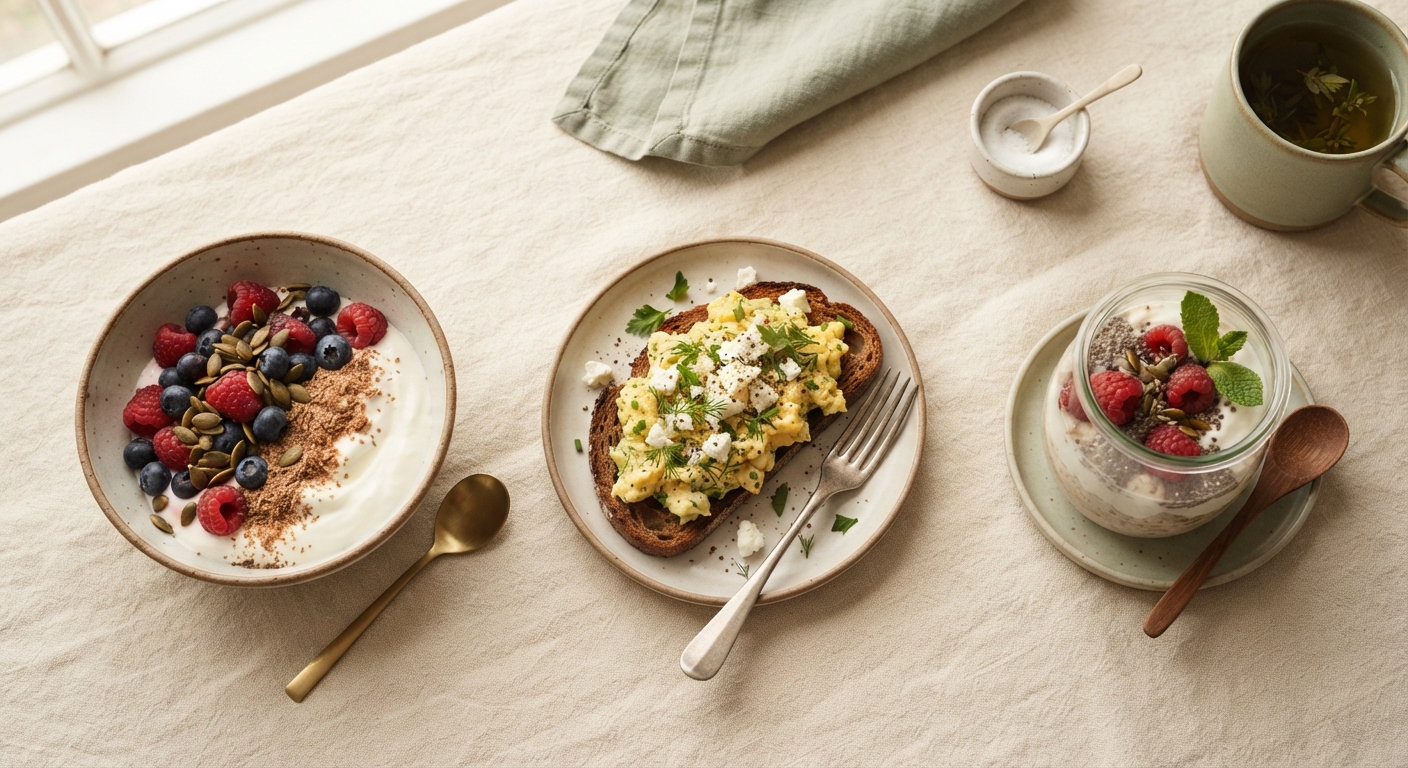
PCOS Breakfast Ideas 12 High-Protein Recipes Under 500 Calories
Short answer: the best PCOS breakfast has 25–35g of protein, low-glycaemic carbs (typically 15–30g net), and travels well or takes under 10 minutes to cook. Every recipe below hits those targets, stays under 500 calories, and uses standard supermarket ingredients. Six can be prepped the night before or batch-cooked on Sunday.
Breakfast is where the whole day's blood sugar gets set. A refined-carb breakfast — cereal, croissant, sweetened oat sachet, banana smoothie — spikes glucose, insulin overcorrects, and by 11am you're crashing and craving sugar for the rest of the day. A protein-forward breakfast does the opposite: steady energy, no mid-morning crash, less snacking later. The 2013 Jakubowicz study in 60 lean women with PCOS showed a big-breakfast/small-dinner distribution (983/645/190 kcal) at the same 1,800 kcal daily total produced a 56% drop in insulin resistance, 50% drop in testosterone, and 50% rise in ovulation compared to the same calories loaded into dinner.1 That's the pattern behind this list: real breakfasts that hit the protein target without needing a chef’s schedule.
🔑 Key takeaways
- Every recipe hits 25–35g protein, under 500 calories, and 15–30g net carbs — the pattern that prevents the mid-morning crash
- 4 formats represented: no-cook bowls (5 min), overnight prep (make the night before), quick cooks (10 min), batch-cook (make once, eat 4-5 mornings)
- Recipes 3, 4, 8, 9 are batch or make-ahead formats — Sunday prep gives you 4-5 breakfasts
- Recipe 12 is a vegan option; recipes 3, 4, 10 are wheat-free (use certified gluten-free oats)
- Every ingredient is a standard supermarket item — no specialty stores or protein powders required (though whey is a useful optional add for recipes 3, 4, 11)
- If you skip breakfast for intermittent fasting, that’s fine too — see the timing section below
Contents
Three things every PCOS breakfast needs
Before the recipes, the pattern behind them. Once you understand these three requirements, you can adapt any breakfast idea you find online to work for PCOS.
1. 25–35 grams of protein, minimum
This is the single biggest thing that separates a PCOS-friendly breakfast from a blood-sugar disaster. Protein has the lowest insulin response of the three macronutrients, blunts the glucose spike from any carbs eaten alongside it, and prevents the mid-morning crash that drives coffee-and-biscuit snacking. For most women with PCOS, 1.2–1.6g of protein per kilogram of body weight per day is the target used in PCOS nutrition research and clinical practice — 50-100% higher than the general population RDA. The 2023 international PCOS guideline does not prescribe a specific protein target but supports a lifestyle-first approach to managing insulin resistance.2
Realistic single-serving amounts that hit 25–35g at breakfast: 250g Greek yogurt (2% fat, ~10g protein per 100g) = 25g; 250g cottage cheese (2% fat, ~11g protein per 100g) = 27g; 3 large eggs + 30g feta = 22g; 80g Greek yogurt as a booster added to any other bowl = 8g extra; a scoop of whey protein powder (20-25g). Most bowls in this list combine two of these to hit the target reliably.
2. Low-glycaemic carbs — and modest portions
The problem with most default breakfast foods is not that they contain carbs — it’s that they contain fast carbs with almost nothing to slow them down. Corn flakes: 20g of carbs, 2g of protein, digested in minutes. A slice of white toast with jam: 30g of carbs, 3g of protein. A shop-bought banana smoothie: 45g of carbs, 6g of protein. All three are metabolically identical to eating a candy bar as far as your morning insulin is concerned.
The fix is two-part: (a) choose carbs from low-glycaemic sources — rolled or steel-cut oats, chia seeds, ground flaxseed, berries, small portions of rye or sourdough bread; and (b) always pair them with adequate protein and fat. A carb source alone will spike glucose. The same carb source eaten alongside 25g of protein and 10g of fat will not. Every recipe in this article is engineered around this pairing rule.
3. It has to fit your actual morning
Ambition is not a breakfast. The best PCOS breakfast is one you’ll actually make on a Wednesday at 7am when the kids are late for school and you haven’t slept enough. That means one of three formats: (a) something already prepped from Sunday (overnight oats, chia pudding, egg muffins, batch hash); (b) something that assembles in 5 minutes from staple ingredients kept in stock (a yogurt or cottage cheese bowl); or (c) something that cooks in 10 minutes with no thought (scrambled eggs, an omelette).
The 3-minute pantry check: if you have Greek yogurt, cottage cheese, eggs, oats, chia seeds, ground flaxseed, and one bag of frozen berries in the freezer, you can make eight of the twelve recipes below with zero additional shopping. Those seven items are the PCOS-breakfast staple kit — get them in stock and you’ve solved 80% of breakfast decisions permanently.
The 12 recipes
All macros are per one serving. If a recipe serves more than one (batch and make-ahead formats), the total number of servings is noted at the top — divide the ingredient list accordingly. Adjust portions to your calorie target if needed — 350 kcal fits a 1,400 kcal day, 450 kcal fits a 1,700 kcal day.
Greek Yogurt & Berry Protein Bowl
Bowl · no-cookServes 1 · 5 min · the fastest PCOS breakfast that hits 35g protein
Ingredients
- 250g Greek yogurt (2% fat, plain — check the label for ~10g protein per 100g)
- 80g mixed berries (blueberries, raspberries, or blackberries — frozen work fine, no need to defrost)
- 20g pumpkin seeds (about 2 tbsp)
- 15g raw almonds (about 12 nuts)
- 1 tbsp ground flaxseed (7g)
- Optional: a few drops of vanilla extract, a light dusting of cinnamon
Method
- Spoon yogurt into a bowl. Top with berries.
- Scatter pumpkin seeds, almonds, and ground flaxseed across the top.
- Add vanilla and cinnamon if using. Eat immediately.
Cottage Cheese, Peach & Walnut Bowl
Bowl · no-cookServes 1 · 5 min · a sweet-and-creamy alternative if Greek yogurt is getting old
Ingredients
- 250g cottage cheese (2% fat)
- 1 medium peach (about 100g), sliced — or 100g pear, apple, or berries if peach not in season
- 15g walnut halves (about 5 halves)
- 1 tbsp ground flaxseed
- 1 tsp honey (optional — skip if strictly avoiding added sugar)
- A light dusting of cinnamon
Method
- Spoon cottage cheese into a bowl. Arrange peach slices on top.
- Scatter walnuts and flaxseed. Drizzle honey if using. Dust with cinnamon.
- Eat cold. Travels well in a container if breakfast is at the desk.
Overnight Oats with Greek Yogurt & Almond Butter
Bowl · make-aheadServes 1 · 5 min prep + overnight fridge · make 4 jars on Sunday for the whole workweek
Ingredients (per jar)
- 30g rolled oats (not instant — instant is too high-GI)
- 200g Greek yogurt (2% fat, plain)
- 150ml unsweetened almond milk (or dairy milk if preferred)
- 1 tbsp almond butter (16g — check the label, only ingredient should be almonds)
- 1 tbsp chia seeds
- 60g raspberries (fresh or frozen)
- Optional: 20g whey protein powder for +18g protein / +80 kcal
- Optional: a few drops of vanilla, a dusting of cinnamon
Method
- Add oats, yogurt, almond milk, chia, and almond butter to a jar with a lid. Stir well.
- Top with raspberries. Seal and refrigerate overnight (minimum 6 hours).
- Eat cold in the morning, or add a splash more milk if too thick. Batch-make 4 jars on Sunday — they keep 4 days in the fridge.
Chocolate Chia Pudding with Berries
Bowl · make-aheadServes 1 · 5 min prep + overnight · naturally gluten-free
Ingredients (per jar)
- 30g chia seeds (about 2 tbsp)
- 200ml unsweetened almond milk
- 200g Greek yogurt (2% fat) — stirred in after the pudding sets
- 10g unsweetened cocoa powder (about 1 tbsp)
- 80g mixed berries
- 15g raw almonds, roughly chopped
- Optional: a small drizzle of maple syrup or a few drops of stevia if too bitter
Method
- Whisk chia, almond milk, and cocoa in a jar until no lumps. Refrigerate overnight (chia will absorb liquid and gel).
- In the morning, stir in Greek yogurt for creaminess and the protein boost. Top with berries and almonds.
- Batch 3-4 jars at once — the chia pudding base keeps 5 days; add yogurt and berries the morning of.
Herby Scrambled Eggs with Feta on Rye
Eggs · 10 min cookServes 1 · 10 min · the reliable 3-egg workhorse
Ingredients
- 3 large eggs
- 30g feta, crumbled
- 100g fresh spinach (a big handful)
- 1 slice dark rye bread (about 30g)
- 1 tsp olive oil
- Fresh chives or dill, chopped
- Salt, black pepper
Method
- Heat olive oil in a small non-stick pan over medium-low. Add spinach and wilt for 90 seconds, then push to one side.
- Whisk eggs with salt and pepper. Pour into the pan and stir gently for 2-3 minutes until just set.
- Off the heat, scatter feta over the top. Fold once so feta warms without melting into a puddle.
- Toast the rye. Plate eggs on top or alongside the toast, scatter herbs. Eat immediately.
Shakshuka for One
Middle Eastern · 15 min cookServes 1 · 15 min · the weekend breakfast that reheats surprisingly well
Ingredients
- 3 large eggs
- 200g tinned chopped tomatoes
- 100g bell pepper (any colour), diced
- ½ small onion, diced
- 30g feta, crumbled
- 1 slice dark rye (30g) for dipping
- 1 tsp olive oil
- 1 tsp cumin, 1 tsp smoked paprika, 1 grated garlic clove
- Fresh coriander or parsley, salt, black pepper
Method
- Heat olive oil in a small heavy pan over medium. Add onion and pepper; cook 5 minutes until soft.
- Add garlic, cumin, and paprika. Stir for 30 seconds until fragrant.
- Pour in tomatoes with a pinch of salt. Simmer 3-4 minutes until slightly thickened.
- Make 3 shallow wells in the sauce. Crack an egg into each. Cover and cook 4-5 minutes until whites are set but yolks still soft.
- Scatter feta and herbs. Serve straight from the pan with rye alongside for dipping.
Mushroom, Spinach & Cheese Omelette
Eggs · 10 min cookServes 1 · 10 min · the lowest-carb option in this list — ideal for insulin-resistant days
Ingredients
- 3 large eggs
- 100g chestnut or button mushrooms, sliced
- 100g fresh spinach
- 30g mature cheddar or gruyère, grated
- 1 tsp butter or olive oil
- Salt, black pepper
Method
- Heat butter in a non-stick pan over medium-high. Add mushrooms and cook 4-5 minutes until browned. Add spinach and wilt for 60 seconds. Slide onto a plate.
- Whisk eggs with salt and pepper. Add to the same pan, tilting so the egg coats the base evenly. Cook 90 seconds until just set on top.
- Scatter cheese over half the omelette. Return mushrooms and spinach on top. Fold the empty half over the filling.
- Slide onto a plate and eat immediately — omelettes wait for no one.
Batch Egg & Vegetable Muffins
Eggs · batch-bake · freezesMakes 12 muffins (3 per serving) · 45 min · make Sunday, breakfast for the whole week
Ingredients (12 muffins)
- 12 large eggs
- 250g cottage cheese (2% fat)
- 100g spinach, finely chopped
- 1 bell pepper, finely diced
- 100g mushrooms, finely diced
- ½ small onion, finely diced
- 120g grated cheddar
- Salt, black pepper, dried oregano or thyme
Method
- Preheat oven to 180°C. Grease a 12-hole muffin tin or line with silicone cases.
- Whisk eggs and cottage cheese in a large bowl with salt, pepper, and herbs.
- Stir in all vegetables and grated cheese.
- Ladle into muffin holes, filling each about three-quarters full.
- Bake 22-25 minutes until set and lightly golden. Cool 5 minutes before removing.
- Store 4 days in the fridge or freeze up to 2 months. Reheat 30 seconds from fridge, 90 seconds from frozen.
Turkey Sausage & Sweet Potato Hash
Savoury · batch-cookServes 4 · 30 min · add a fried egg on top when serving
Ingredients (4 servings)
- 500g lean ground turkey (7% fat)
- 400g sweet potato, peeled and diced into 1cm cubes
- 1 red bell pepper, diced
- 1 red onion, diced
- 4 large eggs (1 per serving, cooked to order)
- 1 tbsp olive oil
- 2 tsp smoked paprika, 1 tsp cumin, 1 tsp dried thyme, 2 grated garlic cloves
- Salt, black pepper, fresh parsley to serve
Method
- Toss sweet potato cubes in half the olive oil and half the paprika. Roast at 220°C for 20 minutes on a baking tray until edges are crisp.
- Meanwhile, heat remaining oil in a large frying pan. Add onion and pepper; cook 5 minutes until soft.
- Add turkey, remaining spices, and garlic. Break turkey up with a spoon and brown for 8-10 minutes until no pink remains.
- Fold roasted sweet potato through the turkey mixture. Season, take off heat.
- Divide into 4 containers. Refrigerate up to 4 days. Each morning: reheat one portion 2 minutes in the microwave, fry an egg in a separate pan, plate egg on top with parsley.
Smoked Salmon, Cottage Cheese & Rye
Nordic · no-cookServes 1 · 5 min · the fanciest breakfast you can throw together in 5 minutes
Ingredients
- 80g smoked salmon
- 100g cottage cheese (2% fat)
- 1 slice dark rye bread (30g)
- ½ small avocado (60g), sliced
- 30g cucumber, thinly sliced
- 1 tsp capers
- 1 tbsp fresh dill
- Squeeze of lemon, black pepper
Method
- Toast the rye. Spread cottage cheese thickly across the toast.
- Layer avocado and cucumber slices on top, then drape the salmon over.
- Scatter capers and dill. Squeeze lemon over, crack black pepper on top. Eat.
Greek Yogurt Protein Pancakes
Weekend · 15 min cookServes 1 (2 pancakes) · 15 min · the ‘weekend’ recipe that’s still PCOS-safe
Ingredients
- 2 large eggs
- 100g Greek yogurt (2% fat)
- 30g rolled oats, blitzed in a blender to a rough flour
- 1 tsp baking powder
- ½ tsp vanilla extract, a pinch of cinnamon
- 1 tsp butter for the pan (or cooking spray)
- Topping: 80g mixed berries + 1 tbsp Greek yogurt
- Optional: 20g whey protein for +18g protein / +80 kcal (46g protein / 438 kcal total)
Method
- Whisk eggs, yogurt, blitzed oats, baking powder, vanilla, cinnamon (and whey if using) into a smooth batter.
- Melt butter in a small non-stick pan over medium. Pour half the batter to form a pancake about 12cm across. Cook 90 seconds until bubbles appear on top; flip and cook 60 seconds more.
- Repeat with remaining batter.
- Stack pancakes. Top with berries and a spoon of Greek yogurt. Skip syrup — the fruit is sweet enough.
Turmeric Tofu Scramble with Spinach
Vegan · 10 min cookServes 1 · 10 min · the vegan option — genuinely eggy in texture, dairy- and egg-free
Ingredients
- 200g firm tofu (press for 10 min to drain if very wet), crumbled with a fork
- 100g fresh spinach
- 60g cherry tomatoes, halved
- 30g mushrooms, sliced
- 1 tbsp nutritional yeast
- 1 tsp olive oil
- ½ tsp ground turmeric
- ½ tsp kala namak (black salt — this is what gives it the eggy sulphur flavour; sub regular salt if unavailable)
- 1 grated garlic clove, black pepper
- Optional: ½ small avocado (30g), sliced, on top
Method
- Heat olive oil in a non-stick pan over medium. Add mushrooms and cook 3 minutes until browned.
- Add tofu, turmeric, garlic, and black salt. Stir-fry 3 minutes until tofu is coated yellow and warmed through.
- Add tomatoes and spinach; cook another 2 minutes until spinach wilts.
- Off heat, stir in nutritional yeast and pepper. Serve with avocado slices on top if using.
The IF question: do I need to eat breakfast at all?
This is genuinely nuanced and the two camps in PCOS nutrition talk past each other. Here’s the honest read.
The eat-breakfast case rests largely on the Jakubowicz 2013 trial: 60 lean women with PCOS on identical 1,800 kcal diets for 90 days. The big-breakfast group (983 kcal at breakfast, 190 at dinner) saw a 56% drop in insulin resistance, 50% drop in testosterone, and 50% rise in ovulation frequency versus the big-dinner group at the same total calories.1 This is a strong signal that when you eat matters, not just what — and specifically that front-loading calories works with the body’s natural morning insulin sensitivity.
The skip-breakfast (16:8 intermittent fasting) case rests on the observation that many women with PCOS improve insulin markers and lose weight successfully on 16:8 patterns where the first meal is at 12pm and the last at 8pm. Some 2021-2022 pilot studies in women with PCOS have shown improvements in insulin resistance and androgens on time-restricted eating, though sample sizes are small and study durations short.
Practical read: both patterns can work if the daily protein target is hit and the carbs are low-GI. If you naturally wake hungry, eat breakfast — the Jakubowicz data is compelling and there’s no downside. If you naturally aren’t hungry until lunch and 16:8 fits your life, that’s fine too, but shift the front-loading intent to lunch: make lunch your biggest, most protein-forward meal, not dinner. What consistently fails for PCOS is a small breakfast plus a large late dinner — that pattern reliably worsens insulin resistance regardless of total calories.
For a deeper dive on IF specifically for PCOS, see our intermittent fasting for PCOS guide.
Sunday prep: 5 breakfasts in 45 minutes
The single biggest breakfast fix for most women with PCOS is not motivation — it’s having options ready at 6:30am when the brain is not making good decisions yet. Here’s a Sunday sequence that yields 5 breakfasts in about 45 minutes.
- Batch the egg muffins (recipe 8). Chop veg, whisk eggs and cottage cheese, fold together, ladle into a muffin tin, oven 25 minutes. Yields 12 muffins = 4 breakfasts (3 muffins per serving).
- While the muffins bake, make 3 jars of overnight oats (recipe 3) OR 3 jars of chia pudding (recipe 4). 10 minutes of assembly. Refrigerate.
- Stock the pantry: a fresh tub of Greek yogurt, a fresh tub of cottage cheese, one bag of frozen berries in the freezer. That covers ad-hoc Bowl recipes 1 and 2 without shopping again all week.
Total weekly breakfast bill: about €25-30 for 5 mornings. Total weekly decision fatigue: zero.
Frequently asked questions
What is the best breakfast for PCOS?▼
Should I skip breakfast if I have PCOS?▼
How much protein should I eat at breakfast with PCOS?▼
Are oats OK for breakfast with PCOS?▼
Can I have coffee for breakfast with PCOS?▼
Can these breakfasts be made the night before?▼
Skip the planning. Get a personalised week.
HerMeal builds a full 5-day PCOS plan — breakfast, lunch, dinner, macros, and grocery list — matched to your calorie target, dietary preferences, and profile. Ready in 90 seconds. Free tier includes the full 5-day plan.
Generate my plan →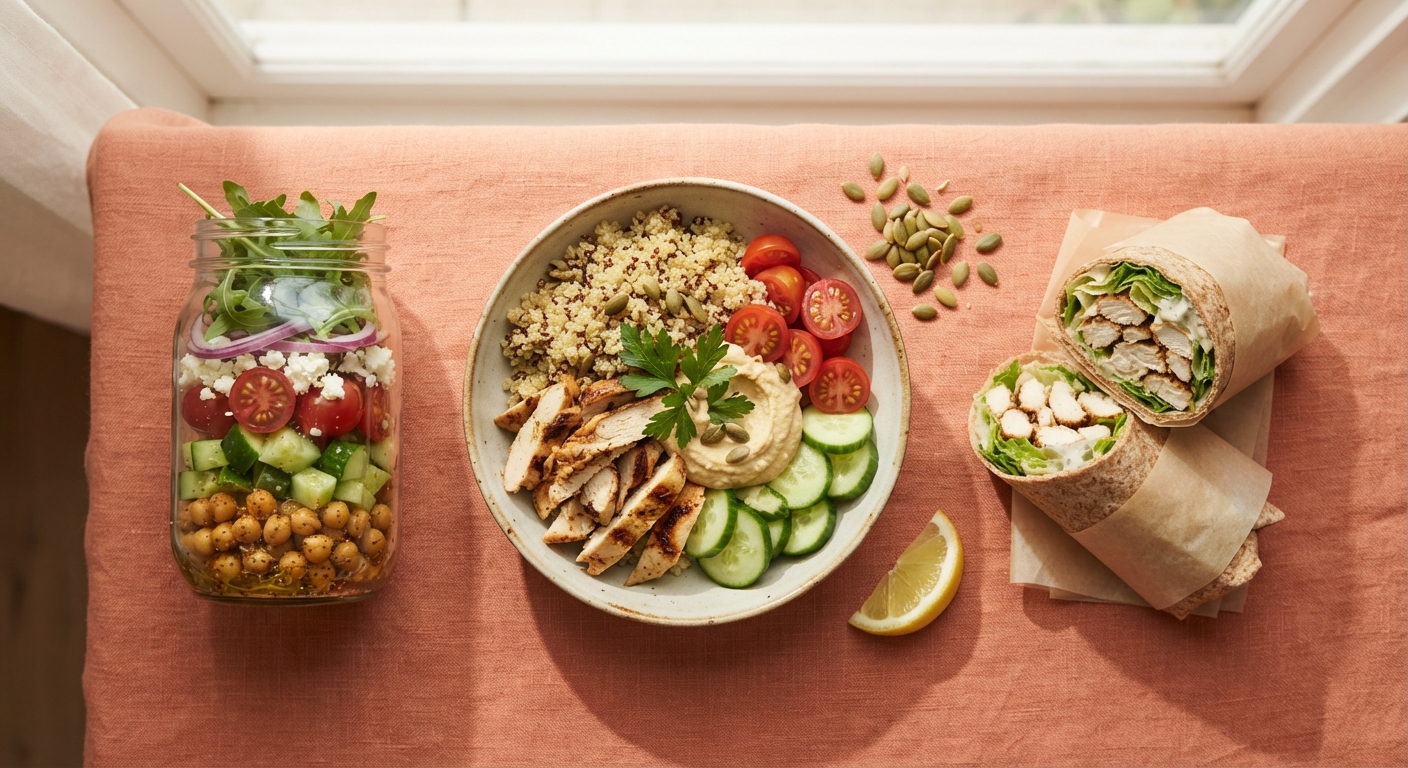

References
- Jakubowicz D, Barnea M, Wainstein J, Froy O. Effects of caloric intake timing on insulin resistance and hyperandrogenism in lean women with polycystic ovary syndrome. Clinical Science (London). 2013 Nov;125(9):423-32. PMID: 23688334
- Teede HJ, Tay CT, Laven J, et al. Recommendations from the 2023 International Evidence-based Guideline for the Assessment and Management of Polycystic Ovary Syndrome. Fertility and Sterility. 2023 Oct;120(4):767-793. PMID: 37589624