PCOS Dinner Ideas 12 High-Protein Recipes Under 500 Calories
Short answer: the best PCOS dinner has 30–40g of protein, under 40g of net carbohydrates, plenty of non-starchy vegetables for fibre, and takes 30 minutes or less. Every recipe below hits all four, sits under 500 calories, and uses low-glycaemic ingredients that don't spike insulin overnight.
Dinner is where most PCOS eating plans break down. Breakfast is easy to script (eggs, Greek yogurt, oats), lunch is usually leftovers, but dinner is the meal where cravings, exhaustion, and time pressure collide. The default answer — pasta, takeaway, or "just a salad" — either spikes insulin or leaves you hungry two hours later. This is a working library of 12 dinners built specifically for PCOS: 30–40g of protein per meal (roughly half the daily target for most women1), controlled carbohydrate portions, high fibre, and no ingredient that's hard to find at a normal supermarket. Every one is under 500 calories and ready in under 30 minutes.
🔑 Key takeaways
- Every recipe hits 30–40g protein, under 500 calories, and under 40g net carbs — the three levers that improve insulin sensitivity in PCOS
- Prep time is capped at 30 minutes — long recipes get abandoned mid-week
- Six cuisines represented (Mediterranean, Middle Eastern, Latin, Asian, Italian, Spanish) so you're not eating variations of the same three meals
- Recipes 4, 6, 9 and 12 are 100% batch-cookable — make Sunday, eat Monday to Thursday
- Every ingredient is a normal supermarket staple — no specialty stores, no obscure supplements dressed up as food
- The macros are calculated per single serving — if you eat two portions, double them (this is where most calorie counting quietly fails)
Contents
Three things every PCOS dinner needs
Before the recipes, the pattern behind them. Every dinner in this list is built on the same three-part structure — if you understand it, you can adapt any recipe you find online to be PCOS-appropriate.
1. 30–40 grams of protein, minimum
This is the single most important lever. Protein has the lowest insulin response of the three macronutrients, blunts the glucose spike from any carbs you eat with it, and supports muscle mass — which is directly correlated with insulin sensitivity. For most women with PCOS, 1.2–1.6g of protein per kilogram of body weight per day is the working target,1 which translates to 30–40g per main meal for a body weight of 55–90kg.
Realistic single-serving amounts that hit 30–40g: 150g chicken breast, 180g salmon fillet, 200g cod, 3 large eggs plus 100g Greek yogurt, 250g cottage cheese, 200g firm tofu with a legume side, 150g lean beef, 180g prawns.
2. Net carbs under 40 grams — from low-GI sources
"Net carbs" means total carbohydrates minus fibre — the number that actually affects your blood sugar. For dinner, aim for 15–40g net carbs, always from low-glycaemic sources: sweet potato, quinoa, lentils, chickpeas, black beans, berries, or a small portion of whole-grain pasta. Skip white rice, white bread, cornflakes, agave, and fruit juice at dinner — they hit the bloodstream faster than your body can handle in the evening, when insulin sensitivity is already lower.
3. Plenty of non-starchy vegetables — for fibre and volume
Vegetables do three jobs: they add fibre (which slows carb absorption), they add volume (which fills you up on low calories), and they add micronutrients (magnesium, zinc, and B-vitamins that PCOS bodies commonly run low on). Every recipe here uses at least one full serving of non-starchy vegetables: leafy greens, cruciferous (broccoli, cauliflower, cabbage), peppers, courgette, mushrooms, tomatoes, asparagus, or green beans.
The 30-second sanity check for any dinner recipe: can I see the protein clearly on the plate? Are the vegetables more than a garnish? Is the carb portion the smallest part of the meal (not the largest)? If yes to all three, it's probably PCOS-friendly — regardless of what the original recipe was designed for.
The 12 recipes
All macros are per one serving. Adjust portions to your calorie target — if your target is 1,600 kcal/day and dinner is 450 kcal, you have room for a substantial breakfast and lunch. If your target is 2,000 kcal, add a bigger snack or a small dessert.
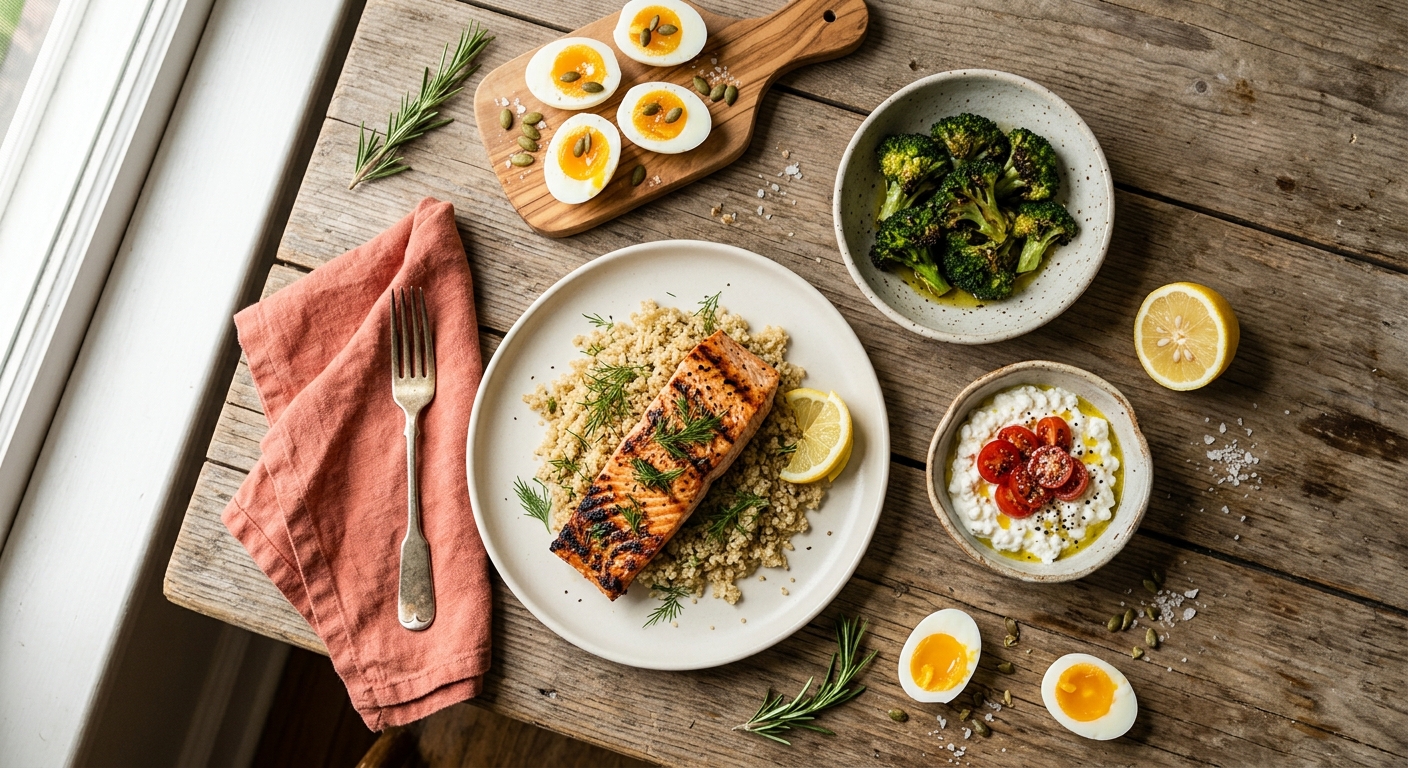
Lemon-Herb Salmon with Roasted Broccoli & Quinoa
MediterraneanServes 1 · 25 min · batch-cook the quinoa in advance
Ingredients
- 180g salmon fillet, skin on
- 200g broccoli florets
- 60g cooked quinoa (about 25g dry)
- 1 tsp olive oil
- Juice of half a lemon, plus zest
- Fresh dill or parsley, salt, black pepper
Method
- Preheat oven to 200°C. Toss broccoli with half the olive oil, salt, pepper. Roast 15 min.
- Rub salmon with remaining oil, salt, pepper. Add to the tray for the last 10–12 min — skin down.
- Warm quinoa; stir through lemon zest and herbs.
- Plate quinoa first, broccoli beside, salmon on top. Squeeze lemon over everything.
Turkish-Style Turkey Meatballs with Cucumber Yogurt Sauce
Middle EasternServes 1 · 25 min
Ingredients
- 180g lean ground turkey (7% fat)
- 2 tbsp finely chopped onion, 1 garlic clove minced
- 1 tsp cumin, 1/2 tsp smoked paprika, salt, pepper
- 150g full-fat Greek yogurt
- Half a cucumber, grated and drained
- 1 tsp olive oil, fresh mint
- Bed of shredded lettuce + tomato + red onion
Method
- Mix turkey with onion, garlic, cumin, paprika, salt. Form 6–8 meatballs.
- Heat oil in a pan; brown meatballs 8–10 min, turning, until cooked through.
- Combine yogurt, drained cucumber, mint, pinch of salt.
- Serve meatballs on the salad bed, sauce spooned over.
Chicken Fajita Bowl (No Rice)
LatinServes 1 · 20 min
Ingredients
- 150g chicken breast, sliced
- 1 red pepper + 1 yellow pepper, sliced
- Half a red onion, sliced
- 60g cooked black beans
- 1/4 avocado (about 30g)
- 1 tsp olive oil, 1 tsp fajita seasoning, lime juice, coriander
Method
- Heat oil in a wide pan on high heat. Add chicken and seasoning; sear 3 min per side.
- Add peppers and onion; stir-fry 5–6 min until softened but still bright.
- Warm black beans in the same pan for 1 min.
- Plate; top with avocado, coriander, big squeeze of lime.
Cottage Cheese Baked Ziti with Spinach
ItalianServes 4 · 35 min · make once, reheat 4 dinners
Ingredients (4 servings)
- 320g whole-wheat penne, cooked al dente (80g per serving)
- 500g full-fat cottage cheese
- 2 large eggs (binds the cottage cheese)
- 400g jar marinara (no sugar added)
- 250g baby spinach, wilted
- 60g grated parmesan
- 2 garlic cloves, oregano, salt, pepper
Method
- Preheat oven to 180°C. Cook pasta 2 min less than package says.
- Whisk cottage cheese with eggs, half the parmesan, salt, pepper.
- Wilt spinach in a dry pan with garlic; fold through.
- Combine pasta, cottage cheese mix, and marinara in a baking dish. Top with remaining parmesan.
- Bake 20 min until bubbling and golden. Portion into 4 — each is one dinner.
Thai Green Curry with Prawns & Zucchini Noodles
AsianServes 1 · 20 min
Ingredients
- 180g raw prawns, peeled
- 1 large courgette, spiralised (or 300g bagged zucchini noodles)
- 1 tbsp Thai green curry paste
- 80ml light coconut milk
- Handful of Thai basil, sliced chilli, lime
- 1 tsp coconut oil
Method
- Heat oil in a wok; fry curry paste 1 min until fragrant.
- Add coconut milk; bring to a gentle simmer.
- Add prawns; cook 3–4 min until just pink.
- Toss in zucchini noodles; stir for 1–2 min — do not overcook or they turn to water.
- Off heat, add basil and lime. Serve immediately.
Lentil Bolognese over Spaghetti Squash
Italian · plant-basedServes 3 · 45 min · sauce keeps 4 days
Ingredients (3 servings)
- 1 medium spaghetti squash (roasted, forked into strands)
- 300g cooked green or brown lentils (or 1 tin, drained)
- 100g extra-lean ground beef (for umami depth — optional but recommended)
- 1 tin chopped tomatoes + 2 tbsp tomato paste
- 1 onion, 2 garlic cloves, 1 carrot, 1 celery stalk — all finely diced
- Oregano, bay leaf, salt, pepper, splash of red wine (optional), 1 tsp olive oil
- 15g grated parmesan per serving
Method
- Halve spaghetti squash, scoop seeds, roast face-down at 200°C for 40 min. Fork into strands when cool enough to handle.
- Meanwhile: brown beef in olive oil 5 min; add onion, carrot, celery, garlic; cook 5 min.
- Stir in tomato paste, then tinned tomatoes, lentils, oregano, wine if using. Simmer 20 min.
- Serve one third of the sauce over one third of the squash. Parmesan on top.
Korean Beef Bulgogi Lettuce Wraps with Kimchi
KoreanServes 1 · 20 min · 30 min marinade
Ingredients
- 150g lean beef sirloin or ribeye, thinly sliced
- 1 tbsp soy sauce, 1 tsp gochujang, 1 tsp sesame oil, 1 grated garlic clove, 1 tsp grated ginger, half a tsp honey
- 6–8 large romaine or butter lettuce leaves
- 80g kimchi
- 1 tsp toasted sesame seeds, spring onion
Method
- Marinate beef in soy, gochujang, sesame oil, garlic, ginger, honey for 20–30 min.
- Sear beef in a hot dry pan 2–3 min — do not crowd, work in batches if needed.
- Set out lettuce cups, beef, kimchi. Build wraps at the table.
- Top each wrap with sesame seeds and spring onion.
Baked Cod with White Bean Ratatouille
French · MediterraneanServes 2 · 30 min
Ingredients (2 servings)
- 2 x 180g cod fillets
- 1 courgette, diced
- 1 small aubergine, diced
- 1 red pepper, diced
- 1 tin chopped tomatoes
- 200g cooked cannellini or white beans
- 2 garlic cloves, thyme, bay leaf, 1 tbsp olive oil, salt, pepper
Method
- In an oven-safe pan, sweat vegetables in olive oil 8 min. Add garlic; 1 min more.
- Stir in tomatoes, beans, thyme, bay. Season generously. Simmer 10 min.
- Nestle cod fillets on top; season fish. Bake at 200°C for 12–15 min until fish flakes.
- Rest 2 min. Serve with the sauce spooned around the fish.
Chicken Shawarma Bowl with Tahini
Middle EasternServes 4 · 30 min + 30 min marinade · batch-cook the chicken
Ingredients (4 servings)
- 720g boneless chicken thigh (skinless)
- Marinade: 2 tbsp olive oil, 2 tsp cumin, 2 tsp coriander, 1 tsp paprika, 1 tsp turmeric, 1/2 tsp cinnamon, juice of 1 lemon, 3 grated garlic cloves, salt
- 800g cauliflower rice (200g per serving)
- 4 tbsp hummus (30g per serving)
- 4 tbsp tahini + 4 tbsp water + lemon juice + garlic (whisk to a sauce)
- Diced cucumber, tomato, red onion, parsley for garnish
Method
- Marinate chicken 30 min minimum (or overnight).
- Bake at 220°C for 20–25 min on a lined tray. Rest, slice.
- Meanwhile, pan-fry cauliflower rice in a dry pan for 5–6 min until slightly charred.
- Build each bowl: cauliflower base, sliced chicken, spoon of hummus, drizzle of tahini sauce, salad garnish.
Tofu Stir-Fry with Bok Choy, Mushrooms & Cashews
Asian · plant-basedServes 1 · 20 min
Ingredients
- 200g firm or extra-firm tofu, pressed and cubed
- 2 heads bok choy, chopped
- 100g shiitake or chestnut mushrooms, sliced
- 15g raw cashews
- 1 tbsp low-sodium soy sauce, 1 tsp sesame oil, 1 grated garlic clove, 1 tsp grated ginger, pinch of chilli flakes
Method
- Heat sesame oil in a wok. Add tofu cubes, sear 5–6 min on high heat until golden. Set aside.
- Add cashews; toast 1 min. Add mushrooms; cook 3 min. Add garlic, ginger, chilli; 30 sec.
- Add bok choy stalks first (2 min), then leaves (1 min).
- Return tofu; add soy sauce, toss. Serve straight from the wok.
Spanish Chicken & Chickpea Stew with Smoked Paprika
SpanishServes 3 · 35 min · better on day 2
Ingredients (3 servings)
- 540g boneless chicken thigh (skinless), cubed
- 240g cooked chickpeas (or 1 tin, drained)
- 1 tin chopped tomatoes
- 1 onion, 3 garlic cloves, 1 red pepper — all diced
- 2 tsp smoked paprika (sweet or hot to preference)
- 1 tsp cumin, bay leaf, pinch of saffron (optional)
- 200g baby spinach, stirred in at the end
- 1 tbsp olive oil, salt, pepper
Method
- Brown chicken in oil, 5 min. Set aside.
- In the same pot, cook onion 5 min. Add red pepper, garlic; 3 min more.
- Add paprika, cumin; stir 30 sec. Return chicken with tomatoes, chickpeas, bay, saffron.
- Simmer 15–20 min. Stir in spinach at the end until wilted. Season.
Frittata with Feta, Spinach & Cherry Tomato
Mediterranean · low-effortServes 2 · 20 min · the "no plan" dinner
Ingredients (2 servings)
- 6 large eggs + 4 egg whites (extra protein without more fat)
- 150g baby spinach, wilted
- 150g cherry tomatoes, halved
- 80g feta, crumbled
- 1 tsp olive oil, black pepper, fresh basil, half a tsp dried oregano
Method
- Wilt spinach in olive oil in a 24cm oven-safe pan. Squeeze out excess water.
- Whisk eggs, egg whites, pepper, oregano.
- Add spinach back to pan. Pour eggs over. Scatter tomatoes and feta.
- Cook 3–4 min on the hob until edges set. Finish under the grill 4–5 min until puffed and golden.
- Slice into 2 portions. Serve with basil torn over.
Meal prep tips: make dinner easier all week
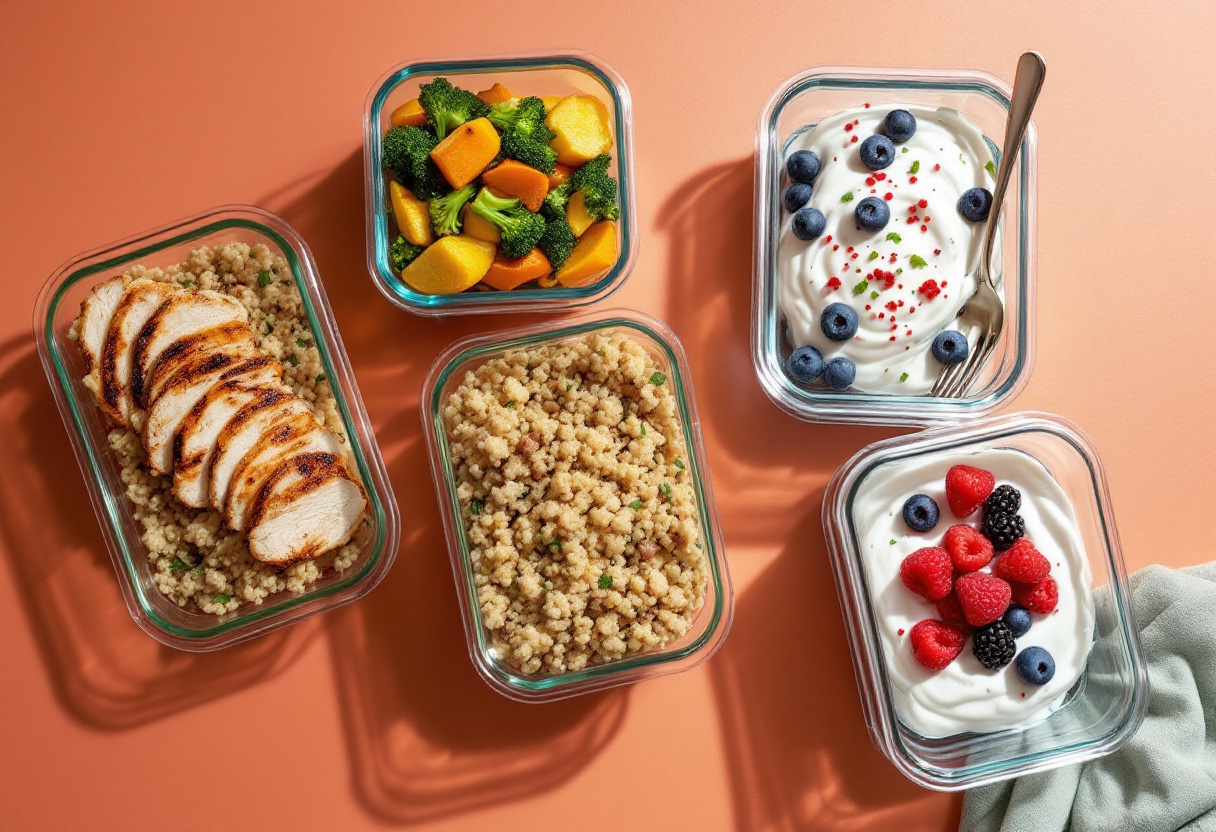
Weeknight dinner failure isn't a recipe problem — it's an energy problem. The single most valuable habit for staying on a PCOS eating plan is spending 60–90 minutes on Sunday preparing enough base components to make the week almost cook itself. What to prep:
- Protein: roast 800g of chicken thighs (recipe 9) or bake 4 salmon fillets at once. That's dinner for four nights.
- Grains: cook a big pot of quinoa (200g dry) or lentils (200g dry). Portion into containers.
- Vegetables: chop peppers, cucumber, red onion, cherry tomatoes into a large container. Stays fresh 4–5 days.
- Sauces: whisk one big batch of tahini sauce or yogurt-mint sauce. Use across three different dinners.
- Batch-cook dinners: recipes 4, 6, 9, and 11 are all designed to make once and eat multiple nights. If you cook two of them on Sunday, you have 6–7 dinners already done.
The 3-container rule: most weeknight dinners can be assembled if you have (1) a cooked protein, (2) a cooked grain or legume, and (3) a raw vegetable in the fridge. Combine any three with a dressing or sauce and you have dinner in under 10 minutes. See our full PCOS meal prep guide for the full Sunday routine.
When to eat dinner (and what happens if you eat late)
Insulin sensitivity declines through the day — the same meal produces a bigger glucose spike at 9pm than at 6pm, even in healthy women. In PCOS this effect is amplified, and late-night eating is one of the most consistently disruptive habits for overnight fasting glucose and morning insulin. If you can, finish dinner 2–3 hours before bed. If your natural bedtime is 11pm, that means dinner ideally wrapped by 8pm.
If you follow intermittent fasting (16:8 or similar), ending your eating window by 8pm and breaking your fast around noon is the setup most PCOS women find sustainable. See our dedicated intermittent fasting for PCOS guide for the full protocol and the situations where fasting doesn't help (adrenal-pattern PCOS, high stress, undereating during the day).
What if you get home late and it's already 9pm? Eat anyway — skipping dinner and going to bed hungry disrupts sleep, spikes morning cortisol, and often leads to a bigger breakfast the next day. The goal is not perfection. It's making the earlier-dinner pattern the default when your schedule allows.
Stop planning. Start eating.
HerMeal generates a fresh 5-day PCOS dinner plan built around your calorie target, favourite proteins, and dietary preferences. Free, in your browser, ready in 90 seconds.
Build my free planFrequently asked questions
What's the best dinner for PCOS? ▼
Should I eat carbs at dinner if I have PCOS? ▼
How much protein should a PCOS dinner have? ▼
Can I eat pasta with PCOS? ▼
What time should I eat dinner if I have PCOS? ▼
Are these PCOS dinner recipes good for insulin resistance? ▼
References
- Teede HJ et al. Recommendations from the 2023 International Evidence-based Guideline for the Assessment and Management of Polycystic Ovary Syndrome. Fertility and Sterility. 2023;120(4):767–793. PubMed ↗