PCOS Meal Prep: The Complete Sunday Plan for a Hormone-Balanced Week
Why the decision to eat well with PCOS almost always fails mid-week — and the one Sunday system that removes the decision entirely.
The hardest part of eating for PCOS is not knowing what to eat. Most women with PCOS understand the principles: high protein, low glycaemic index, limited refined carbohydrates, anti-inflammatory fats. The hard part is Wednesday at 6:30pm when you are tired, the fridge is half-empty, and you have not prepped anything. That is the moment when the best nutritional intentions collapse into ordering whatever is fastest. PCOS meal prep is not a productivity hack or a wellness trend — it is a structural solution to a structural problem. When the right food is already cooked, portioned, and waiting in the fridge, you cannot make the wrong decision. This is the system that makes that happen.
Key Takeaways
- PCOS meal prep is primarily an insulin management system — it keeps high-protein, low-GI food available at every meal without requiring daily decisions
- Prep proteins first, in this order: eggs, chicken, fish — they form the foundation of every meal
- A 2-hour Sunday prep session covers all 5 weekday lunches and dinners, plus a week of snacks
- Build components, not complete meals — the same prepped chicken becomes 5 different dishes throughout the week
- Glass containers over plastic; BPA leaches endocrine-disrupting chemicals when heated, which directly worsens PCOS
- The mid-week failure point is Wednesday evening — mid-week prep (20 minutes) eliminates it
In This Article
Why PCOS Meal Prep Is Different
General meal prep advice — batch-cook some grains, roast some vegetables, portion some lunches — does not fully address what PCOS requires. Standard meal prep often prioritises convenience over macronutrient structure. The result is a fridge full of grain bowls, pasta salads, and fruit, which looks organised but keeps insulin elevated all week.
PCOS meal prep has a specific metabolic objective: maintain low, stable insulin throughout the day by ensuring every meal is built around sufficient protein and low-GI carbohydrates, with no refined carbohydrates accessible as a default option. This sounds simple. It requires deliberate design to actually achieve it.
The other distinction is the role of hormonal context. Women with PCOS frequently experience intense carbohydrate cravings driven by blood sugar volatility — especially mid-afternoon, and especially under stress when cortisol rises and glucose regulation degrades further. A well-executed PCOS meal prep removes the moment of decision from that context entirely. There is nothing to choose between a prepped chicken and quinoa bowl and a bag of crackers if the crackers were never purchased.
The PCOS Meal Prep Formula
Every PCOS meal prep session produces the same five categories of food. These are not specific recipes — they are categories of components that combine into dozens of different meals throughout the week. Keeping them separate (rather than assembling complete meals) is what prevents boredom.
- Protein (30–40g per serving). The foundation. At least two different protein sources per week — typically one animal protein (chicken, salmon, or eggs) and one backup (canned tuna, cottage cheese, or Greek yogurt). Every meal is built from the protein outward.
- Low-GI carbohydrate base. One batch of a whole grain — quinoa, brown rice, or buckwheat — cooked in bulk. This covers lunches and dinners without requiring daily cooking. Portion is deliberately kept moderate: 60–80g dry per day, yielding 150–200g cooked.
- Roasted vegetables. Two trays, roasted at the same time as proteins. Mixed low-GI vegetables: courgette, broccoli, capsicum, cherry tomatoes, asparagus. These reheat well, add fibre and antioxidants, and require zero mid-week effort.
- Raw salad base. Washed, dried, and portioned into containers — spinach, rocket, or mixed leaves. Stays fresh for 4–5 days when stored with a paper towel to absorb moisture. The base of lunch meals when you want something lighter than a cooked grain.
- Sauces and dressings. Two or three simple sauces made on Sunday transform the same protein and grain combination into different dishes. A tahini-lemon sauce, a simple olive oil and herb dressing, and a yogurt-based sauce cover most combinations.
The Best PCOS Meal Prep Proteins
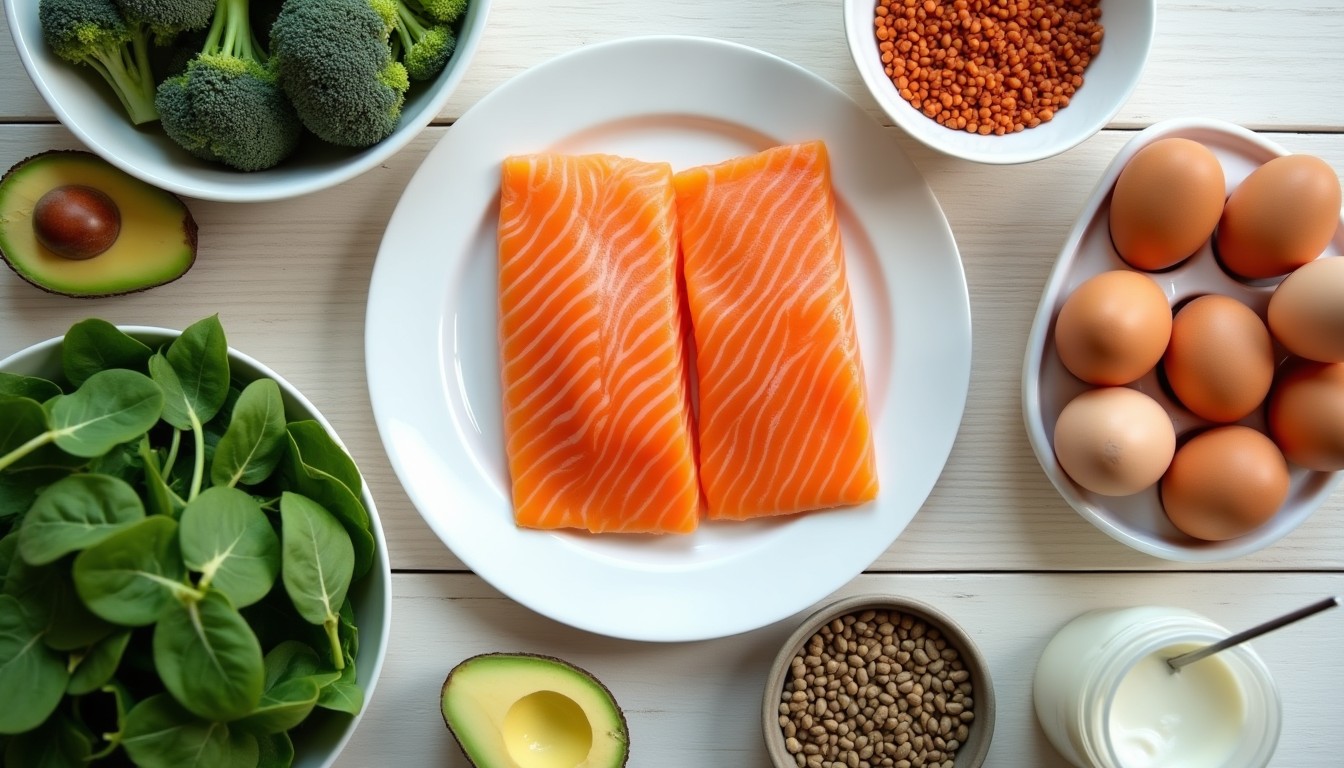
Protein selection for PCOS meal prep is not arbitrary. The best proteins are those that (a) provide at least 25g of protein per serving, (b) reheat well or can be eaten cold, (c) hold their texture and flavour for 4–5 days in the refrigerator, and (d) offer specific micronutrients relevant to PCOS management. Here are the best options and why each belongs on the list.
Baked Chicken Breast
The most versatile PCOS meal prep protein. Baked at 200°C for 22–25 minutes (or until internal temperature reaches 74°C), chicken breast maintains its texture when refrigerated for up to 5 days. Four large breasts (600–700g total) provide approximately 8 meal-sized servings of protein. Slice before storing for faster assembly. Season with olive oil, garlic, and herbs — simple flavours that work with any sauce or grain combination. Protein per 150g serving: approximately 42g.
Baked Salmon
Nutritionally the most targeted PCOS protein. Salmon provides EPA and DHA — the long-chain omega-3 fatty acids with documented evidence for reducing testosterone, improving insulin sensitivity, and reducing systemic inflammation in PCOS. A 400g salmon fillet baked at 180°C for 15–18 minutes yields 3–4 servings. Salmon is best eaten within 3 days when prepped, so include it in Monday–Wednesday meals. Protein per 150g serving: approximately 30g, plus a clinically meaningful dose of EPA and DHA.
Hard-Boiled Eggs
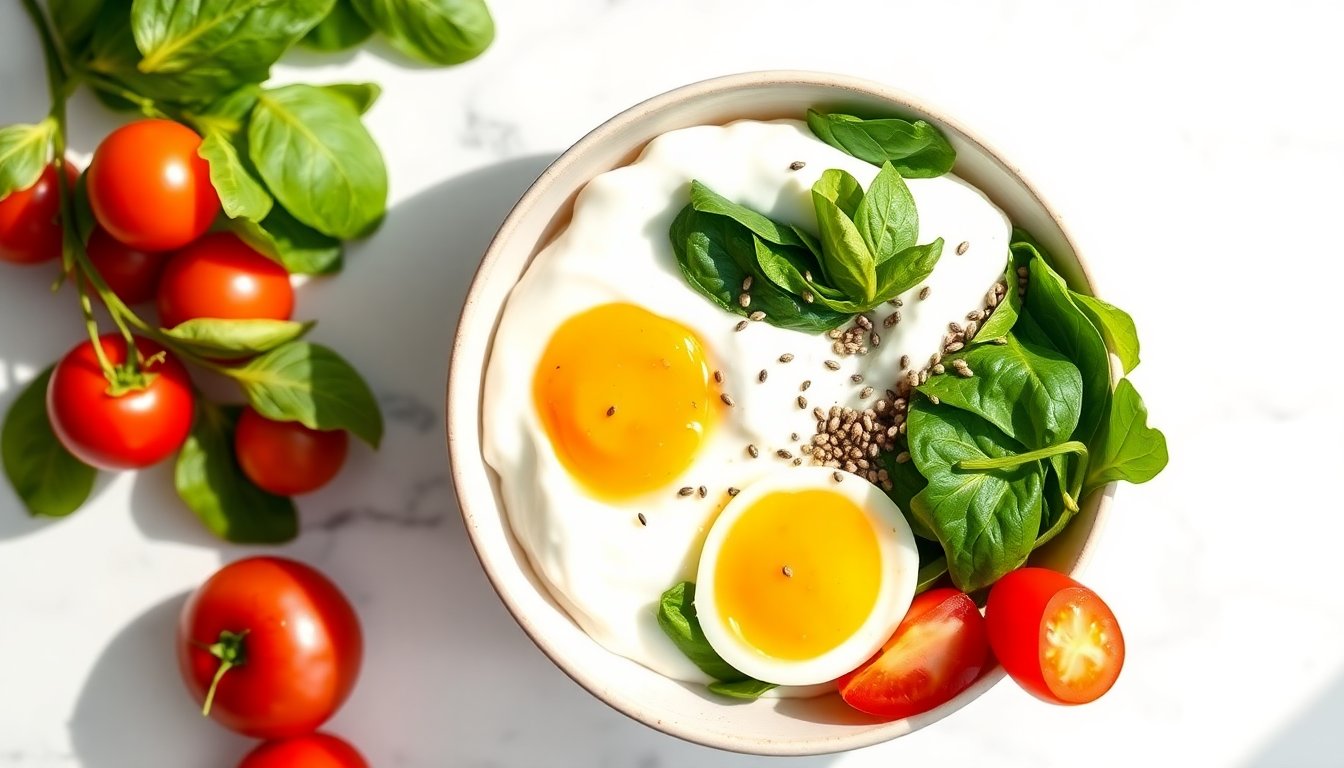
The fastest and most portable prep protein. Boil 8–10 eggs, transfer to ice water, refrigerate in shells — they keep for 7 days and peel easily when needed. Eggs provide choline (critical for liver function and oestrogen metabolism, frequently impaired in PCOS), vitamin D, B12, and all fat-soluble vitamins. They require no reheating and work as standalone snacks, protein additions to salads, or full meals. Two eggs provide approximately 12g protein — pair with Greek yogurt or cottage cheese to reach a full meal-level protein target.
Greek Yogurt (portioned)
Decant a 1kg tub of full-fat plain Greek yogurt into 5 individual containers (150–200g each) on Sunday. These become the fastest breakfast or snack protein of the week. Greek yogurt provides probiotics that support gut microbiome health — an emerging area of PCOS research linking gut dysbiosis to worsened androgen metabolism and insulin resistance. Full-fat only; low-fat flavoured versions compensate for removed fat with 15–25g of added sugar. Protein per 200g serving: approximately 20g.
Canned and Pouched Fish
Tuna pouches, canned salmon, and sardines require zero cooking and store indefinitely — they are the emergency PCOS protein that lives in the pantry and requires no Sunday prep. Include 3–4 pouches in your weekly shop as backup. Sardines are particularly worth including: a single 100g tin provides omega-3 EPA and DHA, vitamin D (deficient in the majority of women with PCOS), calcium from the soft bones, and B12.
Lentils (plant-based option)
For plant-based eating, red or green lentils are the most efficient PCOS meal prep protein. A 200g dry batch cooks in 20 minutes and yields approximately 500g cooked — five 100g portions providing 9g plant protein each. Pair with a complete protein source (Greek yogurt, eggs, or tofu) to meet full meal targets. Lentils also provide resistant starch that feeds beneficial gut bacteria and a meaningful amount of iron and folate.
| Protein | Protein per serving | Fridge life | PCOS benefit |
|---|---|---|---|
| Chicken breast (150g cooked) | 42g | 4–5 days | Lean, high-protein, versatile |
| Salmon (150g cooked) | 30g | 2–3 days | EPA/DHA, testosterone reduction |
| Hard-boiled eggs (2) | 12g | 7 days (in shell) | Choline, vitamin D, portable |
| Greek yogurt (200g) | 20g | 5–7 days | Probiotics, gut health, zinc |
| Tuna pouch (100g) | 25g | Pantry (indefinite) | Zero prep, selenium, omega-3 |
| Sardines (100g tin) | 22g | Pantry (indefinite) | Omega-3, vitamin D, calcium |
| Lentils (100g cooked) | 9g | 4–5 days | Resistant starch, iron, gut health |
Low-GI Carbohydrates to Batch-Cook
Carbohydrate selection in PCOS meal prep is governed by one metric above all others: glycaemic index. A low-GI carbohydrate raises blood sugar slowly and gradually, producing a modest insulin response. A high-GI carbohydrate raises blood sugar rapidly, producing a sharp insulin spike — the primary driver of the androgen overproduction and fat storage that characterise PCOS. The carbohydrates you prep on Sunday become the carbohydrates you eat all week. Getting this right is non-negotiable.
Quinoa (GI 53)
The most nutritionally complete grain for PCOS. Unlike most grains, quinoa is a complete protein — it contains all nine essential amino acids — which means it contributes to protein targets as well as providing a low-GI carbohydrate base. It also contains iron, magnesium (commonly deficient in PCOS), and quercetin, a flavonoid with anti-inflammatory and mild anti-androgenic properties. Cook 200g dry quinoa in 400ml water (20 minutes, simmer), yielding approximately 600g cooked — five 120g portions. Quinoa reheats well with a splash of water and stays fresh refrigerated for 5 days.
Brown Rice (GI ~50)
The most practical and affordable low-GI grain. Cook 200g dry brown rice in 400ml water (35–40 minutes), yielding approximately 500g cooked. The longer cooking time makes it worth batching — cooking brown rice daily is impractical; prepping it Sunday is efficient. Brown rice provides B vitamins, particularly B1 and B3, and a meaningful amount of magnesium and phosphorus. It has a neutral flavour that works with any cuisine direction during the week.
Sweet Potato (GI 44–61, depending on cooking method)
Baked or steamed sweet potato has a significantly lower GI than boiled (baking concentrates sugars but also dries the starch, which slows digestion). Cut into cubes and roast alongside your vegetables for approximately 25 minutes at 200°C. A 400g roasted sweet potato provides approximately 4 portions of approximately 100g each — enough carbohydrate for 4 meals. Sweet potato is one of the best sources of beta-carotene (a vitamin A precursor important for ovarian function) and provides a meaningful amount of potassium and vitamin C.
Oats (GI 55)
For breakfast, overnight oats prepped on Sunday are the fastest weekday morning option. Use rolled oats (not instant — instant oats have a higher GI due to greater processing). Combine 40g rolled oats with 150g Greek yogurt, 100ml unsweetened almond milk, 1 tablespoon chia seeds, and a small handful of frozen berries. Portion into 5 jars on Sunday and refrigerate. Add a scoop of protein powder to push protein above 25g per serving. These keep for 5 days and require nothing but opening the fridge on a weekday morning.
Vegetables and Fats
Vegetables in PCOS meal prep serve three functions: fibre (which slows digestion and feeds gut bacteria), micronutrients (antioxidants, vitamins, and minerals that support hormone metabolism), and volume (which creates satiety without significant calorie or carbohydrate load). The practical goal is two full trays of roasted vegetables per Sunday prep session.
Best PCOS roasting vegetables: Broccoli (sulforaphane supports liver detoxification of excess oestrogen), courgette (very low carbohydrate, high potassium), capsicum/bell pepper (vitamin C, which improves iron absorption), cherry tomatoes (lycopene, anti-inflammatory), asparagus (natural diuretic, supports progesterone production), and cauliflower (low-GI, high fibre, cruciferous). Toss with olive oil, salt, and pepper. Roast at 200°C for 20–25 minutes until caramelised at the edges.
Raw greens: Wash and dry a full bag of spinach or rocket at the start of the week. Store with a sheet of paper towel in a sealed container — the towel absorbs excess moisture and extends freshness from 2 days to 5. Spinach is a particularly good choice for PCOS: it provides iron (menstrual blood loss depletes iron faster in women with heavy periods, common in PCOS), magnesium, folate, and inositol.
Fats to have prepped and ready: Keep a ripe avocado on the counter (not in the fridge) for slicing over meals as needed. A jar of tahini, a bottle of good extra-virgin olive oil, and a small pot of natural almond or peanut butter cover all fat needs without any prep. These anti-inflammatory fats slow digestion and reduce the glycaemic impact of every meal they accompany.
The 2-Hour Sunday Prep Schedule
The reason most meal prep attempts fail is trying to do everything sequentially. The key to completing a full week of PCOS meal prep in 2 hours is parallelism — having the oven, stovetop, and counter all active simultaneously. Here is the exact sequence.
0:00 — Start the oven (200°C) and put on the kettle
The oven needs 10 minutes to reach temperature. Use this time to get everything out of the fridge and cupboards, line baking trays with foil, and fill a large pot with water for the eggs and grains.
0:10 — Eggs into boiling water; grains into a second pot
Hard-boil 8–10 eggs (10 minutes), then transfer to ice water. Simultaneously, start 200g of quinoa or brown rice in a separate pot. The grains will simmer for 20–35 minutes while you prep everything else.
0:15 — Chicken and vegetables into the oven
Season 4–6 chicken breasts with olive oil, salt, and herbs. Arrange on one tray. On a second and third tray, spread cut vegetables (courgette, broccoli, capsicum, sweet potato) tossed in olive oil and salt. All three trays go into the oven. Chicken takes 22–25 minutes; vegetables take 20–25 minutes; sweet potato takes 25–30 minutes.
0:40 — Oven items out; salmon in (if using)
Remove chicken and vegetables. Place a seasoned salmon fillet on a foil-lined tray and return to the oven for 15–18 minutes. While the salmon cooks, slice the chicken breast and portion into containers. Divide the roasted vegetables across containers.
0:55 — Assemble overnight oats jars
While the salmon finishes, layer 5 jars with rolled oats, Greek yogurt, almond milk, chia seeds, and frozen berries. Cap and refrigerate. This takes approximately 10 minutes.
1:05 — Salmon out; grains portioned
Remove salmon from oven and divide into 3–4 containers. Drain and cool the cooked grains and portion into containers or a large serving bowl for the week.
1:15 — Make sauces and portion snacks
Two simple sauces: (1) Tahini dressing — 3 tablespoons tahini, juice of 1 lemon, 1 clove garlic grated, water to thin, salt. (2) Herb yogurt — 100g Greek yogurt, fresh herbs, lemon, salt. Portion Greek yogurt into individual containers if not using for overnight oats. Portion nuts into 5 small bags (20g each).
1:30 — Wash and store salad greens
Wash rocket or spinach, dry thoroughly in a salad spinner or with paper towels, and store in a sealed container with a sheet of paper towel.
1:45 — Label and refrigerate everything
Label containers with the day of the week if you have assigned meals, or simply stack proteins, grains, and vegetables separately and assemble as needed. Everything goes into the fridge. Prep complete.
A 5-Day PCOS Meal Prep Plan
The following plan uses one Sunday prep session — the schedule described above — to cover all weekday breakfasts, lunches, and dinners. All meals are assembled from the same prepped components; they feel different because the assembly and sauces vary.
| Day | Breakfast | Lunch | Dinner |
|---|---|---|---|
| Monday | Overnight oats + berries | Salmon + quinoa + roasted veg + tahini dressing | Chicken breast + brown rice + spinach salad + olive oil |
| Tuesday | Greek yogurt + pumpkin seeds + cinnamon | Chicken + quinoa + roasted capsicum + herb yogurt sauce | Salmon + roasted courgette + sweet potato |
| Wednesday | Overnight oats + chia seeds | 2 hard-boiled eggs + spinach + olive oil + lemon + avocado | Chicken + brown rice + broccoli + tahini dressing |
| Thursday | Greek yogurt + walnuts + berries | Tuna pouch + quinoa + roasted tomatoes + olive oil | Chicken + sweet potato + roasted asparagus + herb yogurt |
| Friday | Overnight oats + almond butter | Sardines + spinach salad + avocado + lemon | Eggs (2, scrambled or poached) + brown rice + roasted veg |
Each meal delivers approximately 30–40g protein, 40–60g low-GI carbohydrates, and substantial anti-inflammatory fat. The variation is entirely in the assembly — the prep work done Sunday is identical each week.
Storage Guide
How you store prepped food determines how long it stays safe and how good it tastes by Friday. The following guidelines are specific to the proteins and foods listed in this plan.
- Cooked chicken breast: 4–5 days refrigerated. Store sliced, not whole — this reduces reheating time and makes assembly faster. Reheat with a splash of water in a covered container to prevent drying out.
- Cooked salmon: 2–3 days refrigerated. Eat Monday and Tuesday. Salmon deteriorates faster than chicken and should not be left to day 4 or 5.
- Hard-boiled eggs: 7 days refrigerated, in their shells. Peel only when ready to eat — peeled eggs dry out and absorb fridge odours within 24 hours.
- Cooked quinoa or brown rice: 5 days refrigerated. Cool completely before covering — trapping steam in a sealed container promotes bacterial growth. Reheat with a splash of water, microwave 90 seconds.
- Roasted vegetables: 4–5 days refrigerated. Some textures soften (courgette especially), but flavour improves with time as the vegetables absorb their own juices. Reheat or eat cold in salads.
- Overnight oats: 5 days refrigerated. The texture thickens over time as chia seeds continue absorbing liquid — add a splash of almond milk on day 4 or 5 to loosen.
- Greek yogurt (portioned): Use by the date on the container — typically 1–2 weeks from opening, not from portioning date.
- Washed salad greens: 4–5 days with a paper towel in a sealed container. Replace the paper towel on Wednesday when doing the mid-week refresh.
- Tahini dressing: 7 days refrigerated in a sealed jar. Stir before using — tahini separates when stored.
Common PCOS Meal Prep Mistakes
Understanding what goes wrong is as useful as knowing what to do. These are the most common reasons PCOS meal prep systems fail within a few weeks of starting.
- Prepping complete identical meals. Five identical chicken and rice bowls labelled Monday through Friday look organised but produce compliance failure by Wednesday. Prep components — protein, grains, vegetables, sauces separately — and assemble differently each day. The food is identical; the dish is different.
- Skipping the protein. Prepping only grains and vegetables is the most common beginner error. Without prepped protein, every meal defaults to whatever protein is easiest to reach for — which is rarely the right choice mid-week when time is short. Protein prep first, every time.
- Over-prepping and wasting food. Prepping more food than you will realistically eat produces waste and demoralises the system. Start conservatively: 4 days of food rather than 7. A tight, effective 4-day prep that you actually eat is infinitely more valuable than a comprehensive 7-day prep that gets thrown away by Thursday.
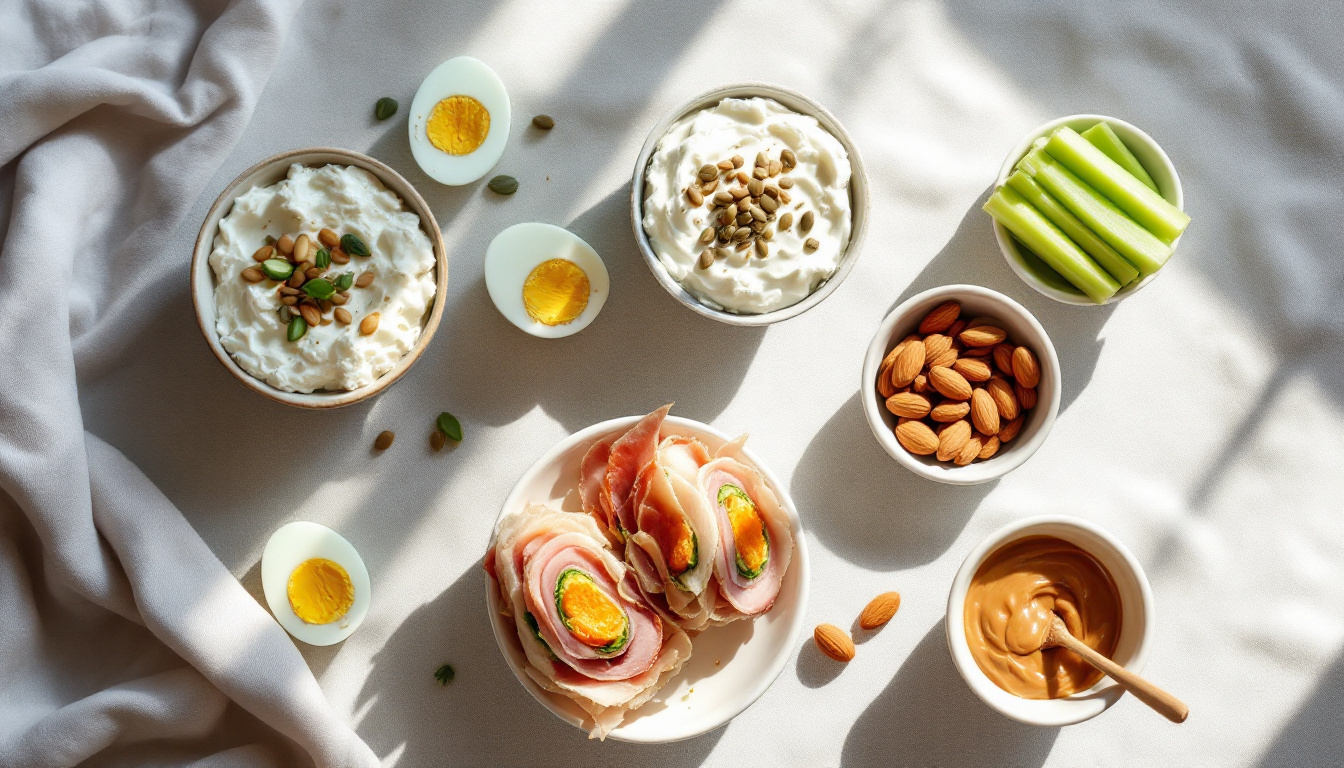
- Not prepping snacks. Meals are covered, but the 3pm hunger is not. Without prepped snacks, the mid-afternoon gap is filled by whatever is available. Portioning 5 bags of nuts, 5 containers of Greek yogurt, and a batch of hard-boiled eggs takes 10 minutes and eliminates the mid-afternoon blood sugar crisis.
- Leaving out high-GI foods instead of replacing them. Many women with PCOS remove refined carbohydrates from their prep without adequately replacing the volume and energy with low-GI alternatives. The result is under-eating at meals, hunger, and a compensatory reach for whatever is in the cupboard. Every meal needs adequate volume from low-GI carbohydrates — quinoa, brown rice, sweet potato, lentils — not restriction.
- No mid-week refresh. A Sunday-only system reliably runs out of fresh food by Wednesday or Thursday. The 20-minute Wednesday refresh — boil more eggs, open backup tuna pouches, replace the paper towel in the salad container — is the difference between a system that lasts the week and one that collapses mid-week every time.
Get a personalised PCOS meal plan — ready to prep Sunday
HerMeal generates a complete 5-day PCOS plan built around your protein targets, dietary restrictions, and calorie goal — with a full grocery list so Sunday prep starts from a single shop.
Generate your free planFrequently Asked Questions
What should I meal prep for PCOS? ▼
The most effective PCOS meal prep prioritises proteins first, then low-GI carbohydrates, then vegetables. For protein: batch-cook chicken breast (bake 4–6 breasts at once), hard-boil 8–10 eggs, and portion Greek yogurt into individual containers. For carbohydrates: cook a large batch of brown rice or quinoa, and roast a tray of sweet potato. For vegetables: roast two trays of mixed vegetables (courgette, capsicum, broccoli, cherry tomatoes) and wash and portion raw salad greens. This base takes approximately 90 minutes and covers every meal combination for the week. Proteins provide the insulin-stabilising foundation; low-GI carbohydrates give you energy without blood sugar spikes; roasted vegetables add fibre, antioxidants, and volume without significant carbohydrate load.
How do I meal prep for PCOS weight loss? ▼
PCOS meal prep for weight loss is built around three principles: high protein at every meal (30–40g per sitting), low glycaemic index carbohydrates only, and no refined carbohydrates accessible as a default option. The practical system: on Sunday, cook 4–6 chicken breasts, a large salmon fillet, 10 eggs, and a pot of quinoa. Roast two trays of low-GI vegetables. Portion everything into containers labelled by day. When meals are pre-portioned and ready, the decision to eat a PCOS-appropriate meal requires no willpower — it is the path of least resistance. The weight loss mechanism is not calorie restriction but insulin management: consistently low-GI eating keeps insulin low, which allows fat mobilisation and reduces the androgen-driven fat storage that characterises PCOS.
How many days should I meal prep for PCOS? ▼
Most women with PCOS find prepping Sunday for Monday–Friday (5 days) most sustainable. Weekend eating tends to be more flexible and social, so prepping only weekdays reduces the volume to a manageable 90–120 minutes of Sunday cooking. For proteins, 5 days of storage is comfortable — cooked chicken breast lasts 4–5 days, hard-boiled eggs last 7 days in their shells, and cooked quinoa or rice lasts 5 days. If the full week feels overwhelming, start with a 3-day prep on Sunday (Monday–Wednesday) and do a quick 30-minute mid-week prep on Wednesday evening for Thursday–Friday. Consistency matters more than perfection — a 3-day prep done every week beats a 5-day prep attempted twice and abandoned.
What are the best PCOS meal prep proteins? ▼
The best PCOS meal prep proteins are those that reheat well, have a neutral flavour that works across multiple dishes, and provide at least 25–30g of protein per serving. Baked chicken breast is the most versatile — it can be sliced into salads, shredded into bowls, or served with roasted vegetables, and it holds its texture well over 4–5 days. Baked salmon is the most nutritionally dense, providing EPA and DHA omega-3s with documented testosterone-lowering effects in PCOS. Hard-boiled eggs are the fastest and most portable. Canned tuna and salmon require zero cooking and last indefinitely. Greek yogurt provides protein plus probiotics. For plant-based eating: lentils (9g protein per 100g cooked), edamame (12g per 100g), and baked tofu (15g per 150g serving).
Can I meal prep overnight oats for PCOS? ▼
Overnight oats can be appropriate for PCOS when structured correctly. The problem with typical recipes — oats, milk, banana, honey, granola — is the carbohydrate load, which can reach 60–80g per serving. A PCOS-appropriate version uses a small portion of rolled oats (30–40g dry), replaces honey and banana with a small serving of berries, adds a scoop of protein powder or 150g of Greek yogurt to push protein above 25g, and includes chia seeds and nut butter for fat. Prepped this way across 5 jars on Sunday, it is a fast and practical weekday breakfast that keeps blood sugar stable through the morning. Use rolled oats, not instant — instant oats are more processed and have a higher glycaemic index.
How do I meal prep for PCOS on a budget? ▼
PCOS meal prep on a budget centres on the cheapest high-quality protein sources: eggs, canned tuna and salmon, chicken thighs (cheaper than breast and higher in fat, which is beneficial for satiety), lentils, and frozen edamame. Frozen vegetables are equally nutritious as fresh and significantly cheaper — frozen broccoli, spinach, and mixed vegetable bags are PCOS-appropriate and last months in the freezer. Brown rice and oats are inexpensive low-GI carbohydrates that store well. A full week of PCOS meal prep built from these staples costs significantly less than buying individual meals and removes the impulse spending that happens when food decisions are made while hungry. A rough budget of $50–70 CAD typically covers a full week of PCOS meal prep for one person.
What containers should I use for PCOS meal prep? ▼
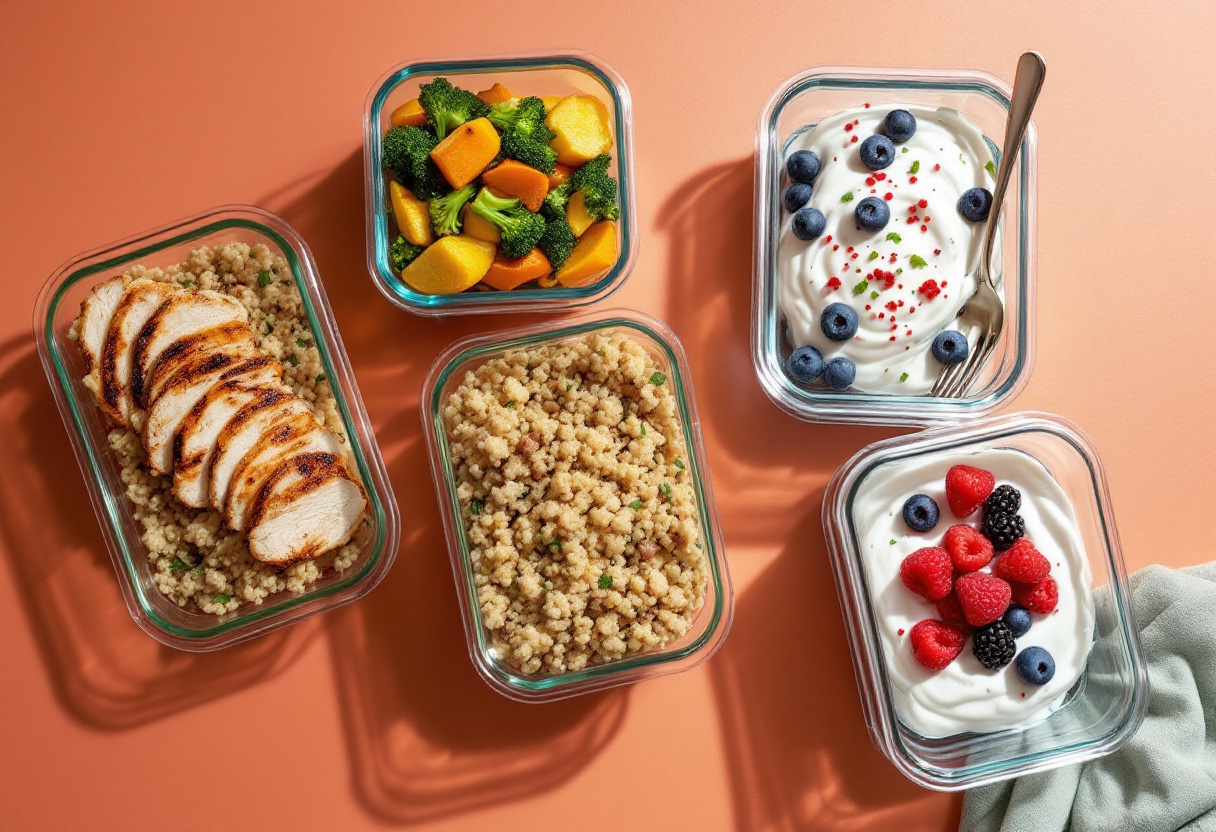
Glass containers are preferred over plastic for PCOS meal prep for one specific reason: plastic containers, particularly when heated in the microwave, can leach bisphenol A (BPA) and phthalates — endocrine-disrupting chemicals that may worsen hormonal imbalance in women with PCOS. Glass containers are microwave safe, dishwasher safe, do not absorb odours or stain, and do not leach chemicals at any temperature. Borosilicate glass containers with airtight lids are the best investment. A set of 5 meal-sized containers (approximately 800ml each) and 5 smaller snack containers covers a full week. If budget is a concern, BPA-free plastic is a reasonable compromise — transfer food to a plate before microwaving rather than heating directly in the plastic container.
How do I stop getting bored of meal prep with PCOS? ▼
Meal prep boredom is the primary reason most women abandon the system within a few weeks. The solution is building flexible components rather than complete identical meals. Instead of prepping 5 identical chicken and rice bowls, prep the components separately: batch-cooked protein, a base carbohydrate, roasted vegetables, and two or three sauces. Each day you combine them differently — Monday is a chicken and quinoa bowl with tahini sauce; Tuesday is chicken over spinach with lemon and olive oil; Wednesday is chicken in a lettuce wrap with avocado and mustard. The protein is the same; the dish feels different. Rotating between two or three proteins per week (chicken one week, salmon and eggs the next) adds enough variety to sustain the system long-term without adding meaningful prep time.