The PCOS Grocery List: What to Buy, What to Skip, and Why
A printable, evidence-backed shopping list built around the one thing that changes PCOS outcomes most: insulin.
Most grocery shops happen on autopilot — you buy what you always buy, reach for what looks familiar, and end up with a trolley that is working against you without you realising it. For women with PCOS, the grocery shop is actually one of the highest-leverage points in the entire week. The food in your kitchen is the food you will eat. What you buy on Saturday determines what is available on Tuesday at 7pm when you are tired and not making optimal decisions. This guide is not about restriction — it is about knowing which foods actively reduce insulin and androgen levels and putting those in the trolley instead of the foods that spike them. The difference between a PCOS-helpful shop and a harmful one is surprisingly specific, and it does not require spending more money.
Key Takeaways
- The PCOS grocery list is built around one principle: keep insulin low and stable between meals
- Protein is the highest-priority category — aim for 25–35g per main meal; buy accordingly
- Most harmful PCOS foods are marketed as healthy: low-fat yogurt, granola, fruit juice, wholemeal bread
- Frozen vegetables are nutritionally equivalent to fresh and significantly cheaper — use them freely
- The shopping framework: proteins first, non-starchy vegetables second, healthy fats third, everything else optional
- HerMeal generates a full PCOS grocery list automatically with every meal plan — no manual list-building required
In This Article
The PCOS Shopping Framework
Before looking at the specific list, it helps to understand the logic behind it — because once you understand the logic, you can make good decisions in the aisle without needing to consult a list at all.
PCOS is, in the majority of cases, a condition of insulin excess. The elevated insulin drives the ovarian androgen production that causes the symptoms most women with PCOS experience — irregular cycles, acne, hair loss, and difficulty losing weight. Reducing insulin — specifically, reducing the frequency and magnitude of insulin spikes throughout the day — is the dietary intervention with the strongest evidence base for improving PCOS outcomes. Everything on this grocery list follows from that.
The shopping hierarchy:
- Proteins first. High-protein foods have a minimal effect on insulin (protein stimulates a modest insulin response, far below carbohydrates) and are the primary tool for achieving and maintaining satiety. Without adequate protein, hunger drives carbohydrate cravings, which drive insulin spikes, which drive PCOS symptoms. Protein is not optional.
- Non-starchy vegetables second. These are the foundation of meal volume — they add bulk, fibre, and micronutrients with essentially no glycaemic impact. A plate built around protein and non-starchy vegetables cannot produce a meaningful insulin spike regardless of what else is on it.
- Healthy fats third. Fat has no insulin effect. It slows gastric emptying, extends the satiety window of every meal, and provides fat-soluble vitamins. PCOS-specific fats — olive oil, avocado, fatty fish — also have direct anti-inflammatory and mild anti-androgenic effects.
- Low-GI complex carbohydrates — controlled amounts only. Not eliminated, but chosen carefully and portioned deliberately. Lentils and legumes are the priority here; sweet potato, quinoa, and oats in smaller amounts.
- Everything else is optional — condiments, flavourings, and convenience items that do not disrupt the above categories.
Proteins to Always Have
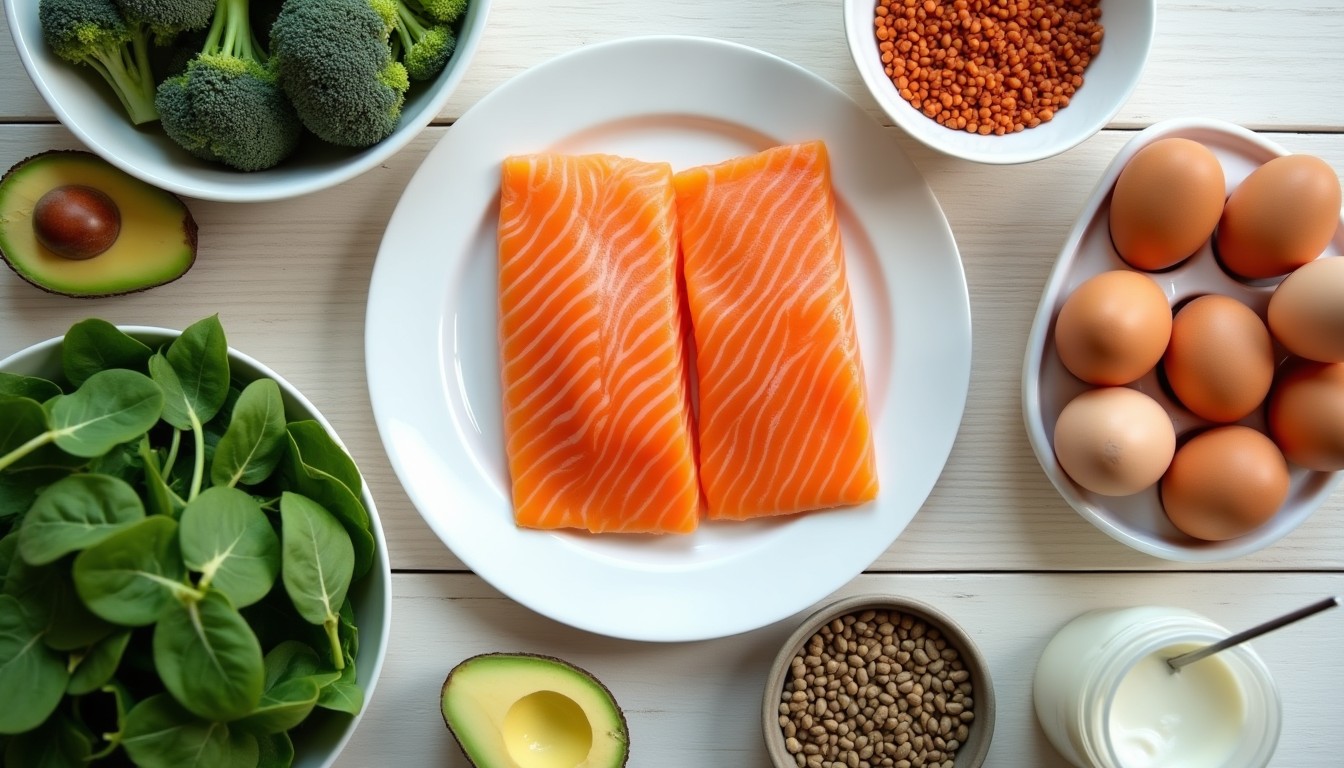
This is the most important section of the PCOS grocery list. Protein is what keeps blood sugar stable, prevents the cravings that lead to poor food choices, and supports muscle tissue that improves insulin sensitivity. The target for most women with PCOS is 25–35g of protein per main meal — which requires buying protein sources in sufficient quantity for the week ahead.
- Eggs — 12–18 per week minimum
- Chicken breast or thighs — 600–800g/week
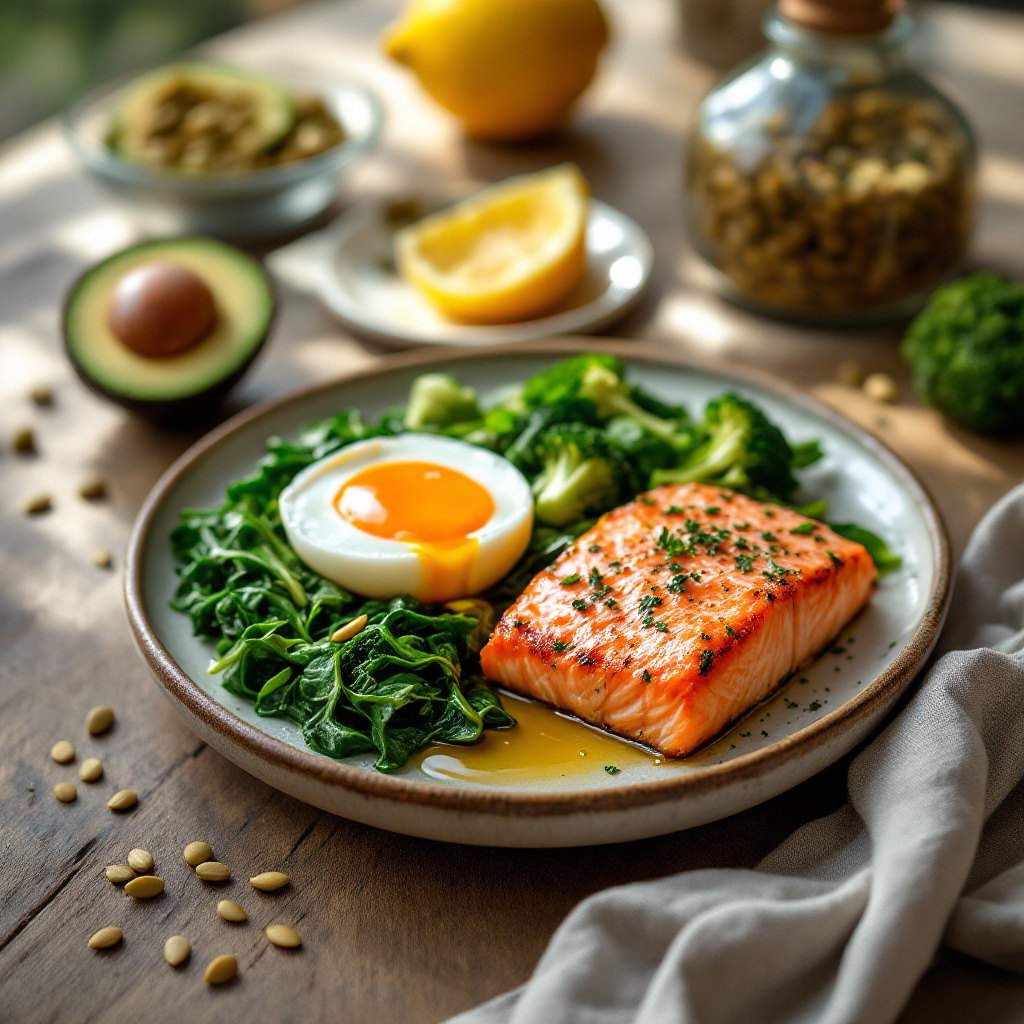
- Salmon fillets — 2 fillets/week minimum
- Canned tuna in water — 4–6 cans
- Canned sardines in olive oil — 3–4 tins
- Full-fat plain Greek yogurt — 500–750g/week
- Cottage cheese (full-fat) — 400–500g/week
- Turkey breast or mince — 400–500g/week
- Lean beef mince (5% fat) — 400–500g/week
- Smoked salmon — 100–150g/week
Why salmon and sardines in particular: they are the best dietary sources of EPA and DHA — the long-chain omega-3 fatty acids with the strongest clinical evidence for reducing inflammation and lowering free testosterone in PCOS. Two portions of oily fish per week is a core recommendation in most PCOS dietary frameworks.
- Red lentils — 500g dried
- Green or brown lentils — 400g dried or 2 × 400g tins
- Chickpeas (canned) — 2–3 × 400g tins
- Black beans (canned) — 2 × 400g tins
- Edamame (frozen, shelled) — 500g bag
- Firm tofu — 400g block
- Hemp seeds — 200g bag
- Pumpkin seeds — 200g bag (zinc, plant protein)
Legumes are the most underrated PCOS food: they provide protein, soluble fibre (which slows glucose absorption), and have a glycaemic index of 20–45 — among the lowest of any carbohydrate source. They act simultaneously as the protein and carb component of a meal.
Vegetables — the PCOS Priority List
Non-starchy vegetables can be eaten in essentially unlimited quantities on a PCOS diet. They have minimal glycaemic impact, provide the fibre that slows glucose absorption from the rest of the meal, and supply the micronutrients that are commonly deficient in PCOS. The following are the highest-priority vegetables — chosen for their specific micronutrient contributions, not just their general healthfulness.
- Spinach — iron, folate, magnesium
- Broccoli — DIM (supports oestrogen clearance), vitamin C
- Cauliflower — rice substitute, versatile
- Courgette — noodle substitute, very low GI
- Kale or cavolo nero — calcium, vitamin K, DIM
- Bell peppers (capsicum) — vitamin C (enhances iron absorption)
- Cucumber — hydration, near-zero carbohydrate
- Asparagus — folate, prebiotic fibre
- Brussels sprouts — DIM, fibre, vitamin C
- Celery — apigenin (mild anti-androgenic), very low calorie
- Cherry tomatoes — lycopene, very low GI
- Mushrooms — vitamin D (if sun-exposed), B vitamins
- Green beans — fibre, very low GI
- Rocket (arugula) — nitrates, glucosinolates
- Frozen spinach — buy a 1kg bag; nutritionally identical to fresh
- Frozen broccoli — 500g bag; cheaper than fresh
The cruciferous vegetables — broccoli, cauliflower, Brussels sprouts, kale, and rocket — deserve a specific mention. They contain diindolylmethane (DIM) and indole-3-carbinol, compounds that support the liver's conversion and clearance of oestrogen. In PCOS, oestrogen dominance is common and worsens symptom burden. Regular cruciferous vegetable intake is consistently recommended in functional PCOS nutrition protocols.
Healthy Fats to Stock
Fat is not the enemy in PCOS management. The wrong fats — refined seed oils, trans fats, and hydrogenated fats found in processed foods — are harmful. The right fats are anti-inflammatory, help absorb fat-soluble vitamins (A, D, E, K), and have no effect on insulin. They are essential to a PCOS diet, not a concession to it.
- Extra-virgin olive oil — primary cooking fat
- Avocados — 3–4 per week
- Avocado oil — for high-heat cooking
- Walnuts — highest ALA omega-3 of any nut
- Almonds — magnesium, vitamin E
- Brazil nuts — selenium (1–2 nuts meets or exceeds daily requirement; more is not better)
- Natural almond butter — ingredients: almonds only
- Tahini (sesame paste) — sesamin (mild anti-androgenic)
- Full-fat coconut milk (canned) — dairy-free fat for curries
- Grass-fed butter or ghee — saturated fat for cooking, butyrate for gut health
Extra-virgin olive oil should be the default cooking fat for most PCOS meals. It is the most studied dietary fat in relation to insulin sensitivity, and oleocanthal — a compound in high-quality olive oil — has anti-inflammatory activity comparable to low-dose ibuprofen. The key is high-quality, cold-pressed oil; refined "light" olive oil has had most of the beneficial polyphenols removed.
Complex Carbs in Controlled Amounts
PCOS does not require eliminating carbohydrates entirely — it requires choosing low-GI carbohydrates and controlling portions. The following are the PCOS-appropriate carbohydrate sources, listed in order of suitability. All of them should be eaten alongside protein and fat to further blunt the glucose response.
- Sweet potato — max 100g/serving (GI 44 when boiled; higher when baked)
- Quinoa — max 80g cooked/serving (GI 53)
- Rolled oats (not instant) — max 50g dry (GI 55)
- Brown rice — max 80g cooked/serving (GI 50)
- Blueberries — freely (GI 25–40)
- Raspberries — freely (GI 32)
- Strawberries — freely (GI 40)
- Apples — 1 per day maximum, always with protein
- Seed crackers — flaxseed/sunflower-based, no wheat flour
- Ground flaxseed — add to anything; lignans reduce free testosterone
Ground flaxseed (linseeds) deserves special mention. It is one of the richest dietary sources of secoisolariciresinol — a lignan that is converted by gut bacteria to enterolactone, which has demonstrated anti-androgenic activity by competing with androgens at the androgen receptor and inhibiting 5-alpha reductase activity. Add 1–2 tablespoons to Greek yogurt, smoothies, or mixed into mince dishes. It is cheap, tasteless, and has the most specific anti-PCOS evidence of any food supplement on this list.
PCOS Pantry Staples
These items do not need to be bought weekly — they are the foundations that support PCOS cooking without requiring constant replenishment. Stock the pantry once, top up as needed.
- Apple cider vinegar — improves post-meal glucose response
- Turmeric (dried) — curcumin, anti-inflammatory
- Ginger (dried or fresh) — anti-inflammatory, gut health
- Cinnamon — modest insulin-sensitising effect
- Garlic (fresh or dried) — anti-inflammatory, prebiotic
- Black pepper — piperine dramatically increases curcumin absorption (early studies suggest 20x or more)
- Cayenne pepper — capsaicin, mild metabolic effect
- Dijon or wholegrain mustard — zero sugar, adds flavour
- Tamari (gluten-free soy sauce) — lower sodium than regular
- Bone broth (low-sodium) — collagen, gut health
- Chia seeds — omega-3 ALA, soluble fibre, complete protein
- Dark chocolate 85%+ — flavanols, anti-inflammatory; 10–20g/day
Apple cider vinegar (ACV) has early evidence in PCOS — a small 2013 pilot in Tohoku Journal of Experimental Medicine (n=7) found that 15ml of ACV daily for 90 days improved insulin sensitivity and restored ovulation in 4 of 7 women. Small sample size, but the mechanism (acetic acid slowing gastric emptying and glucose absorption) is well-established. Add 1 tablespoon to a glass of water before meals, or use as a salad dressing base.
What to Remove From Your Trolley
The remove list is as important as the buy list. Many of the most harmful PCOS foods are marketed as healthy — they have packaging that implies wellness, and they are sold in the health food aisle. The marketing is often the opposite of the metabolic reality.
Refined Carbohydrates — Remove Entirely
- White bread, white rolls, bagels, wraps — GI 70–95; spike insulin rapidly and profoundly
- Regular pasta — GI 45–65; slightly better than bread, still a significant insulin driver
- White rice — GI 64–72; replaced by cauliflower rice, lentils, or quinoa
- Most breakfast cereals — even "wholegrain" and "bran" versions are typically GI 55–80 with added sugar; oats are the exception
- Rice cakes — GI 82; one of the worst foods for PCOS despite their health image and low calorie count
- Corn tortillas and most wraps — refined starch base with minimal protein or fibre
Added Sugar — Check Every Label
- Fruit juice and smoothies — liquid fructose with no fibre; absorbs faster than solid food
- Flavoured low-fat yogurt — often 15–25g added sugar; the worst category for PCOS
- Granola and granola bars — typically 20–35g sugar per 100g despite health branding
- Sauces and condiments — most ketchup, sweet chilli, teriyaki, BBQ sauce, and pasta sauces contain 10–20g sugar per 100g; check labels
- Protein bars — read the label; many contain glucose syrup, maltodextrin, or 15–25g of sugar
- Dried fruit — concentrated fructose without the water that slows absorption in whole fruit
- Flavoured oats (sachets) — most flavoured oat sachets contain 10–20g added sugar
Processed Oils — Swap Out
- Sunflower oil, vegetable oil, canola oil — high in omega-6 linoleic acid, which drives the inflammatory pathways elevated in PCOS when consumed in excess; replace with olive oil or avocado oil
- Margarine and spreads — even "healthy" spreads are often based on refined seed oils; use butter or olive oil
Reading Labels with PCOS
Food labels are not always honest, but they are required to be accurate on the nutrition panel. The three numbers that matter most for PCOS are, in order:
| Check this | What to look for | What to avoid |
|---|---|---|
| Sugars (per 100g) | Under 5g total sugars | Over 10g — put it back regardless of other claims |
| Protein (per serving) | Over 10g per serving for snacks; over 25g for main meal components | Under 5g per serving — it will not sustain satiety |
| Ingredients list | Recognisable whole food ingredients; short list | Sugar in the first 5 ingredients; seed oils; modified starch; emulsifiers; "natural flavours" as primary ingredient |
| Carbohydrates (per serving) | Under 15g per serving for snacks; carbs should come with at least equal protein | Over 30g per serving without significant protein to buffer the glucose response |
The "low-fat" and "reduced sugar" labels are traps more often than not. "Low-fat" almost always means more added sugar to compensate for flavour. "Reduced sugar" means the product had so much sugar to begin with that the reduced version is still problematic. "No added sugar" means the product does not have refined sugar added but may still be very high in natural sugars — dried fruit and pure fruit juice are examples.
Budget PCOS Shopping
PCOS eating does not have to be expensive. The most expensive grocery items — exotic supplements, organic everything, specialist health food products — are not the ones that move the needle on PCOS symptoms. The items with the strongest evidence for PCOS management are among the cheapest foods available.
Budget-first PCOS protein sources:
- Eggs — cheapest complete protein available; 12 eggs for the price of a coffee
- Canned sardines and tuna — very cheap per gram of protein, long shelf life, high omega-3
- Dried lentils and chickpeas — pennies per serving; cook a large batch Sunday and refrigerate for the week
- Chicken thighs — significantly cheaper than breast, higher zinc content, still excellent PCOS protein
- Cottage cheese — cheaper than Greek yogurt per gram of protein; high leucine
- Frozen edamame — complete plant protein at budget price
Budget-first PCOS vegetables:
- Frozen spinach — a 1kg bag is the most cost-effective PCOS vegetable purchase; nutritionally identical to fresh, no waste
- Frozen broccoli — same nutritional value as fresh; much cheaper
- Cabbage — cheap, cruciferous (DIM for oestrogen clearance), extremely versatile
- Carrots — low GI (raw ~16, cooked ~41–49), cheap, high in beta-carotene; raw or lightly steamed keeps the GI lower
- Seasonal fresh produce — whatever is on special this week is usually fine; the specific vegetable matters less than eating large quantities of any non-starchy vegetable
References
- Teede HJ, et al. (2018). Recommendations from the international evidence-based guideline for the assessment and management of polycystic ovary syndrome. Human Reproduction. https://pubmed.ncbi.nlm.nih.gov/30052961/
- Moran LJ, et al. (2003). Dietary composition in restoring reproductive and metabolic physiology in overweight women with polycystic ovary syndrome. Journal of Clinical Endocrinology & Metabolism. https://pubmed.ncbi.nlm.nih.gov/12574218/
- Szczuko M, et al. (2021). Nutrition strategy and life style in polycystic ovary syndrome — narrative review. Nutrients. https://pubmed.ncbi.nlm.nih.gov/34371961/
- Khani B, et al. (2011). Effect of a low-glycaemic-load diet on medication requirement in type 2 diabetes. Asia Pacific Journal of Clinical Nutrition.
- Nidhi R, et al. (2012). Effect of holistic yoga program on anxiety symptoms in adolescent girls with polycystic ovarian syndrome. International Journal of Yoga.
Skip the manual grocery list
HerMeal generates a complete 5-day PCOS meal plan and an itemised weekly grocery list — sorted by aisle category, portioned to your calorie goal, and built around your dietary restrictions. Takes a few minutes.
Generate my plan freeFrequently Asked Questions
What should I not buy at the grocery store with PCOS? ▼
The items most harmful to PCOS management are: refined carbohydrates (white bread, pasta, white rice, most breakfast cereals), added sugar in any form (sodas, fruit juice, flavoured yogurts, most sauces and condiments), processed seed oils (sunflower, vegetable, canola oil), low-fat dairy products that compensate for removed fat with added sugar, and ultra-processed snack foods. The critical label check: if the first three ingredients include any form of sugar or refined starch, put it back. For PCOS, the insulin response to food matters more than calorie count — a food can be low-calorie and still aggressively spike insulin.
Is Greek yogurt on the PCOS grocery list? ▼
Yes — full-fat plain Greek yogurt is one of the most important PCOS grocery items. It provides around 17–20g of protein per 200g serving, probiotics that support the gut microbiome (disrupted in many women with PCOS), calcium, and B vitamins. The non-negotiable rule: full-fat only, plain only. Low-fat flavoured Greek yogurt typically contains 15–25g of added sugar per serving — it is a dessert food sold in the dairy aisle, not a PCOS food. Look for labels that list only milk and live cultures as ingredients.
Can I eat bread with PCOS? ▼
Standard white or wholemeal bread is not ideal for PCOS management because it has a high glycaemic index and spikes insulin significantly. If bread is important to your eating pattern, the least harmful options are genuine sourdough made with long fermentation (the fermentation partially breaks down the starch structure and significantly lowers the glycaemic response), or seed-based grain-free breads made primarily from flaxseed, sunflower seeds, and pumpkin seeds. Avoid: white bread, most wholemeal bread, gluten-free bread (typically high-GI rice and potato flour), corn tortillas, and most wraps.
What are the best proteins to buy for PCOS? ▼
The best protein sources for PCOS are those with high protein content, minimal processing, and ideally some additional micronutrient benefit. Top picks: eggs (protein, choline, vitamin D, B12), salmon and fatty fish (protein + omega-3 EPA/DHA for anti-inflammatory and testosterone-lowering effect), full-fat plain Greek yogurt (protein + probiotics), chicken breast and turkey (lean protein, zinc, B vitamins), canned tuna and sardines (protein, omega-3, selenium, vitamin D — sardines also provide calcium), cottage cheese (high leucine content, improves insulin sensitivity), and legumes as plant protein: lentils, chickpeas, black beans. The target for PCOS is 25–35g of protein per main meal.
Is oatmeal okay for PCOS? ▼
Rolled oats (not instant) are one of the more acceptable grains for PCOS because of their beta-glucan content — a soluble fibre shown to slow glucose absorption and improve insulin sensitivity. The glycaemic index of rolled oats is approximately 55, compared to 70–85 for instant oats and most breakfast cereals. The critical rules for oats and PCOS: use rolled oats only (not instant or quick-cook), always pair with at least 25g of protein (protein powder, Greek yogurt, eggs), keep the portion to 40–50g dry, and add no sugar, honey, or dried fruit. If significant insulin resistance is present, eggs or Greek yogurt may be a better breakfast choice until insulin sensitivity improves.
What fats should I buy for PCOS? ▼
The best fats to include in a PCOS grocery shop are: extra-virgin olive oil (oleic acid, anti-inflammatory, the foundation cooking fat for PCOS), avocado and avocado oil (monounsaturated fat, slows gastric emptying, reduces insulin response to meals), fatty fish like salmon and sardines (omega-3 EPA/DHA, directly lowers inflammation and testosterone in PCOS), whole nuts — particularly walnuts (omega-3 ALA), almonds, and Brazil nuts, and full-fat dairy (grass-fed where available). The fats to reduce or eliminate: refined seed oils (sunflower, vegetable, canola, soybean oil), trans fats in any form, and processed foods containing partially hydrogenated oils.
What should I buy instead of pasta or rice with PCOS? ▼
The best low-GI alternatives to pasta and rice for PCOS are: cauliflower rice (essentially zero GI, works in most rice dish contexts), courgette noodles (very low carbohydrate, works well with protein-rich sauces), lentils (GI 20–30, high protein, high fibre — act as both the carb and protein component of a meal), chickpeas and black beans (GI 28–45, high fibre, plant protein), sweet potato in controlled portions (≤100g, GI 44), and quinoa (GI 53, complete protein, ~3g fibre per 100g cooked). If pasta is important, red lentil pasta provides higher protein than wheat pasta with a lower GI.
How do I shop on a budget with PCOS? ▼
PCOS eating can be done on a tight budget. The most cost-effective PCOS protein sources are: eggs (cheapest complete protein available), canned tuna and sardines (very cheap per gram of protein, long shelf life), canned legumes — chickpeas, lentils, black beans (cheap, high in fibre and plant protein), cottage cheese (high protein at a lower price point than Greek yogurt), and chicken thighs (cheaper than breast, still excellent PCOS protein). For vegetables, frozen spinach, broccoli, edamame, and peas are often cheaper and nutritionally equivalent to fresh. Spend the budget on protein first, then vegetables — everything else is secondary.