Is Peanut Butter Good for PCOS? Yes — Pick the Right Jar and Measure It
Peanut butter sits in an odd place for women with PCOS: it's full of healthy fats and keeps you full, but it's also easy to overdo. The good news is that the research on peanuts and blood sugar is encouraging. Here's what it says, how to choose a jar, and how much to put on your plate.
Key takeaways
- In nearly 84,000 women, eating peanut butter 5+ times a week was linked to about a 21% lower risk of type 2 diabetes
- Adding peanut butter to breakfast lowered blood sugar after the next meal in women at high diabetes risk
- Peanuts are very filling — people naturally eat less of other foods when they add them
- One tablespoon (~95 kcal) is a sensible portion; it's mostly fat, not protein
- Pick a jar with just peanuts (and salt) — no added sugar or hydrogenated oils
Contents
What the research says
Most women with PCOS have some insulin resistance, so foods that keep blood sugar steady are helpful. Peanuts are low in carbohydrate and rich in unsaturated fat, fibre and magnesium — a good starting point.
In the Nurses' Health Study, which followed nearly 84,000 women for 16 years, those who ate nuts most often had a lower risk of type 2 diabetes. Women who ate peanut butter five or more times a week had about a 21% lower risk than those who rarely ate it.1 In a Spanish trial, a Mediterranean diet with 30 g of mixed nuts a day roughly halved the rate of new diabetes compared with a low-fat diet over four years.2
Peanut butter also seems to help with the next meal. In a small trial of women with obesity and a high risk of diabetes, adding peanut butter to a breakfast lowered their blood sugar after lunch, raised fullness hormones and reduced their desire to eat.3
What about weight? Peanuts are energy-dense, but in a 30-week study people who ate peanuts every day without other changes naturally ate less of other food — making up for about two-thirds of the extra calories — and gained far less weight than predicted.4 That doesn't mean unlimited peanut butter is free; it means a measured portion is unlikely to cause problems.
There is a small trial in PCOS itself, though on other nuts: in 31 women with PCOS, six weeks of walnuts or almonds improved some markers — walnuts lowered HbA1c and raised sex hormone-binding globulin, and almonds lowered the free androgen index — without weight change.5
What's in a spoonful
| Natural peanut butter | 1 tbsp (16 g) | 2 tbsp (32 g) |
|---|---|---|
| Calories | ~95 kcal | ~190 kcal |
| Protein | ~4 g | ~7 g |
| Fat | ~8 g | ~16 g |
| Carbohydrate | ~3.5 g | ~7 g |
| Fibre | ~1 g | ~2 g |
Values are approximate, from USDA data for smooth peanut butter. The key point: peanut butter is mostly fat. It's a good fat, but it isn't a protein food — two tablespoons give you about 7 g of protein for 190 kcal, while 150 g of Greek yogurt gives you about 15 g for a similar or smaller amount of calories.
How to choose a peanut butter
- Read the ingredients, not the front of the jar. The best list is "peanuts" or "peanuts, salt".
- Skip added sugar — sugar, icing sugar, honey, corn syrup or molasses.
- Skip hydrogenated or palm oils added to stop the oil separating. Oil on top is normal; stir it in and keep the jar in the fridge.
- Be wary of "reduced fat" versions — they usually replace fat with sugar and starch, which is the opposite of what you want.
- Powdered peanut butter (defatted) has fewer calories and is handy in smoothies, but often has added sugar — check the label.
How much with PCOS?
About 1 tablespoon at a time is a sensible portion — roughly the size of your thumb. Two tablespoons can work as a snack on a day you have room. The real risk is the "spoon in the jar" habit: three or four casual spoonfuls add up to 300–400 kcal.
Treat peanut butter as the fat in a meal or snack, not as an extra. If it goes on your toast or yogurt, go lighter on cheese, oil or avocado at that meal.
PCOS-friendly ways to eat it
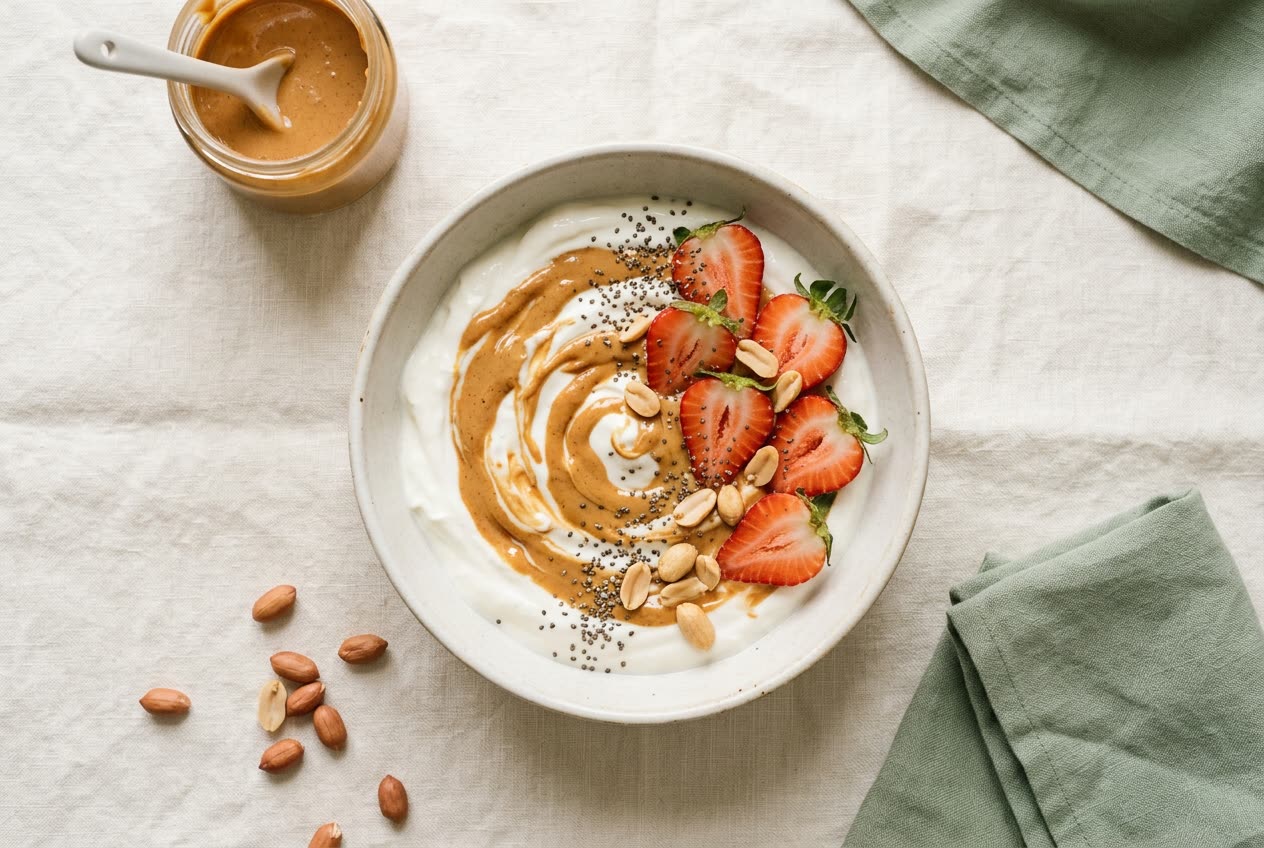
- Greek yogurt bowl: 150 g plain Greek yogurt, 1 tbsp peanut butter, berries and a teaspoon of chia
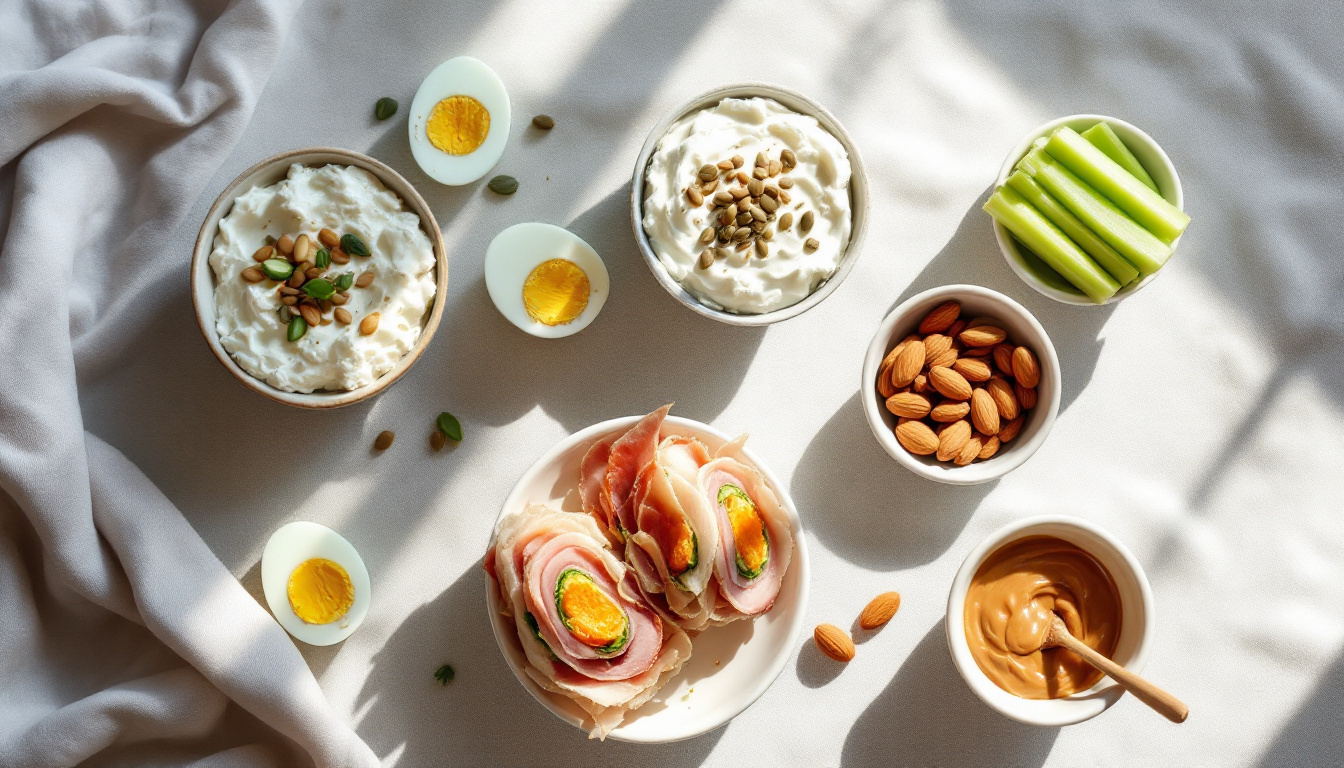
- Apple or pear slices with 1 tbsp peanut butter and a handful of cottage cheese on the side
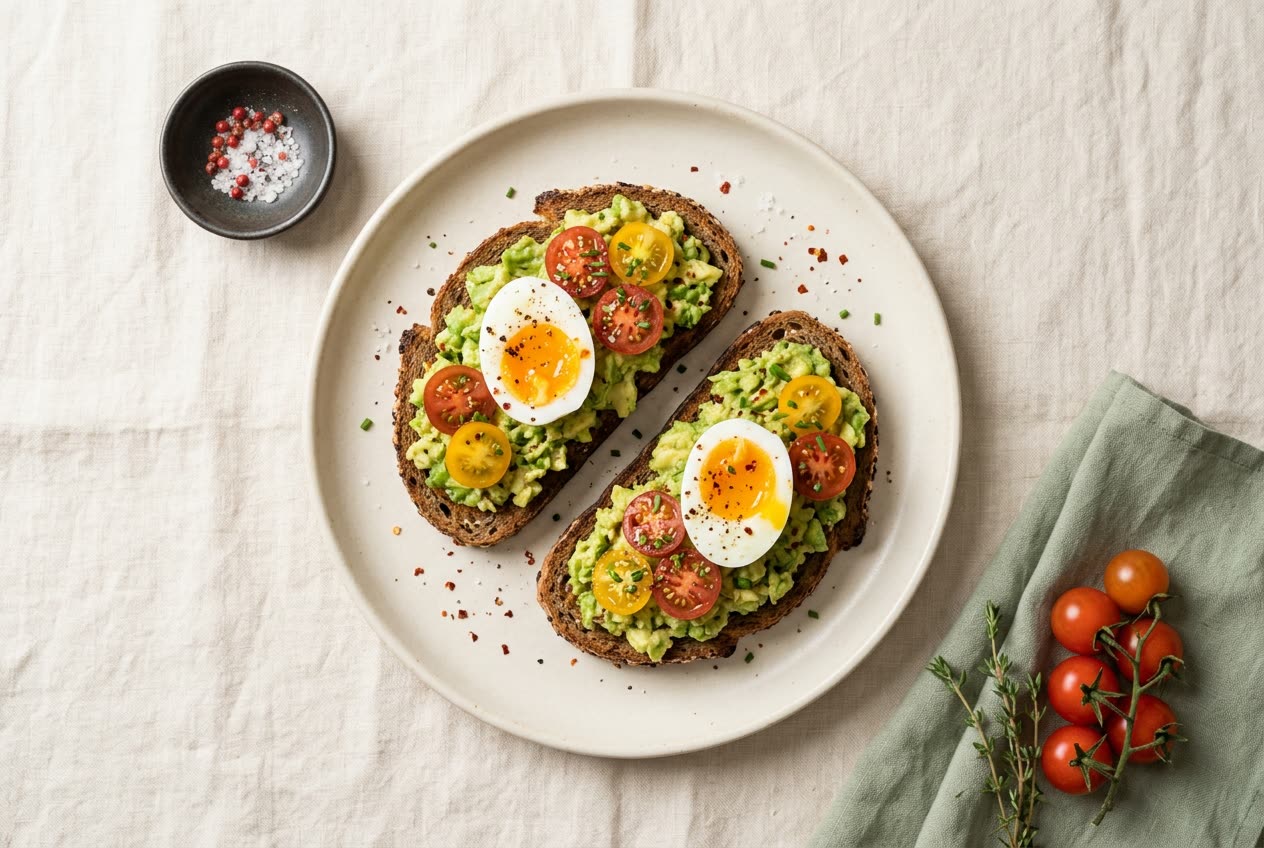
- Toast: 1 slice of rye or whole grain sourdough with peanut butter and a boiled egg
- Satay-style sauce: peanut butter, lime, soy sauce and ginger over chicken or tofu with crunchy vegetables
- Smoothie: unsweetened milk, a scoop of protein, frozen berries and 1 tbsp peanut butter
More ideas: PCOS-friendly snacks, high-protein PCOS breakfasts and Greek yogurt and PCOS. For the toast underneath, see is bread bad for PCOS?
Frequently asked questions
Is peanut butter good for PCOS?▼
How much peanut butter can I eat with PCOS?▼
Which peanut butter is best for PCOS?▼
Is peanut butter high in protein?▼
Is almond butter better than peanut butter for PCOS?▼
References
- Jiang R et al. (2002). Nut and peanut butter consumption and risk of type 2 diabetes in women. JAMA. PMID 12444862
- Salas-Salvadó J et al. (2011). Reduction in the incidence of type 2 diabetes with the Mediterranean diet: results of the PREDIMED-Reus nutrition intervention randomized trial. Diabetes Care. PMID 20929998
- Reis CE et al. (2013). Acute and second-meal effects of peanuts on glycaemic response and appetite in obese women with high type 2 diabetes risk: a randomised cross-over clinical trial. Br J Nutr. PMID 23122211
- Alper CM, Mattes RD (2002). Effects of chronic peanut consumption on energy balance and hedonics. Int J Obes Relat Metab Disord. PMID 12119580
- Kalgaonkar S et al. (2011). Differential effects of walnuts vs almonds on improving metabolic and endocrine parameters in PCOS. Eur J Clin Nutr. PMID 21157477
- Teede HJ et al. (2023). Recommendations from the 2023 International Evidence-based Guideline for the Assessment and Management of Polycystic Ovary Syndrome. J Clin Endocrinol Metab. PMID 37580314
Healthy fats, portioned for you.
HerMeal builds a 5-day PCOS plan around your calorie and protein targets — nuts, oils and nut butters measured inside a daily fat budget. Free to try.
Build my free plan