PMOS and Intermittent Fasting: Does Time-Restricted Eating Help?
Intermittent fasting shows promise for PMOS, but it works through insulin sensitivity—not magic—and works best alongside whole-food eating patterns.
PMOS is fundamentally a metabolic disorder driven by insulin resistance and androgen excess—not primarily an ovarian problem. That's why almost every dietary intervention for PMOS hinges on whether it improves insulin sensitivity. Intermittent fasting (IF) and time-restricted eating (TRE) have generated significant interest in PCOS management, but the evidence is nuanced: some women see real improvements in metabolic markers and hormones, whilst others see little change. This article examines what the research actually shows, who it might help, and how to implement it without derailing your nutrition.
🔑 Key takeaways
- A 2021 RCT [1] found 8-hour time-restricted feeding improved endocrine and metabolic profiles in women with anovulatory PCOS
- A 2025 systematic review [3] examined intermittent fasting effects on weight, metabolic markers, and hormones in PCOS, confirming measurable benefits in multiple studies
- Time restriction is most effective when combined with nutrient-dense eating in your window; fasting alone without dietary quality yields minimal benefit
- An 8-12 hour eating window is more sustainable and evidence-supported than extreme 4-6 hour windows for most women with PMOS
Contents
What does the research show on intermittent fasting and PCOS?
A 2021 randomised controlled trial 1 assigned women with anovulatory PCOS to either an 8-hour time-restricted feeding protocol or standard care. The women practising time restriction showed improvements in endocrine and metabolic profiles—measures that matter deeply in PCOS because hormonal dysregulation and poor insulin handling are core features of the condition.
More recently, a 2025 systematic review and meta-analysis 3 synthesised evidence from multiple studies on intermittent fasting in women with PCOS, looking at anthropometric measurements (weight, body fat), metabolic markers (glucose, insulin, lipids), and hormonal outcomes (testosterone, FSH, LH). This type of systematic approach gives us a broader picture than any single study and confirms that intermittent fasting does produce measurable changes in these parameters across multiple trials.
A 2023 research paper 5 positioned 8-hour time-restricted feeding as a "strong candidate diet protocol for first-line therapy" in PCOS, suggesting it may be comparable to or more practical than traditional calorie restriction for some women. This language reflects growing interest in fasting as a tool, though it should not be read as definitive proof it is superior to other approaches.
Why might intermittent fasting help PMOS?
The mechanism is straightforward: intermittent fasting extends the period during which your body is not processing dietary glucose and insulin levels naturally decline. Over time, this may improve insulin sensitivity—meaning your cells respond better to insulin signalling. Since insulin resistance is the metabolic root of PMOS, any approach that genuinely improves how your body handles insulin is theoretically valuable.
Additionally, time restriction can simplify eating patterns and reduce overall energy intake without formal calorie counting, which appeals to many women. Fewer eating windows can mean fewer decisions, less grazing, and a clearer metabolic "reset" window—all of which may support weight management and hormonal rebalancing.
Important caveats: time restriction is not a magic fix
Intermittent fasting works only if the food you eat during your eating window supports metabolic health. Fasting for 16 hours then consuming ultra-processed foods, refined carbohydrates, and seed oils in an 8-hour window will not improve insulin resistance. Quality matters more than timing.
A 2023 study protocol 2 designed to compare intermittent fasting alone versus calorie-restricted diet in PCOS acknowledges an important evidence gap: we still do not have robust head-to-head comparisons showing intermittent fasting superior to other evidence-based dietary approaches. The enthusiasm for fasting should be tempered by honesty about what remains unknown.
Intermittent fasting is also not suitable for everyone with PMOS. Women with a history of disordered eating, those trying to conceive (particularly if fertility is compromised), those on certain medications, or those with significant nutrient deficiencies should discuss fasting with their healthcare provider before starting. A 2017 hypothesis paper 4 framed fasting in PCOS as a question—"hope or hype?"—reflecting the reality that the evidence, whilst promising, remains incomplete and context-dependent.
How to implement intermittent fasting sensibly for PMOS
If you decide to try intermittent fasting, start conservatively. Rather than jumping to 16:8 (16 hours fasting, 8-hour eating window), begin with a 12:12 split or 10-hour eating window. This gives your body time to adapt and makes it easier to maintain nutrient adequacy.
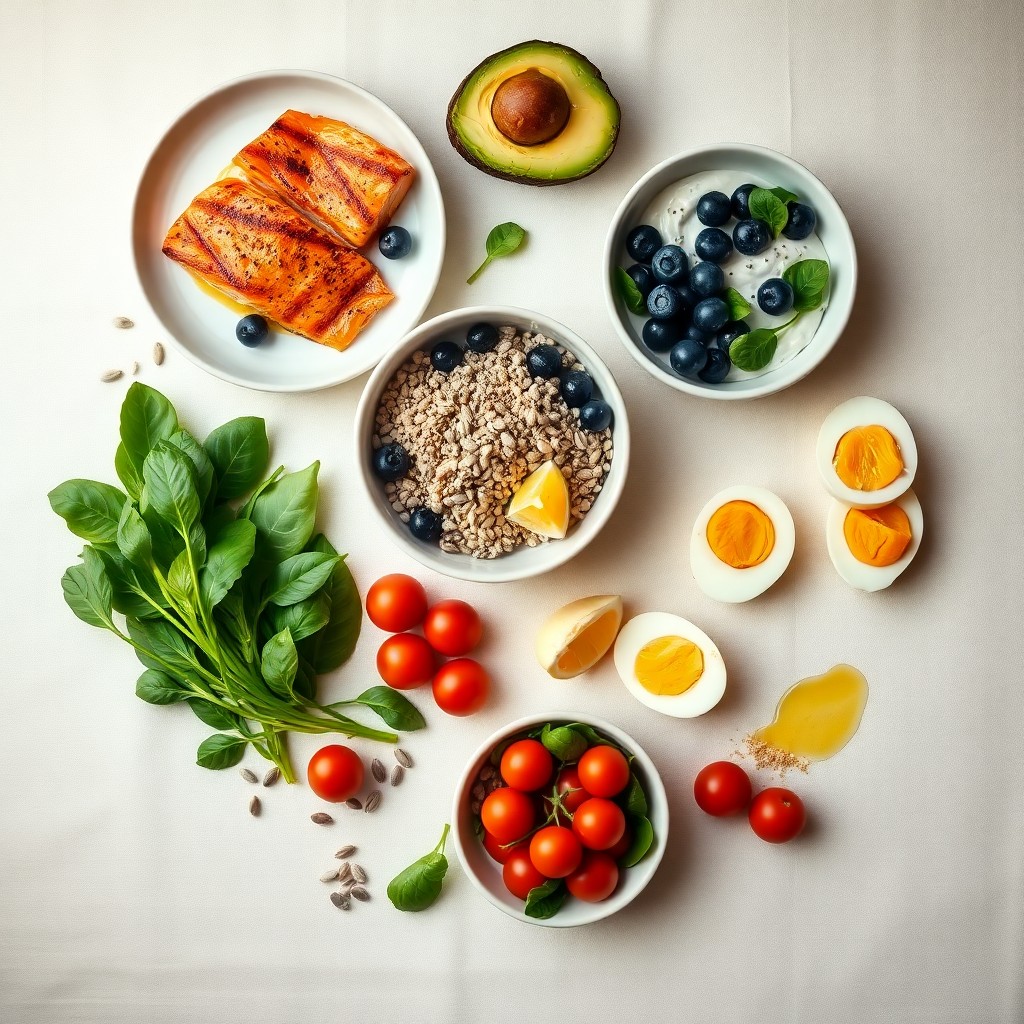
During your eating window, prioritise protein, healthy fats, and fibre-rich carbohydrates—foods that stabilise blood glucose and support satiety. Whole grains, legumes, non-starchy vegetables, eggs, fish, and nuts should form the foundation, not processed alternatives marketed as "fasting-friendly."
Track how you feel: energy levels, hunger patterns, mood, and cycle regularity. If you experience severe fatigue, amenorrhoea (loss of cycle), or increased anxiety, this is a signal that the protocol is not working for your body right now and should be adjusted or paused.
Combine intermittent fasting with other proven PMOS strategies. Fasting alone, without resistance training, stress management, sleep, and nutrient-dense eating, is unlikely to produce sustained improvements.
Action checklist: starting intermittent fasting for PMOS
- Start with a 12-hour overnight fast (e.g. finish eating by 8pm, eat first meal at 8am) for 1-2 weeks to assess tolerance
- Plan your eating window meals in advance: prioritise protein (20-30g per meal), whole grains, and vegetables to avoid refined carbohydrates
- Drink water, herbal tea, or black coffee during fasting periods; anything with calories or sweeteners breaks the fast
- Track 3-4 key metrics before starting: fasting glucose, fasting insulin, testosterone, or weight and how your jeans fit (not all metrics are accessible, but progress is progress)
- Recheck these metrics after 8-12 weeks to assess whether intermittent fasting is improving your metabolic markers
- If energy, mood, or menstrual cycle worsens, revert to a 10-hour eating window or discontinue and explore other dietary approaches
- Schedule a check-in with your GP or dietitian at the 6-week mark, especially if you are taking medications or have comorbidities