PMOS Meal Plan Generator: What to Look for and Why Generic Apps Miss the Mark
Generic meal planners treat PMOS like any other diet—but PMOS is a metabolic disorder that demands precision apps can't guess at.
If you've used a generic meal planning app and found that the suggested meals left you ravenous two hours later, bloated, or didn't improve your cycle regularity, you've bumped into a fundamental truth: PMOS is a metabolic condition, not a calorie condition. Most mainstream diet apps were built for people without insulin resistance. Women with PMOS need something entirely different.
🔑 Key takeaways
- Generic apps use calorie and macro targets designed for non-PMOS bodies; PMOS requires insulin-focused meal sequencing and carbohydrate quality prioritisation.
- Effective PMOS meal generators assess individual insulin resistance patterns and adjust macronutrient timing accordingly—not just portion sizes.
- Consistency in protein across meals (not just daily totals) and careful carbohydrate pairing matter more for PMOS than meal timing alone.
- A truly PMOS-specific app should explain why it's recommending a particular meal structure, not just serve recipes.
Contents
Why Generic Meal Planners Fail Women with PMOS
The standard diet app works like this: calculate daily calorie target, divide by macronutrient percentages (often 40-30-30 carbs-protein-fat), generate meals that fit the numbers, done. For someone without PCOS, this might work. For women with PMOS, it's often a recipe for hunger, energy crashes, and metabolic frustration.
Here's why. PMOS is primarily a metabolic disorder driven by insulin resistance and androgen excess. Your body's cells don't respond normally to insulin, so your pancreas produces more of it to try to get blood sugar down. That excess insulin drives inflammation, acne, hair growth, weight gain, and irregular cycles. A generic app doesn't know this about you. It treats your meal as a simple input-output problem: calories in, calories out. But for your metabolism, what matters isn't just how many calories you eat—it's what happens to your blood sugar and insulin when you eat them.
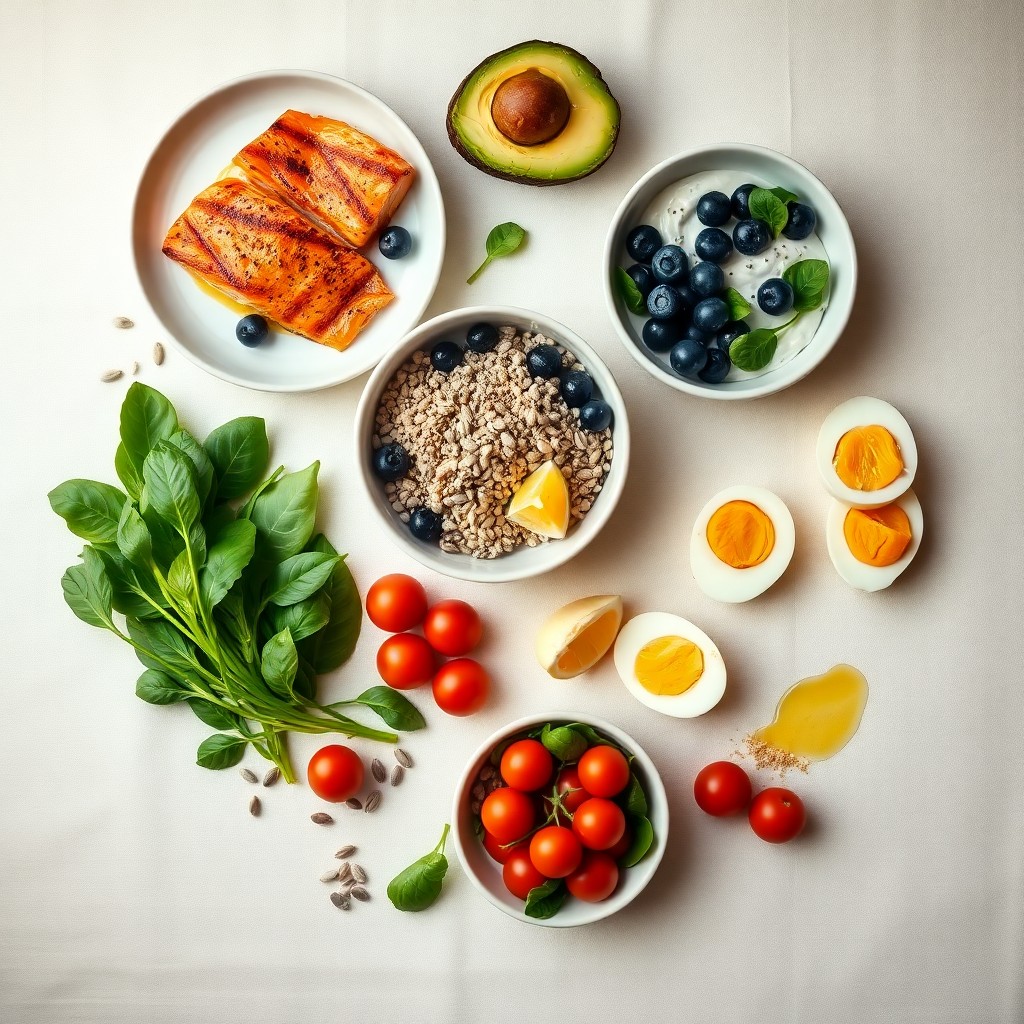
A plate of white rice with chicken and veg might hit the same calorie and macro targets as steel-cut oats with nuts and berries. But the blood sugar and insulin response will be vastly different. The oats-based meal will cause a slower, lower insulin spike. The rice meal will spike faster and higher, making you hungry sooner and driving more androgen production. A generic app can't see this difference—and it won't adjust for it.
What PMOS-Specific Meal Planning Actually Requires
An app genuinely built for PMOS does several things differently.
First, it assesses your individual metabolic baseline. Not every woman with PMOS has identical insulin resistance. A proper PMOS app will ask questions about your symptoms—fasting glucose if you've tested it, cycle length, skin issues, energy patterns—to estimate where you sit on the spectrum. It might ask about your response to different carbohydrate sources or how you feel after high-glycaemic meals. This personalisation matters because it lets the app adjust carbohydrate quantity and quality specifically for you, not for an average person.
Second, it prioritises carbohydrate quality and pairing over arbitrary timing rules. This is different from mainstream "eat carbs post-workout" advice. A PMOS-focused app will consistently pair carbohydrates with protein and fat to slow gastric emptying and blunt glucose spikes. It will favour low-glycaemic carbohydrates—lentils, barley, berries, non-starchy vegetables—over higher-glycaemic options. And it will keep portion sizes of higher-glycaemic carbs modest. These rules apply whether you eat at noon or evening.
Third, it ensures protein consistency across meals, not just daily totals. You might hit 100 grams of protein in a day, but if it's distributed as 15g breakfast, 20g lunch, 65g dinner, your blood sugar will spike at breakfast and your hunger will be worse. A PMOS app will recommend roughly 25-35g protein per meal to stabilise appetite and insulin across the day. This is why two women with the same daily macros can have completely different PMOS outcomes—distribution matters.
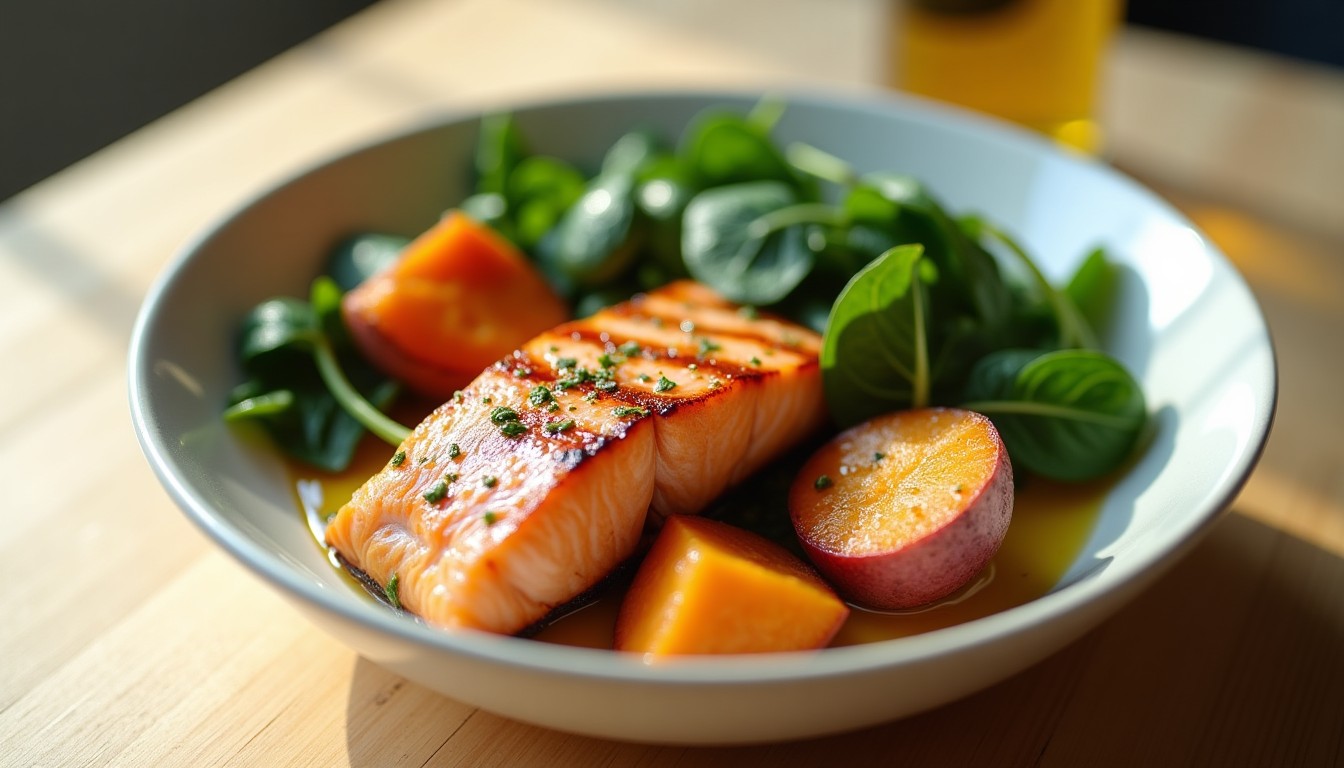
Fourth, a proper PMOS app explains its reasoning. It won't just say "eat this salmon with quinoa." It will say "this meal pairs a slower-digesting whole grain with omega-3 fat and protein to keep your insulin steady and your appetite stable for the next 4 hours." Transparency builds your own understanding so you can adapt when life gets messy and you can't follow the exact meal plan.
Key Features to Look for in a PMOS Meal Plan Generator
- Metabolic assessment on signup: Does the app ask about your PCOS symptoms, blood sugar response, or insulin resistance markers? If it skips this, it's making generic guesses.
- Carbohydrate quality filters: Can you control whether meals include refined carbs, or does it assume you want pasta and bread? A PMOS app lets you set carb sources to low-glycaemic options.
- Protein-per-meal consistency: Does it show you protein at each meal, or only daily totals? Knowing you hit 100g daily is useless if you can't see the distribution.
- Flexibility with explanation: If you swap a meal or change a portion, does the app explain whether it's still PMOS-friendly? Rigid meal plans fail real life.
- Cycle awareness: Does it adjust recommendations for your menstrual cycle (higher calories and carbs in the follicular phase if you want to)? PMOS-specific apps often build this in.
- Food quality defaults: Are the recipes built around whole foods, or do they include ultra-processed options because they fit the macros? Ultra-processed foods drive inflammation and PCOS symptoms even at the right calorie levels.
What to Do Right Now
- If you're using a generic app now, audit three recent meal plans it suggested: check the carbohydrate sources (are they low-glycaemic?), the protein distribution (is it spread across meals?), and whether meals pair carbs with fat and protein. If the answer is no to any, the app isn't PMOS-aware.
- When evaluating a new app, ask whether it has a PCOS or PMOS mode. If it doesn't mention metabolic personalisation, don't assume it's building it in—ask the company directly or check the FAQ.
- Prioritise apps that show you nutritional transparency (protein per meal, fibre content, glycaemic load) over ones that just show you calories. For PMOS, the details matter more than the total.
- If an app can't explain why it's recommending a particular meal structure for PMOS, treat it as a red flag. You need an app that respects your metabolic reality, not one that serves recipes and hopes they work.