PCOS Acne Diet: Best Foods, Top Triggers to Cut, and How Long Until Clearer Skin
Hormonal acne is one of the most stubborn PCOS symptoms — and one of the most responsive to the right nutritional changes.
PCOS acne is not skin misbehaving on its own. It is the visible surface of three biological processes: raised androgens (especially testosterone), elevated insulin and IGF-1, and low-grade systemic inflammation. All three feed into the same pathway inside the skin — oil glands over-produce sebum, hair follicles become blocked with sticky dead skin cells, and inflammation turns clogged pores into red, painful spots. The reason diet works for PCOS acne where it does not work for many other skin conditions is that all three of those upstream drivers are directly influenced by what you eat, meal by meal. This guide covers exactly what to eat, the top triggers to cut, the evidence-backed supplements that support it, and how long you should realistically expect to wait before you see clearer skin.
Key Takeaways
- PCOS acne is driven by three linked factors: androgens, insulin/IGF-1, and inflammation — diet influences all three
- The two highest-impact food changes: cut skim milk and whey protein, and stabilise blood glucose with protein-first meals
- Priority foods: omega-3 fish, zinc-rich foods, spearmint tea, low-GI carbs, and colourful antioxidant produce
- Spearmint tea (2 cups/day) lowered free testosterone by 20–30% in randomised trials — a rare directly acne-focused intervention
- Give any diet change a minimum of 12 weeks — a single skin cell cycle takes 6 weeks, and hormonal breakouts run on a longer underlying rhythm
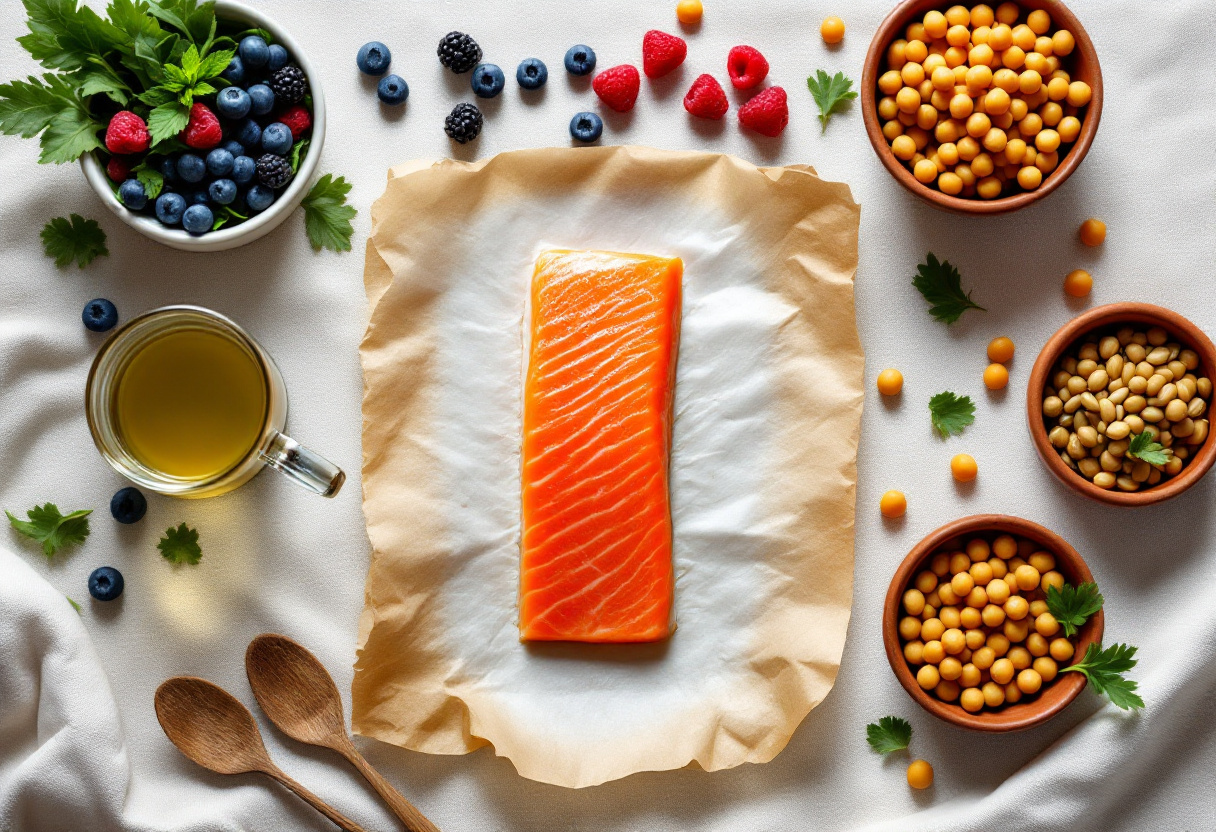
- Salmon, sardines, mackerel (omega-3)
- Pumpkin seeds, oysters, lentils (zinc)
- Spearmint tea — 2 cups per day
- Broccoli, kale, cauliflower (DIM)
- Berries, red peppers, leafy greens
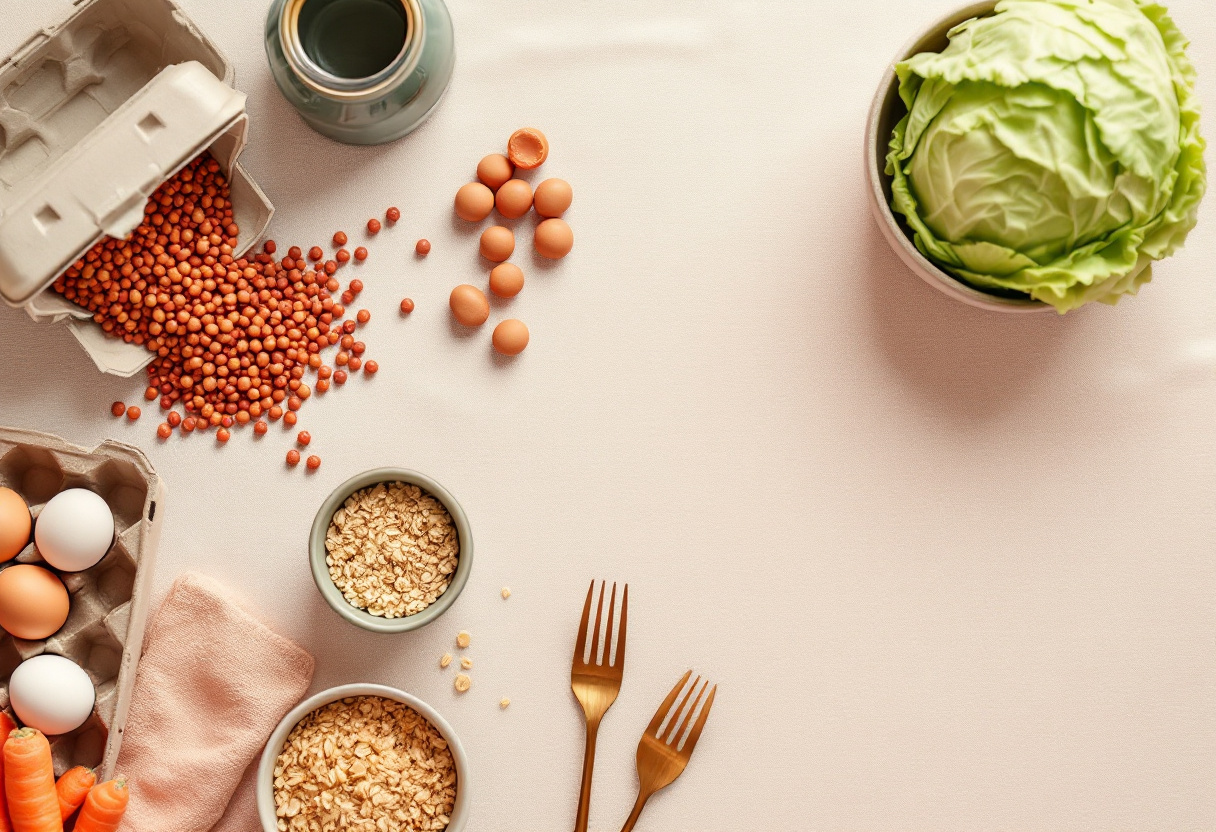
- Eggs, chicken, tofu (protein at every meal)
- Chickpeas, quinoa, steel-cut oats (low-GI)
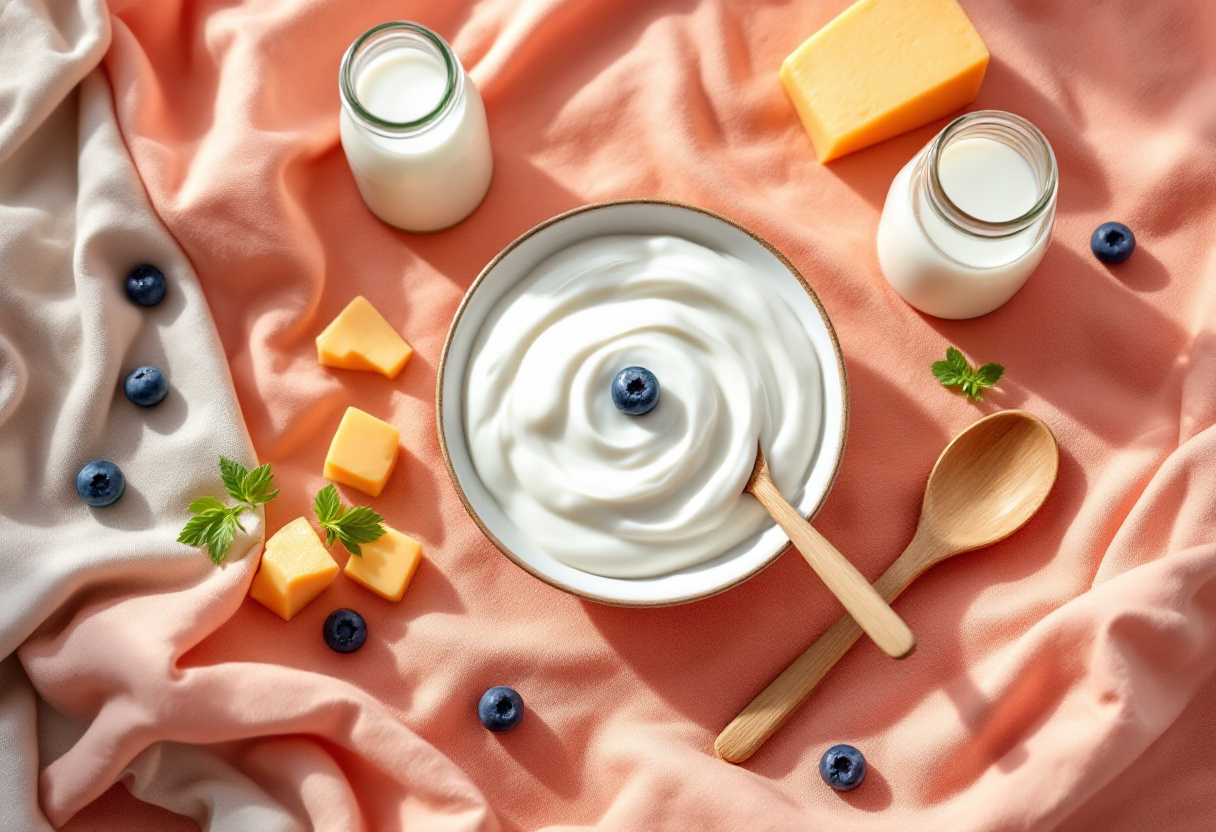
- Skim milk — highest-impact dairy trigger
- Whey protein powder
- Sweetened drinks (juice, soft drinks, lattes)
- Refined carbs eaten alone (bread, pastries)
- High-omega-6 seed oils (sunflower, corn)
- Alcohol — raises inflammation & cortisol
- Large milk-based coffees with syrups
In this article
Why PCOS causes acne (the three drivers)
Every case of PCOS acne, at the biological level, involves the same three-way conversation between hormones, blood sugar, and inflammation. Understanding this chain is the difference between chasing spots and actually changing the conditions that produce them.
1. Androgens — the sebum trigger
PCOS is defined in part by elevated androgens — testosterone, androstenedione, and DHEAS. Every hair follicle in the skin has androgen receptors, but the receptors on the face, jawline, chest, and upper back respond to circulating testosterone by triggering the sebaceous gland to enlarge and produce more sebum. More sebum means a denser, oilier film on the skin surface and inside the pore. On its own this does not cause acne — but it sets the physical stage for it.
2. Insulin and IGF-1 — the amplifier
This is the mechanism most women with PCOS acne do not know about, and it is arguably the most actionable. High insulin levels — the hallmark of the insulin resistance that drives most PCOS — raise circulating IGF-1 (insulin-like growth factor 1). IGF-1 does three problematic things at once. First, it directly stimulates the sebaceous gland to make more sebum. Second, it makes the keratinocytes lining the pore multiply faster, so dead skin cells build up and block the follicle. Third, and most importantly, it signals the ovaries and adrenals to produce even more androgens — closing the loop. Every high-glycaemic meal you eat runs this circuit. This is why diet changes that stabilise blood glucose show up on the skin.
3. Inflammation — the flare
A clogged, sebum-rich follicle is a comedone — not yet acne. It becomes acne when Cutibacterium acnes proliferates in the trapped sebum and the immune system responds. In PCOS, systemic inflammation is chronically elevated — CRP, IL-6, and TNF-alpha are all measurably higher on average than in women without PCOS. This inflammatory tone means the immune reaction to blocked pores is stronger and slower to resolve. It is why PCOS breakouts tend to be deep, cystic, and slow-healing rather than surface whiteheads.
The practical implication of all three drivers is that a good PCOS acne diet is not one thing — it is a set of choices that lowers insulin peaks, supplies the nutrients that reduce androgen conversion in the skin, and calms systemic inflammation. Cutting a single "bad food" rarely works because it only touches one leg of the tripod. Changing the pattern of eating is what shifts all three.
Foods to eat for clearer skin
The foods below address one or more of the three drivers directly. They are not miracle foods — but rotating them into most of your meals is what shifts the underlying conditions that produce breakouts. Aim for consistency rather than perfection.
Omega-3 rich fish and seafood
Salmon, sardines, mackerel, herring, and anchovies are the most bioavailable sources of EPA and DHA — the long-chain omega-3 fatty acids that directly reduce inflammatory cytokines involved in acne. Aim for two servings per week minimum, three if you can. Women with higher omega-3 intake have less severe acne on average, and supplementation trials at 2–3g EPA + DHA per day have shown improvement in inflammatory lesion counts specifically.
Zinc-rich foods
Zinc has direct anti-inflammatory action in the skin, reduces sebum production, and supports the enzymes that regulate androgen conversion. Oysters are by far the richest source, but you do not need shellfish daily. Pumpkin seeds (30g per day provides around 2.5mg), beef, lamb, chickpeas, lentils, and cashews are all useful. If your acne is stubborn, a short course of a zinc supplement (see the supplements section) can be justified.
Low-GI carbohydrates
These are the carbs that raise blood glucose gently rather than in a spike. Lentils, chickpeas, black beans, kidney beans, quinoa, steel-cut oats, sweet potato, and berries are the reliable staples. They keep insulin peaks moderate, which keeps IGF-1 in check — which keeps sebum production and androgen amplification in check. Practically, this means replacing white bread, white rice, breakfast cereals, and pastries with these substitutes at the meal that most reliably triggers your blood sugar (usually breakfast or lunch).
Cruciferous vegetables
Broccoli, cauliflower, cabbage, kale, Brussels sprouts, and rocket contain indole-3-carbinol and its metabolite DIM (diindolylmethane), which support the liver’s clearance of excess oestrogens and modulate androgen metabolism. Aim for at least one serving per day. Sustained intake changes the hormonal balance measurably over weeks.
Colourful antioxidant produce
Berries, red peppers, tomatoes, dark leafy greens, courgette, aubergine, beetroot, and pomegranate are dense in polyphenols and vitamin C, both of which reduce oxidative stress and support skin barrier function. Two to three colours per meal is a good rule of thumb.
Green and spearmint tea
Green tea provides EGCG, a polyphenol that has been shown to reduce sebum production and inflammation. Spearmint tea has more targeted evidence — a 30-day randomised trial (Grant 2010) showed 2 cups per day reduced free testosterone by roughly 30% in women with PCOS; a pilot study (Akdogan 2007) found similar reductions in women with hirsutism. If you drink one caffeinated coffee in the morning and switch your afternoon drink to spearmint tea, you are covering both bases.
Protein at every meal
Not a food category but a structural rule. Protein — roughly 30–40g per meal for most women with PCOS — is the single strongest lever for keeping blood glucose stable across the day. That means it is also the single strongest lever for keeping insulin and IGF-1 low, which shows on the skin. Eggs, fish, chicken, lean beef, tofu, tempeh, Greek yogurt (small servings), lentils, chickpeas, and edamame are your reliable options.
Foods to reduce or cut
The removal side of the equation is arguably where the biggest wins are found — but it needs to be practical. Total elimination diets rarely last long enough to give you a clear signal. Prioritise the highest-impact removals first and hold them for a minimum of 8–12 weeks before deciding whether to reintroduce.
Dairy — especially skim milk and whey
This gets its own section below because the evidence is unusually strong and warrants explanation. If you take only one thing from this article: for 12 weeks, cut fluid milk (particularly skim), whey protein powder, and any milk-based ice cream. This is the highest-impact single removal available for most women with PCOS acne.
Refined sugar in liquid form
Fruit juice, soft drinks, sweetened lattes, kombucha with added sugar, sweetened teas, and sports drinks all cause the same problem: rapid, unbuffered glucose spikes that maximise insulin and IGF-1 output. Liquid sugar is worse than solid sugar because there is no fibre or protein to slow the absorption. Cutting sweetened drinks is often the highest-impact and lowest-difficulty change, because you rarely miss them once you have adjusted.
High-glycaemic refined carbohydrates
White bread, white rice, breakfast cereals, pastries, crackers, biscuits, and anything made with refined wheat flour eaten alone. These are not poisonous — but they are among the fastest triggers of the insulin surge that drives the acne cascade. Replacing them with lower-GI alternatives or pairing any refined carb with protein and fat neutralises much of the harm. Pattern change is the target, not perfection.
Whey protein powder
Whey is the concentrated protein fraction of milk and provokes an even sharper insulin/IGF-1 response than fluid milk itself. It is one of the most consistently reported triggers of adult acne in the dermatology literature. If you use protein powder daily and struggle with breakouts, switching to a plant-based protein — pea, hemp, or a rice-and-pea blend — for a 12-week trial often produces visible improvement within weeks.
Refined seed oils in excess
Sunflower, safflower, corn, and soybean oil are heavy in omega-6 fatty acids. The modern diet delivers 15–20 times more omega-6 than omega-3, which shifts the body’s inflammatory tone in the wrong direction. You do not need to avoid these oils entirely, but if fried, processed, and takeaway foods are frequent, the accumulated omega-6 load is worth reducing. Cook at home with olive oil or avocado oil as the default.
Alcohol
Alcohol worsens the inflammatory tone of the skin, disrupts sleep (which raises cortisol and androgens the next day), and often comes packaged with high-GI mixers. If you drink regularly, cutting to once or twice per week during a 12-week reset gives your skin its best chance of showing you what dietary changes are doing.
The dairy question — what the research shows
Dairy has more high-quality evidence linking it to acne than any other single food. Understanding what the studies actually show — and what they do not — helps you make a proportionate decision rather than swinging between cutting everything or dismissing the connection entirely.
Multiple prospective and case-control studies have found consistent associations between milk intake and acne severity in women. The largest — a study of over 47,000 women that examined recalled adolescent diet — found that women who consumed more milk (particularly skim milk) had significantly higher rates of moderate-to-severe acne. Subsequent studies in different populations have replicated the pattern, and a 2018 meta-analysis confirmed the association across studies, with the effect strongest for skim milk.
The counter-intuitive finding is that skim milk is worse than full-fat milk. This runs against intuition but makes biological sense: skim milk concentrates certain hormonally active compounds relative to the fat, and it elicits a sharper insulin response than the same volume of whole milk, because fat blunts glucose absorption.
What this means practically
- Prioritise cutting: skim milk, whey protein powder, milk-based ice cream, and sweetened milk-coffee combinations (large lattes with syrup).
- Try reducing: hard cheeses (aged cheeses have far lower bioactive protein remaining) and unsweetened Greek yogurt in small servings — these appear less strongly linked than fluid milk.
- Better replacements: unsweetened almond, soy, or oat milk (soy is protein-richer if you use it as a food ingredient rather than just in coffee).
- The test: full elimination for 12 weeks. Photograph your skin monthly. Reintroduce a single dairy source (yogurt is a good first re-test) and track for 3–4 weeks. Repeat with milk. This gives you personalised data no online article can.
Evidence-backed supplements for PCOS acne
Supplements are not a substitute for the dietary pattern — but a small, focused stack can accelerate results and target the acne-specific pathways more directly than food alone. These four have the best combination of evidence and safety for PCOS skin.
Zinc — 30mg per day
Zinc reduces sebum production, has direct anti-inflammatory action in the skin, and inhibits the enzyme 5-alpha reductase, which converts testosterone into the more potent DHT that drives androgenic acne. Multiple placebo-controlled trials have shown zinc improves inflammatory acne severity in doses of 30–40mg elemental zinc per day. Use zinc picolinate or zinc bisglycinate — both are well tolerated. Take with food to avoid nausea. If you are on it for more than 3 months, add a low-dose copper supplement (1mg) to prevent long-term imbalance.
Omega-3 fish oil — 2–3g combined EPA + DHA per day
Omega-3 supplementation reduces the inflammatory cytokines that drive lesion severity and improves skin barrier function. Trials specifically in acne have shown reductions in inflammatory lesion counts of 30–40% at these doses over 10–16 weeks. Choose a product with the actual EPA + DHA content on the label — total “fish oil” is not the same measurement. Take with the day’s fattiest meal for absorption.
Myo-inositol — 4g per day (as 2g twice daily)
This is the underlying-cause supplement. Myo-inositol addresses the insulin resistance and downstream free testosterone that drive PCOS acne at its source. It will not clear breakouts as fast as topical treatment — but it changes the hormonal environment that produces them. See our full myo-inositol for PCOS guide for the mechanism and dosing details.
Spearmint tea — 2 cups per day
Not technically a supplement, but the most directly acne-relevant intervention on this list. A 30-day randomised trial (Grant 2010) showed that 2 cups of spearmint tea per day reduced free testosterone by roughly 30% in women with PCOS; a pilot study (Akdogan 2007) found similar reductions in women with hirsutism. The effect is meaningful and the trade-off is essentially zero. If you make one change to your routine specifically for hormonal breakouts, this is the highest-return one.
| Supplement | Dose | What it targets | Time to see effect |
|---|---|---|---|
| Zinc picolinate | 30 mg/day with food | Sebum, inflammation, DHT conversion | 8–12 weeks |
| Omega-3 (EPA + DHA) | 2–3 g/day with fatty meal | Systemic inflammation | 10–16 weeks |
| Myo-inositol | 4 g/day (2 g twice) | Insulin resistance, free testosterone | 12–16 weeks |
| Spearmint tea | 2 cups/day | Free testosterone directly | 4–8 weeks |
A sample day of eating for PCOS skin
The most useful way to translate the principles above into food is to see a full day. This one is designed to hit the priorities: protein at every meal, low-GI carbs, one omega-3 source, one zinc source, at least three colours of produce, and no fluid dairy.
Breakfast — spinach and eggs
Three eggs scrambled with baby spinach, tomatoes, red onion, served with half an avocado and a slice of sourdough. Coffee with unsweetened almond milk. This delivers roughly 35g protein, healthy fat, and a slow, low-GI carbohydrate that keeps insulin quiet through the morning.
Mid-morning — spearmint tea
Free, easy, and one of the highest-return single habits for hormonal acne. Two cups per day is the studied dose — one now, one in the afternoon.
Lunch — salmon and lentil bowl
A grilled salmon fillet on a bed of Puy lentils, roasted red peppers, cucumber, dill, and rocket, dressed with olive oil, lemon, and a spoon of tahini. Approximately 40g protein, 25g fibre from the lentils and vegetables, plus a significant EPA + DHA hit from the salmon. This is the meal that anchors the day for both skin and satiety.
Afternoon — zinc-boost snack
A small handful of pumpkin seeds (30g) with a piece of dark chocolate 70%+. The pumpkin seeds provide zinc; the dark chocolate provides magnesium and polyphenols without a meaningful sugar spike.
Dinner — chicken thigh with cruciferous greens
Grilled chicken thigh with roasted broccoli, cauliflower, and Brussels sprouts finished with garlic, chilli, and lemon, alongside a small serving of quinoa. The cruciferous vegetables support hormonal clearance; the small quinoa portion satisfies the carb slot without spiking glucose.
Evening — spearmint tea (second cup)
Warm, calming, and completes the day’s testosterone-lowering intake.
How long it actually takes
This is the section that determines whether a dietary approach to PCOS acne succeeds or is abandoned. Most people give up too early — and the biology explains why realistic expectations matter.
Weeks 0–4: setup phase
You may see essentially no visible change during the first month, and for some women skin briefly gets worse before it gets better as older follicles clear out. Blood glucose regulation is improving, insulin is dropping, and inflammatory tone is beginning to shift — but these changes are happening under the surface. The most important thing you can do in this window is stay consistent and take a photograph at the same lighting once a week for reference.
Weeks 4–8: first visible signals
The most reliable early indicator is that new breakouts start healing faster — a spot that used to take a week to resolve now fades in three days. The overall skin tone starts looking calmer. You may not have fewer breakouts yet, but the ones you have are less angry. This is a real change in inflammatory tone. It is easy to miss without photos because we adapt to our own skin quickly.
Weeks 8–12: frequency reduction
This is where most women see the shift they are actually looking for — the frequency of new breakouts starts dropping. The reason it takes this long is that a full skin cell cycle is about 6 weeks, and the underlying hormonal cycle you are modifying takes longer than that to settle into a new baseline. By week 10–12, if the diet is going to work for you, you should be seeing clearly fewer new spots than baseline.
Months 3–6: the new normal
Beyond 12 weeks, your skin has genuinely reset around the new dietary pattern. Any remaining acne is likely revealing the ceiling of what diet alone can achieve for your specific case. If breakouts have improved by 60–80% at this point, hold the pattern. If improvement is minimal after 4 months of consistent adherence, adding medical support is reasonable.
When diet isn’t enough
Diet does not fix every case of PCOS acne, and refusing to acknowledge that leads to years of frustration. If you have given the approach a genuine 3–4 months at meaningful adherence and your skin has not improved by at least 50%, adding medical support is a rational next step — not a failure.
Topical additions that pair well with diet
A basic evidence-based topical routine amplifies dietary work rather than replacing it. Two active ingredients cover most cases: a topical retinoid (adapalene 0.1% is available over the counter in some regions; tretinoin is prescription) used at night to normalise keratinocyte turnover, and benzoyl peroxide (2.5%) used in the morning to reduce C. acnes. Layer sunscreen daily. Keep the routine simple.
Medical options worth discussing with your GP
- Spironolactone — blocks androgen receptors in the skin; often prescribed off-label for adult female acne and highly effective for PCOS-driven breakouts. Requires periodic potassium monitoring.
- Combined hormonal contraception — specific formulations with anti-androgenic progestins (e.g., drospirenone-containing pills) can significantly improve androgenic acne. Not appropriate if you are trying to conceive or have relevant contraindications.
- Metformin — useful if insulin resistance is well-documented and dietary changes alone have not normalised metabolic markers. Improves acne indirectly through insulin sensitisation.
- Isotretinoin — the definitive treatment for severe, cystic, scarring acne that has not responded to other approaches. Rarely first-line but should not be dismissed if breakouts are causing significant scarring or emotional impact.
Diet and medical treatment are not competing options — they address different parts of the problem. Diet addresses the upstream hormonal and inflammatory environment; medical treatment addresses what is already visible on the skin. Combining them is often the fastest path to clear skin, and doing the dietary work alongside means you keep the results after any topical or medical treatment ends.
References
- Adebamowo CA, et al. (2005). High school dietary dairy intake and teenage acne. Journal of the American Academy of Dermatology. pubmed.ncbi.nlm.nih.gov/15692464
- Smith RN, et al. (2007). The effect of a high-protein, low glycemic-load diet versus a conventional, high glycemic-load diet on biochemical parameters associated with acne vulgaris. Journal of the American Academy of Dermatology. pubmed.ncbi.nlm.nih.gov/17448569
- Grant P. (2010). Spearmint herbal tea has significant anti-androgen effects in polycystic ovarian syndrome. A randomised controlled trial. Phytotherapy Research. pubmed.ncbi.nlm.nih.gov/19585478
- Akdogan M, et al. (2007). Effect of spearmint (Mentha spicata) teas on androgen levels in women with hirsutism. Phytotherapy Research. pubmed.ncbi.nlm.nih.gov/17310494
- Cervantes J, et al. (2018). The role of zinc in the treatment of acne: A review of the literature. Dermatologic Therapy. pubmed.ncbi.nlm.nih.gov/29193602
- Jung JY, et al. (2014). Effect of dietary supplementation with omega-3 fatty acid and gamma-linolenic acid on acne vulgaris: a randomised controlled trial. Acta Dermato-Venereologica. pubmed.ncbi.nlm.nih.gov/24553997
- Melnik BC. (2015). Linking diet to acne metabolomics, inflammation, and comedogenesis: an update. Clinical, Cosmetic and Investigational Dermatology. pubmed.ncbi.nlm.nih.gov/26203267
Get a PCOS meal plan built for clearer skin
hermeal™ generates 5-day PCOS meal plans that already follow the principles in this guide — high protein, low-GI, omega-3 rich, dairy-optional. Personalised to your restrictions and goals.
Start freeFrequently Asked Questions
The five biggest food triggers for PCOS acne are: (1) skim milk and whey protein — both spike insulin and IGF-1 sharply; (2) sweetened drinks — juice, soft drinks, and syrup-heavy lattes cause the fastest glucose surges; (3) refined carbohydrates eaten alone — white bread, pastries, and cereal with no protein or fat buffer; (4) whey protein powder — one of the most consistently reported acne triggers in dermatology literature; and (5) alcohol — raises inflammation, disrupts sleep, and elevates cortisol and androgens the next day. Cutting these five in order of impact, and giving it 8–12 weeks, covers the dietary side of most PCOS acne cases.
Dairy — particularly skim milk and whey protein — has the most consistent evidence linking food to acne. The mechanism is insulin-like: milk raises insulin and IGF-1 levels, both of which drive sebum production and follicular keratinocyte proliferation. Skim milk is worse than full-fat, likely because the removal of fat concentrates the bioactive protein fraction. Cutting dairy for 8–12 weeks is the fastest single dietary change with a track record of clinical improvement in PCOS acne. If a full cut feels too restrictive, start with skim milk, whey protein powder, and ice cream — these are the highest-impact removals.
A single skin cell cycle takes about 6 weeks, and hormonal breakouts have an underlying cycle of roughly 8–12 weeks. Realistic timeline: modest improvement (fewer new spots, faster fading) in 4–6 weeks; meaningful change in overall breakout frequency at 10–12 weeks; full baseline reset by 3–4 months of consistent eating. This is why quick-fix diets fail — the tissue simply cannot respond faster. Track photos monthly rather than checking the mirror daily.
Yes — a 30-day randomised controlled trial (Grant 2010) showed that 2 cups of spearmint tea per day reduced free testosterone by roughly 30% in women with PCOS; a shorter pilot study (Akdogan 2007) found similar reductions in women with hirsutism. Since androgens are the primary driver of PCOS acne, this translates into a real, measurable improvement in breakouts for many women. It is one of the cheapest, lowest-risk interventions available and worth trying for a minimum of 12 weeks alongside dietary changes.
The three with the best evidence for PCOS skin are: (1) zinc, at 30mg per day of zinc picolinate or bisglycinate — reduces sebum production and has direct anti-inflammatory action in the skin; (2) omega-3 fish oil, at 2–3g combined EPA + DHA daily — lowers systemic inflammation and improves the skin’s fatty acid profile; (3) myo-inositol at 4g per day — reduces the underlying insulin resistance and free testosterone that drive breakouts. Add spearmint tea (2 cups daily) for a directly acne-focused testosterone effect. Give any protocol 12 weeks before judging results.
No — the goal is not zero sugar, it’s steadying blood glucose. Spikes are what drive the insulin surge that feeds androgen production. In practice this means cutting sweetened drinks (the fastest glucose spike source), skipping refined carbs eaten on their own, and always pairing any sweet food with protein and fat. Whole fruit, dark chocolate 70%+, and small portions of sweet foods eaten alongside a balanced meal are generally fine. It is the sugar-alone-on-empty-stomach pattern that matters, not the absolute number of grams.
Diet can dramatically improve PCOS acne — often by 60–80% — but calling it a cure oversimplifies things. PCOS acne is driven by a constellation of factors: androgen levels, insulin, inflammation, sebum composition, and skin microbiome. Diet targets the first three directly. For some women that is enough. For others, dietary changes take breakouts from severe to mild, and adding topical care (retinoids, benzoyl peroxide) or medical support (spironolactone, hormonal contraception, or in specific cases isotretinoin) closes the remaining gap.
The best options are unsweetened almond milk, unsweetened soy milk, and unsweetened oat milk in moderation. If you tolerate dairy in principle but want to reduce impact, unsweetened Greek yogurt in small servings appears less acnegenic than fluid milk — the fermentation may alter the insulin response. What to strictly avoid: skim milk (the highest-impact acne trigger in the dairy studies), sweetened flavoured milks, and coffee syrups that combine milk with high-glycaemic sugar. If you are a heavy coffee drinker, switching your milk is one of the highest-impact single changes you can make.
Yes — whey protein is one of the most consistently reported acne triggers in the dermatology literature, and this is doubly relevant for PCOS. Whey is the isolated protein fraction of milk and provokes a very sharp insulin and IGF-1 response — the exact hormonal signal that drives sebum production and androgen-mediated breakouts. If you use protein powder and struggle with acne, switch to a plant-based protein (pea, rice-and-pea blend, or hemp) for a 12-week trial. Many women see meaningful improvement from this single change alone.
Not directly for most people. Unless you have coeliac disease or clinically confirmed non-coeliac gluten sensitivity, cutting gluten specifically is unlikely to help your acne. The confusion arises because reducing gluten often incidentally reduces refined carbs, sugar, and processed foods — and it is those changes, not the gluten itself, that improve skin. If you want to test it, do a full 4-week strict elimination and then a controlled reintroduction; anything less than that produces unreliable signals.