Are Potatoes Good for PCOS? Yes — It's How You Cook Them That Counts
Potatoes have a bad name in PCOS circles, but the research is kinder than the internet. What matters most is how they're cooked — fried, baked, boiled or cooled — and how much of your plate they take up. Here's what the studies say about white and sweet potatoes, and how to keep them in your week.
Key takeaways
- In a study of over 205,000 people, baked, boiled and mashed potatoes were not linked to type 2 diabetes — French fries were
- Cooking matters more than white vs sweet: boiled sweet potato raised blood sugar far less than baked or roasted sweet potato
- Cooked, cooled potatoes raise blood sugar less than hot ones; a vinegar dressing lowers it further
- A PCOS-friendly portion is about 150 g cooked (one small potato or a fist) — a quarter of the plate
- Eat potatoes with protein and vegetables, and keep the skin on for extra fibre
Contents
What the research says about potatoes
Most women with PCOS have some insulin resistance, so meals that send blood sugar up fast make the body release more insulin — and high insulin pushes the ovaries to make more androgens. Potatoes are mostly starch, which is why they get blamed.
The best evidence we have points at the frying, not the potato. A 2025 Harvard study followed more than 205,000 adults for up to 36 years. French fries were clearly linked to type 2 diabetes: every three extra servings a week came with about a 20% higher risk. Baked, boiled or mashed potatoes together were not significantly linked.1
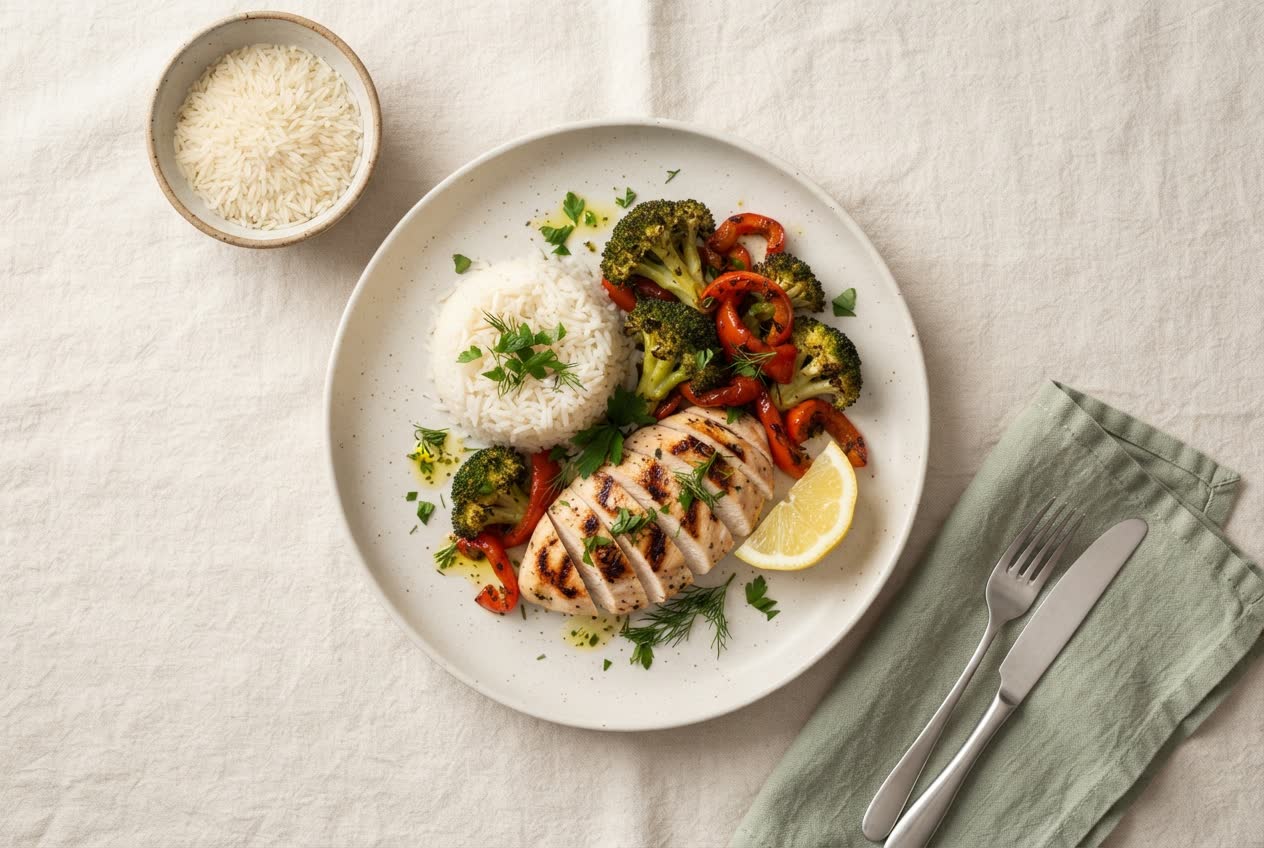
The same study looked at swaps. Replacing three servings a week of potatoes with whole grains was linked to a lower risk — but replacing them with white rice was linked to a higher one. In other words, a boiled potato isn't worse than the white rice many people would put on the plate instead.
Sweet potato vs white potato
Sweet potatoes are often called the "PCOS-safe" potato. They do have some advantages — but the gap is smaller than most people think.
| Per 100 g, boiled | White potato (with skin) | Sweet potato |
|---|---|---|
| Calories | ≈ 87 kcal | ≈ 76 kcal |
| Carbohydrate | ≈ 20 g | ≈ 18 g |
| Fibre | ≈ 1.8 g | ≈ 2.5 g |
| Stand-out nutrient | Potassium, vitamin C | Beta-carotene (vitamin A) |
Both are whole, filling vegetables. Sweet potato wins a little on fibre and vitamin A; white potato is cheaper and rich in potassium. The bigger difference is in the next section.
Cooking method changes everything
How fast a potato raises blood sugar (its glycaemic index, GI) depends hugely on how it's cooked and served. The international GI tables list potatoes anywhere from medium to very high for this reason.3
- Cooled beats hot. In a University of Toronto study, boiled red potatoes eaten cold had a GI of 56, compared with 89 for the same potatoes eaten hot. Instant mash came in at 88 and baked russet at 77.4
- Vinegar helps. In a Swedish study, boiled potatoes kept in the fridge for 24 hours gained resistant starch (a starch that behaves more like fibre). Serving them cold with a vinaigrette lowered the blood sugar response by 43% and insulin by 31% compared with freshly boiled potatoes.5
- Boil sweet potatoes. In a study of ten sweet potato varieties, boiled sweet potato had a GI of 41–50, while baked (82–94) and roasted (79–93) sweet potato were far higher.6 A roasted sweet potato isn't automatically better than a cooled white one.
These were small studies in healthy people, so treat the exact numbers as a guide. The pattern is consistent though: boiling, cooling and adding acid all soften the blood sugar rise.
How much potato with PCOS?
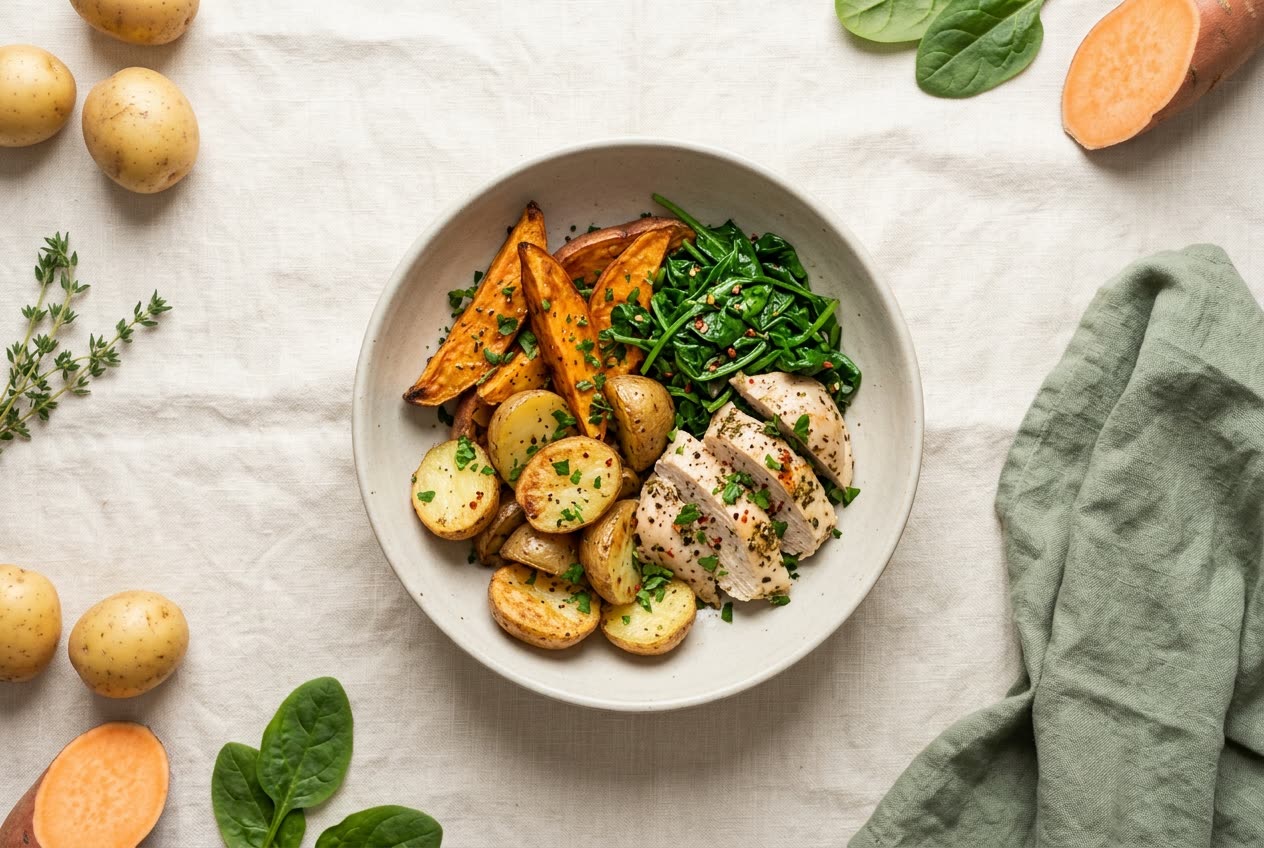
A practical PCOS portion is about 150 g cooked potato or sweet potato per meal — one small potato, or roughly the size of your fist. That's about 115–130 kcal and 26–30 g of carbohydrate, and it takes up a quarter of the plate. Fill the rest with:
- A palm-to-hand-sized protein — chicken, fish, eggs, tofu or lentils (aim for about 25–30 g of protein per meal; protein helps keep you full7)
- Half a plate of non-starchy vegetables — greens, broccoli, peppers, green beans, zucchini
- A little healthy fat — olive oil, or a spoon of Greek yogurt instead of sour cream
Keep the skin on — most of a potato's fibre is in or just under it.
PCOS-friendly ways to eat potatoes
- Potato salad with vinaigrette — boiled baby potatoes, cooled, tossed with olive oil, vinegar, mustard and herbs. Uses both tricks at once.
- Sheet-pan chicken with baby potatoes and green beans — halved potatoes with the skin on, a measured drizzle of oil.
- Boiled sweet potato mash with Greek yogurt and cinnamon, next to salmon or turkey.
- Oven wedges instead of fries — skin on, 1 tsp olive oil per portion, paprika and garlic.
- Prep-day potatoes — boil a batch, cool it in the fridge and reheat through the week (keep for 3 days). See our PCOS meal prep guide.
Want to compare with other starches? Read is rice good for PCOS, oatmeal and PCOS and our low-GI PCOS meal plan.
Frequently asked questions
Are potatoes bad for PCOS?▼
Is sweet potato better than white potato for PCOS?▼
How much potato can I eat with PCOS?▼
Do cold potatoes raise blood sugar less?▼
Can I eat French fries with PCOS?▼
References
- Mousavi SM et al. (2025). Total and specific potato intake and risk of type 2 diabetes: results from three US cohort studies and a substitution meta-analysis of prospective cohorts. BMJ. PMID 40769531
- Teede HJ et al. (2023). Recommendations from the 2023 International Evidence-based Guideline for the Assessment and Management of Polycystic Ovary Syndrome. J Clin Endocrinol Metab. PMID 37580314
- Atkinson FS et al. (2021). International tables of glycemic index and glycemic load values 2021: a systematic review. Am J Clin Nutr. PMID 34258626
- Fernandes G et al. (2005). Glycemic index of potatoes commonly consumed in North America. J Am Diet Assoc. PMID 15800557
- Leeman M et al. (2005). Vinegar dressing and cold storage of potatoes lowers postprandial glycaemic and insulinaemic responses in healthy subjects. Eur J Clin Nutr. PMID 16034360
- Bahado-Singh PS et al. (2011). Relationship between processing method and the glycemic indices of ten sweet potato (Ipomoea batatas) cultivars commonly consumed in Jamaica. J Nutr Metab. PMID 22132322
- Leidy HJ et al. (2015). The role of protein in weight loss and maintenance. Am J Clin Nutr. PMID 25926512
Potatoes, portioned for you.
HerMeal builds a 5-day PCOS plan around your calorie and protein targets — potatoes and grains sized as a side, paired with protein and vegetables. Free to try.
Build my free plan