GLP-1 Medications and PCOS: What They Do and How to Eat on Them
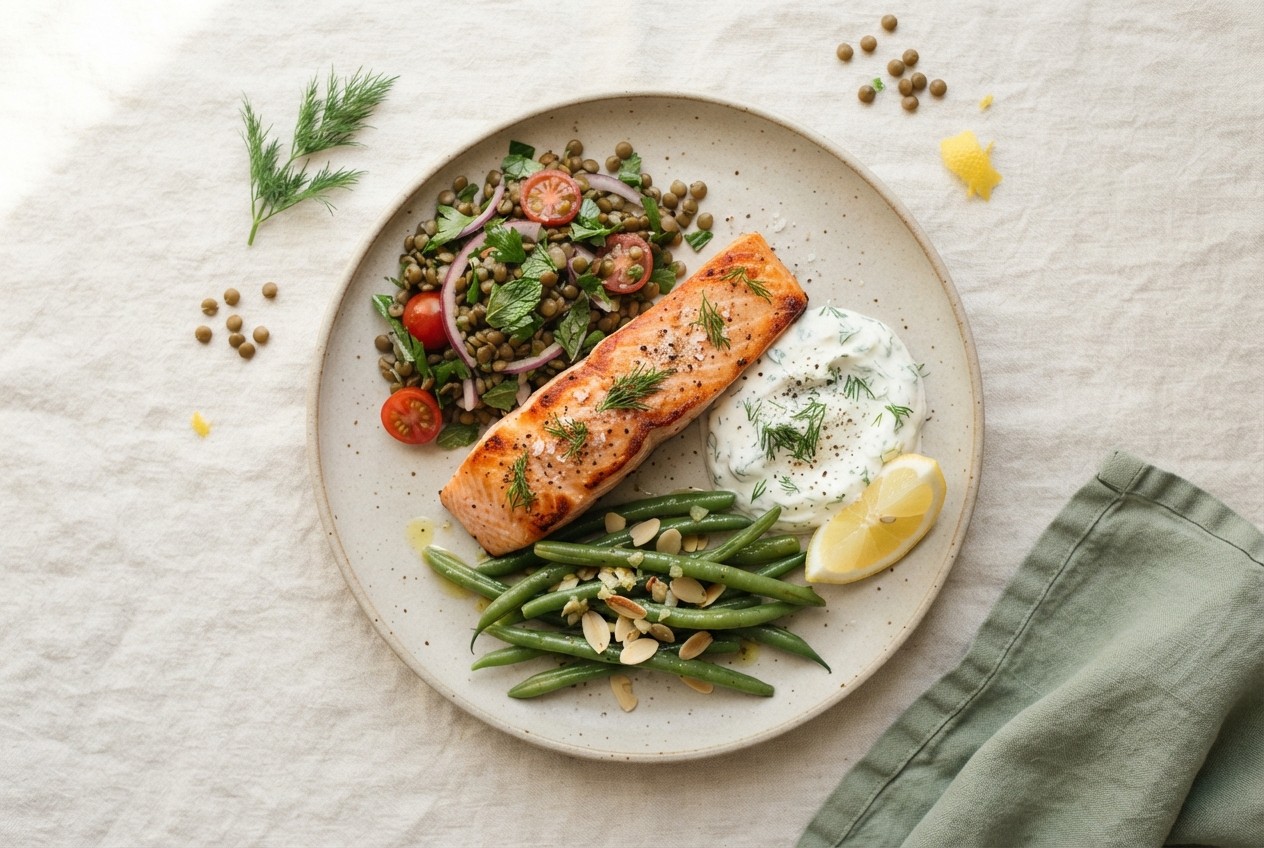
GLP-1 medications like Ozempic, Wegovy and Mounjaro have changed weight management — and many women with PCOS are asking whether they help, and what to eat while taking them. Here's what the research in PCOS actually shows, what to know about pregnancy and contraception, and how to eat so you keep your muscle and feel well on a much smaller appetite.
Key takeaways
- GLP-1 medications (semaglutide, liraglutide, tirzepatide) reduce appetite and slow digestion; in large trials people lost about 15–21% of their body weight
- In PCOS, studies show weight loss and, in some analyses, more regular cycles and higher natural pregnancy rates — but the evidence is still limited and mixed
- The 2023 international PCOS guideline says they could be considered for higher weight, alongside lifestyle changes — not instead of them
- They must be stopped well before trying to conceive; tirzepatide can make the contraceptive pill less reliable
- On a much smaller appetite, protein first at every meal helps protect your muscle
- Smaller, slower meals with enough fibre and fluids help with nausea and constipation, the most common side effects
Contents
This article is general information, not medical advice. GLP-1 medications are prescription medicines. Whether one is right for you — and which one, at what dose — is a decision to make with your doctor.
What GLP-1 medications are
GLP-1 (glucagon-like peptide-1) is a hormone your gut releases after eating. It tells the pancreas to release insulin when blood sugar rises, slows down how fast the stomach empties, and signals fullness to the brain. GLP-1 receptor agonists are medicines that mimic it, usually as a weekly injection:
- Semaglutide — Ozempic (for type 2 diabetes) and Wegovy (for weight management)
- Liraglutide — Victoza and Saxenda (daily injections)
- Tirzepatide — Mounjaro and Zepbound, which also acts on a second hormone (GIP)
In the large trials in adults with overweight or obesity, weekly semaglutide led to an average 14.9% weight loss over 68 weeks, compared with 2.4% on placebo. 5 Tirzepatide led to 15.0%, 19.5% and 20.9% weight loss at its three doses over 72 weeks, compared with 3.1% on placebo. 6 These trials weren't run specifically in PCOS.
What the research shows in PCOS
PCOS is closely tied to insulin resistance, and carrying extra weight tends to make symptoms worse — so it makes sense that a medicine improving both could help. The studies in women with PCOS are smaller and shorter than the big obesity trials, and the results are encouraging but not settled:
- Weight: a review of 11 trials that informed the 2023 PCOS guideline found liraglutide and semaglutide did better than placebo for weight and waist measurements. 2
- Cycles and fertility: a 2023 analysis of 11 randomised trials (840 women) found GLP-1 medications improved menstrual regularity and were linked to a higher natural pregnancy rate (about 1.7 times), along with better insulin resistance, BMI and waist size. 3
- The most cautious view: a 2026 analysis of 11 randomised trials found a modest drop in BMI (about 1.4 points, low certainty) and said the evidence was not enough to draw conclusions on blood sugar, insulin, excess hair growth or cycle regularity. 4
The honest summary: GLP-1 medications help women with PCOS lose weight, and losing weight is itself one of the most reliable ways to improve PCOS symptoms. Whether they do much for PCOS beyond the weight loss is still being studied.
What the PCOS guideline says
The 2023 International Evidence-based Guideline for PCOS says anti-obesity medicines, including the GLP-1 medicines liraglutide and semaglutide, could be considered in addition to active lifestyle intervention for adults with PCOS and higher weight, following general population guidelines. It also recommends effective contraception while taking them, gradual dose increases to limit stomach side effects, and shared decision-making that covers side effects and the possibility of long-term use. 1
In other words: food and movement remain the foundation. The medication is an add-on for some women, not a replacement.
Pregnancy, fertility and contraception
This matters more in PCOS than almost anywhere else, because many women are either trying to conceive or using the pill to manage symptoms:
- Not during pregnancy or while trying to conceive. The UK medicines regulator (MHRA) advises that GLP-1 medicines should not be used during pregnancy, while trying to get pregnant, or while breastfeeding, because there isn't enough safety data. For some, stopping at least two months before trying to conceive is advised, because the medicines stay in the body for weeks. 10
- Fertility can change quickly. As weight drops and insulin resistance improves, cycles can become more regular — so pregnancy can happen sooner than expected. Use effective contraception while on treatment. 1
- Tirzepatide and the pill. Tirzepatide (Mounjaro) can reduce how well oral contraceptives are absorbed. The MHRA recommends switching to a non-oral method, or adding a barrier method such as condoms, for four weeks after starting and for four weeks after each dose increase. 10
If you're planning a pregnancy with PCOS, talk to your doctor before starting — and about when to stop.
Why protein matters more on a GLP-1
When you're eating far less, some of the weight you lose can come from muscle, not just fat. Muscle matters in PCOS: it's where much of your blood sugar gets used, so keeping it supports insulin sensitivity. A 2025 joint advisory from four US nutrition and obesity organisations lists preserving muscle and bone — through resistance training and an appropriate diet — as a core nutrition priority for anyone on GLP-1 therapy, alongside managing stomach side effects and avoiding nutrient gaps. 8
Higher-protein diets help keep lean mass during weight loss, and a range of about 1.2–1.6 g of protein per kg of body weight a day is linked to better fullness and muscle retention. 9 On a small appetite, the practical rule is simple: eat the protein first, then the vegetables, then the rest. See how much protein you need with PCOS for a table by body weight.
Lift something. Food alone can't fully protect muscle. Two or three short strength sessions a week — bodyweight, bands or weights — make the protein work harder. See exercise for PCOS.
How to eat on a GLP-1 with PCOS
GLP-1 medicines slow digestion a lot. In a small trial in women with PCOS and obesity, semaglutide left 37% of a solid meal still in the stomach four hours later, compared with none on placebo. 7 That's why big, heavy meals feel so uncomfortable — and why these habits help:
- Smaller meals, eaten slowly. Stop at the first sign of fullness; it arrives later and stronger than you're used to.
- Protein first. Chicken, fish, eggs, Greek yogurt, cottage cheese, tofu, lentils — aim for 25–30 g per meal if you can.
- Go easy on greasy, fried and very rich food. High-fat meals sit in the stomach longest and are the most common nausea trigger.
- Fibre, added gradually, with plenty of fluids. Constipation is common. Vegetables, berries, oats, chia and legumes help — but build up slowly, and drink water through the day.
- Don't skip meals entirely. A small, protein-rich snack is better than nothing; very low intakes make it hard to get enough protein, iron, calcium and other nutrients.
- Limit alcohol and sugary drinks. They add calories without fullness and can worsen nausea and blood sugar swings. Our guide to what to drink instead of soda has easy swaps.
The PCOS insulin resistance diet principles still apply — whole foods, low-GI carbs, protein and fibre at each meal — just in smaller portions.
A sample day
An example for a small appetite, around 1,200–1,300 kcal and roughly 100 g protein. Adjust portions to your own targets.
| Meal | What | Protein (approx.) |
|---|---|---|
| Breakfast | 200 g plain Greek yogurt with berries and 1 tbsp chia seeds | ~22 g |
| Lunch | 120 g grilled chicken breast, a small lentil and herb salad, cucumber and tomato | ~40 g |
| Snack | 2 hard-boiled eggs, or a small pot of cottage cheese | ~12–14 g |
| Dinner | 120 g baked white fish or salmon, steamed green beans, ½ cup cooked quinoa | ~30 g |
Notice what's not there: large plates, fried food, creamy sauces. Each meal leads with protein and stays small enough to be comfortable.
When you stop
Appetite usually returns when the medicine is stopped, and weight can come back if eating habits haven't changed. The habits that work during treatment — protein at every meal, plenty of fibre, mostly whole foods, regular strength training — are the same ones that help you keep the results afterwards. Building them while your appetite is small makes the transition much easier.
Small appetite? Make every meal count.
HerMeal builds a 5-day PCOS meal plan around your protein target and calorie goal — protein-first meals, step-by-step recipes and one grocery list for the week. Your first plan is free.
Build my free planFrequently asked questions
References
- Teede HJ, Tay CT, Laven JJE, et al. Recommendations from the 2023 International Evidence-based Guideline for the Assessment and Management of Polycystic Ovary Syndrome. J Clin Endocrinol Metab. 2023;108(10):2447–2469. PubMed 37580314 · Guideline summary (Monash University)
- Goldberg A, Graca S, Liu J, et al. Anti-obesity pharmacological agents for polycystic ovary syndrome: a systematic review and meta-analysis to inform the 2023 international evidence-based guideline. Obes Rev. 2024;25(5):e13704. PubMed 38355887
- Zhou L, Qu H, Yang L, et al. Effects of GLP1RAs on pregnancy rate and menstrual cyclicity in women with polycystic ovary syndrome: a meta-analysis and systematic review. BMC Endocr Disord. 2023;23(1):245. PubMed 37940910
- Forslund M, Wändell P, Forsberg L, et al. GLP-1 receptor agonist treatment in women with polycystic ovary syndrome — a systematic review and meta-analysis. Eur J Endocrinol. 2026;194(3):25–39. PubMed 41701618
- Wilding JPH, Batterham RL, Calanna S, et al. Once-weekly semaglutide in adults with overweight or obesity (STEP 1). N Engl J Med. 2021;384(11):989–1002. PubMed 33567185
- Jastreboff AM, Aronne LJ, Ahmad NN, et al. Tirzepatide once weekly for the treatment of obesity (SURMOUNT-1). N Engl J Med. 2022;387(3):205–216. PubMed 35658024
- Jensterle M, Ferjan S, Ležaič L, et al. Semaglutide delays 4-hour gastric emptying in women with polycystic ovary syndrome and obesity. Diabetes Obes Metab. 2023;25(4):975–984. PubMed 36511825
- Mozaffarian D, Agarwal M, Aggarwal M, et al. Nutritional priorities to support GLP-1 therapy for obesity: a joint Advisory from the American College of Lifestyle Medicine, the American Society for Nutrition, the Obesity Medicine Association, and The Obesity Society. Am J Clin Nutr. 2025;122(1):344–367. PubMed 40450457
- Leidy HJ, Clifton PM, Astrup A, et al. The role of protein in weight loss and maintenance. Am J Clin Nutr. 2015;101(6):1320S–1329S. PubMed 25926512
- Medicines and Healthcare products Regulatory Agency (MHRA). MHRA Safety Roundup: June 2025 — GLP-1 medicines, pregnancy and contraception. GOV.UK